

 PDF をダウンロード
Let's Look at Art!
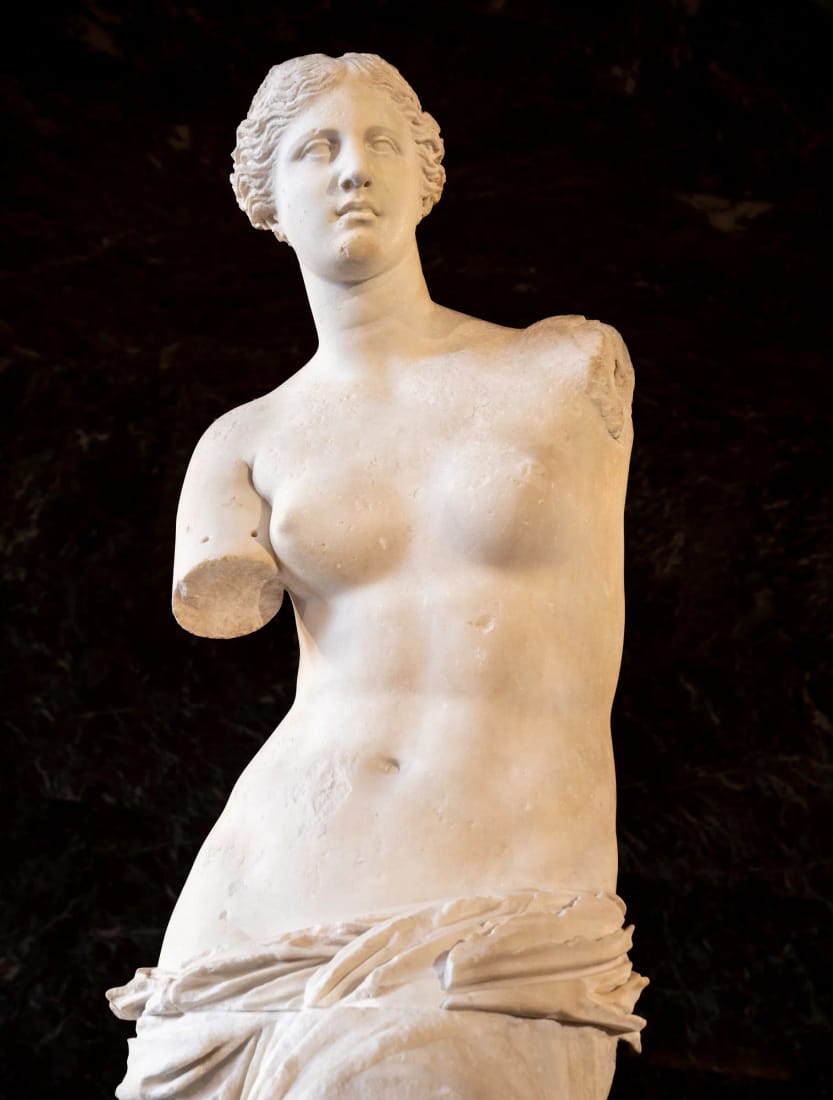
Title: Venus de Milo
Artist: Unknown (possibly Alexandros of Antioch)
Year: c. 150–125 BC
Medium: Marble
Museum: Musée du Louvre, Paris
1 Find it! 絵の中から見つけて、○でかこもう。
- ☐ Calm face
- ☐ Where the arm broke
- ☐ Twisting body
- ☐ Slipping cloth
2 First look 最初に見たときの感想を書こう。
When I first saw this painting, I felt ______________ because ______________________.
Three colors I can see: ①__________ ②__________ ③__________
3 Words — Match them. 英語と日本語を線で結ぼう。
- statue ●
- missing ●
- goddess ●
- discover ●
- ● なくなっている・行方不明の
- ● 発見する
- ● 女神
- ● 像・彫像
Venus de Milo
4 Fill in the blanks. 下の箱から選んで、( )に入れよう。形を変えるものもあります。
- The is about two meters tall.
- Both of her arms are .
- Venus is the of love.
- A farmer the statue in 1820.
5 Read and answer — True or False? 英文を読んで、正しければ T、ちがえば F。
This is a very old statue of a goddess. She is from Greece. A farmer found her in a field in 1820. She has no arms. Nobody knows where her arms are!
The Venus de Milo is a marble statue. It probably shows Aphrodite, the Greek goddess of love and beauty. The Romans called her Venus. It is about two meters tall and was made around 150–125 BC. Today it is one of the most popular works in the Louvre in Paris.
- The Venus de Milo was shown in Japan in 1964. T / F
- Her missing arms were later found in a Louvre storeroom. T / F
6 Quiz — Choose the best answer. 正しいものを選ぼう。
Where was the Venus de Milo found?
- In a temple in Rome
- Under Paris
- In a field on the Greek island of Milos
- In the Egyptian desert
Venus de Milo
7 Put the words in order. 語を正しく並べかえて、文を書こう。
- is / of / de / marble / made / Venus / Milo / The .
- This / statue / a / is / woman / marble / white / of / a .
8 Complete the description. 箱の語を(1)〜(4)に入れて、絵の説明を完成させよう。
This is a (1) marble statue of a (2). She has a calm face and wavy hair. Both of her arms are missing. A long cloth is (3) (4) her hips.
9 Describe the painting in English. この絵を英語で説明しよう(3文以上)。
10 Think & Talk 考えて、ペアやグループで話し合おう。
If you could give her arms, what would she be doing?
Do you think the statue is more beautiful without arms? Why?
11 My favorite part いちばん好きなところを英語で。
I like the ____________ because ____________________________.
Answers & Notes
1 Find it!
Calm face=おだやかな顔/Where the arm broke=腕のあと/Twisting body=ひねった体/Slipping cloth=すべり落ちそうな布
2 First look
自由に書けたら正解。I felt calm / surprised / happy … などの形容詞を使おう。
3 Words
1–d(statue=像・彫像) 2–a(missing=なくなっている・行方不明の) 3–c(goddess=女神) 4–b(discover=発見する)
4 Fill in the blanks
- statue The statue is about two meters tall.
その像は高さ約2メートルです。 - missing Both of her arms are missing.
彼女の両腕はなくなっています。 - goddess Venus is the goddess of love.
ヴィーナスは愛の女神です。 - discovered A farmer discovered the statue in 1820.
1820年に農民がその像を発見しました。
5 Read — T / F
【本文の訳】これは女神のとても古い像です。ギリシャから来ました。1820年に農民が畑で見つけました。彼女には腕がありません。腕がどこにあるのか、だれも知らないのです!
【本文の訳】ミロのヴィーナスは、古代ギリシャの愛と美の女神アフロディテ(ローマ名ヴィーナス)をあらわすと考えられている大理石の像です。高さは約2メートル。紀元前150〜125年ごろ、ヘレニズム時代と呼ばれる時代に作られました。今はパリのルーヴル美術館で、いちばん人気の作品の一つです。
- T ミロのヴィーナスは1964年に日本で公開された。
解説:東京と京都で公開され、大行列ができました。 - F なくなった両腕は、のちにルーヴルの倉庫で見つかった。
解説:両腕は今も見つかっていません。どんなポーズだったかはなぞのままです。
6 Quiz
C 問:ミロのヴィーナスが見つかった場所は?
選択肢:A ローマの神殿/B パリの地下/C ギリシャのミロス島の畑/D エジプトの砂漠
解説:1820年、ミロス島で農民が畑から見つけました。「ミロ」は島の名前です。
7 Put the words in order
- The Venus de Milo is made of marble.
ミロのヴィーナスは大理石でできています。 - This is a white marble statue of a woman.
これは女の人の白い大理石の像です。
💡 is made of(〜でできている):作品の材料を言うときの基本。be made of marble / bronze / gold のように使います。
8 Complete the description
(1) white (2) woman (3) wrapped (4) around
9 Describe(模範解答)
This is a white marble statue of a woman. She has a calm face and wavy hair. Both of her arms are missing. A long cloth is wrapped around her hips.
これは女の人の白い大理石の像です。おだやかな顔で、髪はゆるく波打っています。両腕はありません。腰には長い布が巻かれています。
10 Think & Talk(問いの訳)
- If you could give her arms, what would she be doing?
もし腕をつけられるとしたら、彼女は何をしていると思いますか? - Do you think the statue is more beautiful without arms? Why?
腕がないほうが、かえって美しく見えると思いますか?それはなぜ?
正解のない問いです。理由をつけて話せたら◎。
Fun Fact(訳)
腕はいまも行方不明! 見つかった1820年から200年以上、両腕は見つかっていません。リンゴを持っていた、盾を鏡にしていた、糸をつむいでいたなど、ポーズの説はたくさん。ミロス島の「ミロ」はギリシャ語のリンゴ(メーロン)に通じるため、リンゴ説は人気です。
