

 PDF をダウンロード
Let's Look at Art!
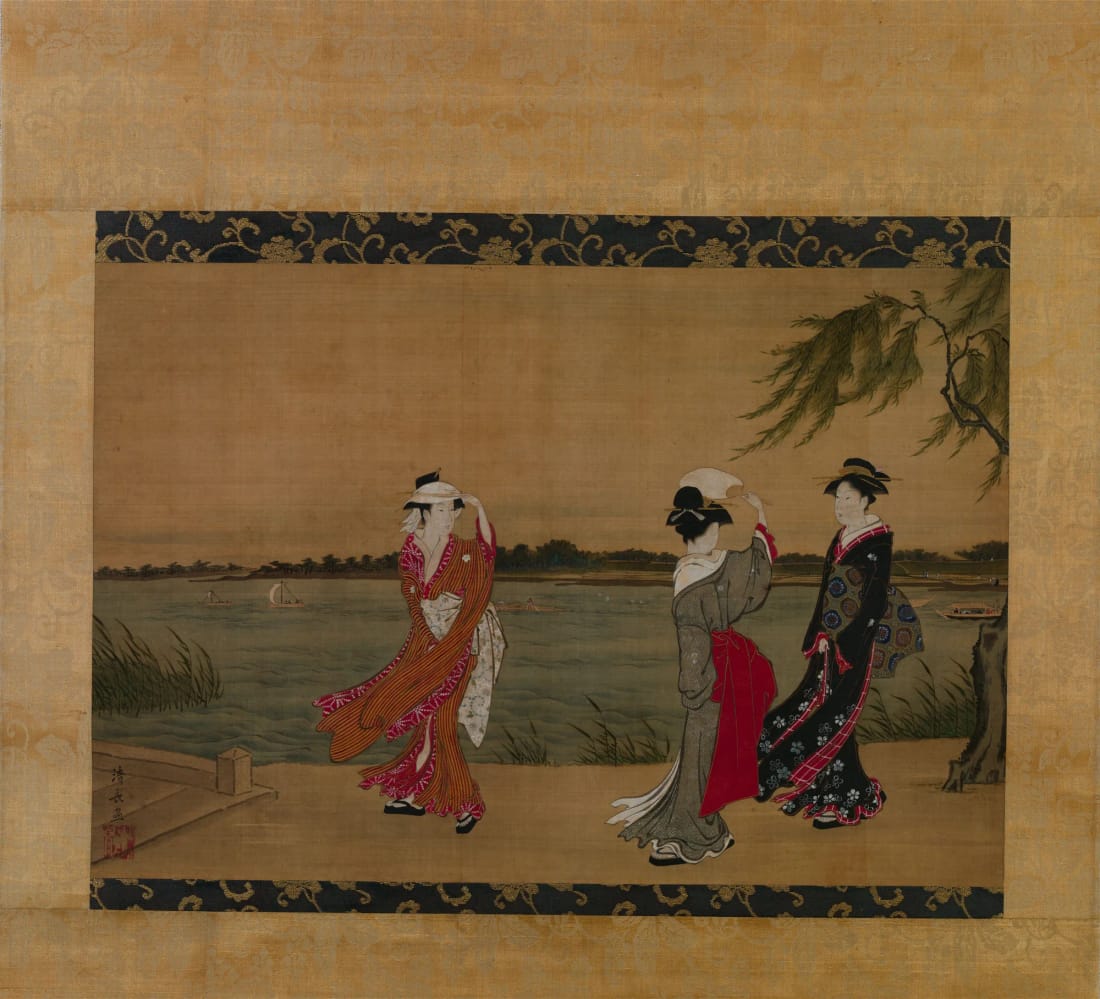
Title: Three Women on a Riverbank
Artist: Torii Kiyonaga (1752–1815)
Year: early 19th century
Medium: Hanging scroll; ink and color on silk
Museum: The Metropolitan Museum of Art, New York
1 Find it! 絵の中から見つけて、○でかこもう。
- ☐ Woman in the wind
- ☐ Woman seen from behind
- ☐ Willow in the wind
- ☐ A sailboat
2 First look 最初に見たときの感想を書こう。
When I first saw this painting, I felt ______________ because ______________________.
Three colors I can see: ①__________ ②__________ ③__________
3 Words — Match them. 英語と日本語を線で結ぼう。
- wind ●
- willow ●
- slender ●
- flap ●
- ● 風
- ● すらりとした
- ● はためく
- ● 柳
Three Women on a Riverbank
4 Fill in the blanks. 下の箱から選んで、( )に入れよう。形を変えるものもあります。
- A strong blows by the river.
- The bends in the wind.
- Kiyonaga painted tall, women.
- Their sleeves in the wind.
5 Read and answer — True or False? 英文を読んで、正しければ T、ちがえば F。
Three women walk by a river. The wind is very strong. Their kimonos move in the wind. One woman holds down a cloth on her head. Another woman raises a fan. This is not a print. The artist painted it by hand on silk.
Three women walk along a path by a river. A strong wind makes their kimono hems and sleeves flap. The woman on the left holds down the cloth on her head, while the woman in the center raises a fan above her head. On the right, a willow tree bends in the wind, and sailboats float on the river. The artist is Torii Kiyonaga, famous for tall, slender beauties. This is not a print but a one-of-a-kind painting, brushed directly onto silk.
- Kiyonaga became popular for pictures of tall, slender women. T / F
- The willow hangs straight down because there is no wind. T / F
6 Quiz — Choose the best answer. 正しいものを選ぼう。
How was this work made?
- Printed many times from woodblocks
- Printed from a photo
- Painted by hand on silk
- Embroidered with thread
Three Women on a Riverbank
7 Put the words in order. 語を正しく並べかえて、文を書こう。
- by / the / The / woman's / wind / is / kimono / blown .
- river / by / This / is / women / painting / three / a / of / a .
8 Complete the description. 箱の語を(1)〜(4)に入れて、絵の説明を完成させよう。
This is a painting of (1) (2) by a river. A (3) wind is blowing. The woman on the left is wearing an orange striped kimono. The woman on the left is holding down a cloth on her head. The woman in the center is (4) a fan. On the right, there is a willow tree.
9 Describe the painting in English. この絵を英語で説明しよう(3文以上)。
10 Think & Talk 考えて、ペアやグループで話し合おう。
How can a painter show wind, which we cannot see?
What do you think the three women are talking about?
11 My favorite part いちばん好きなところを英語で。
I like the ____________ because ____________________________.
Answers & Notes
1 Find it!
Woman in the wind=風に吹かれる女性/Woman seen from behind=うしろ姿の女性/Willow in the wind=なびく柳/A sailboat=帆かけ舟
2 First look
自由に書けたら正解。I felt calm / surprised / happy … などの形容詞を使おう。
3 Words
1–a(wind=風) 2–d(willow=柳) 3–b(slender=すらりとした) 4–c(flap=はためく)
4 Fill in the blanks
- wind A strong wind blows by the river.
川辺に強い風が吹いています。 - willow The willow bends in the wind.
柳が風でしなっています。 - slender Kiyonaga painted tall, slender women.
清長は背が高くすらりとした女性を描きました。 - flap Their sleeves flap in the wind.
彼女たちのそでが風ではためいています。
5 Read — T / F
【本文の訳】三人の女性が川辺を歩いています。風がとても強いです。着物が風で動いています。一人の女性は頭の布をおさえています。もう一人はうちわをかざしています。これは版画ではありません。画家が絹に手で描いた絵です。
【本文の訳】川ぞいの道を、三人の女性が歩いています。強い風が吹いて、着物のすそやそでがはためき、左の女性は頭の手ぬぐいをおさえ、中央の女性はうちわを頭の上にかざしています。右では柳の枝が大きくなびき、川には帆かけ舟。描いたのは、すらりとした美人画で知られる浮世絵師・鳥居清長です。版画ではなく、絹に筆で直接描いた一点ものの絵です。
- T 鳥居清長は、背の高いすらりとした美人画で人気になった。
解説:1780年代、のびやかな美人画で大人気になりました。 - F 絵の中の柳は、風がなくまっすぐにたれている。
解説:柳の枝は風で大きくしなっています。
6 Quiz
C 問:この作品はどうやって作られた?
選択肢:A 木版で何枚も摺った/B 写真をもとに印刷した/C 絹に筆で直接描いた/D 糸でししゅうした
解説:絵師が筆で描いた「肉筆浮世絵」で、世界に一つしかありません。
7 Put the words in order
- The woman's kimono is blown by the wind.
女性の着物が風に吹かれています。 - This is a painting of three women by a river.
これは川辺の三人の女性の絵です。
💡 is blown by the wind(風に吹かれている):blow(吹く)の受け身。過去分詞は blown。髪や旗、木の葉の説明にも使えます。
8 Complete the description
(1) three (2) women (3) strong (4) raising
9 Describe(模範解答)
This is a painting of three women by a river. A strong wind is blowing. The woman on the left is wearing an orange striped kimono. The woman on the left is holding down a cloth on her head. The woman in the center is raising a fan. On the right, there is a willow tree.
これは川辺の三人の女性の絵です。強い風が吹いています。左の女性は、オレンジ色のしま模様の着物を着ています。左の女性は頭の布をおさえています。中央の女性はうちわをかざしています。右には柳の木があります。
10 Think & Talk(問いの訳)
- How can a painter show wind, which we cannot see?
目に見えない風を、画家はどうやって描くことができるのでしょう? - What do you think the three women are talking about?
三人の女性は、何を話していると思いますか?
正解のない問いです。理由をつけて話せたら◎。
Fun Fact(訳)
浮世絵なのに、版画じゃない! 浮世絵というと木版画を思いうかべますが、絵師が筆で直接描いた「肉筆浮世絵」もあります。版画とちがって世界に一つしかない作品で、お金持ちの注文で描かれることが多かったと考えられています。
