

 PDF をダウンロード
Let's Look at Art!
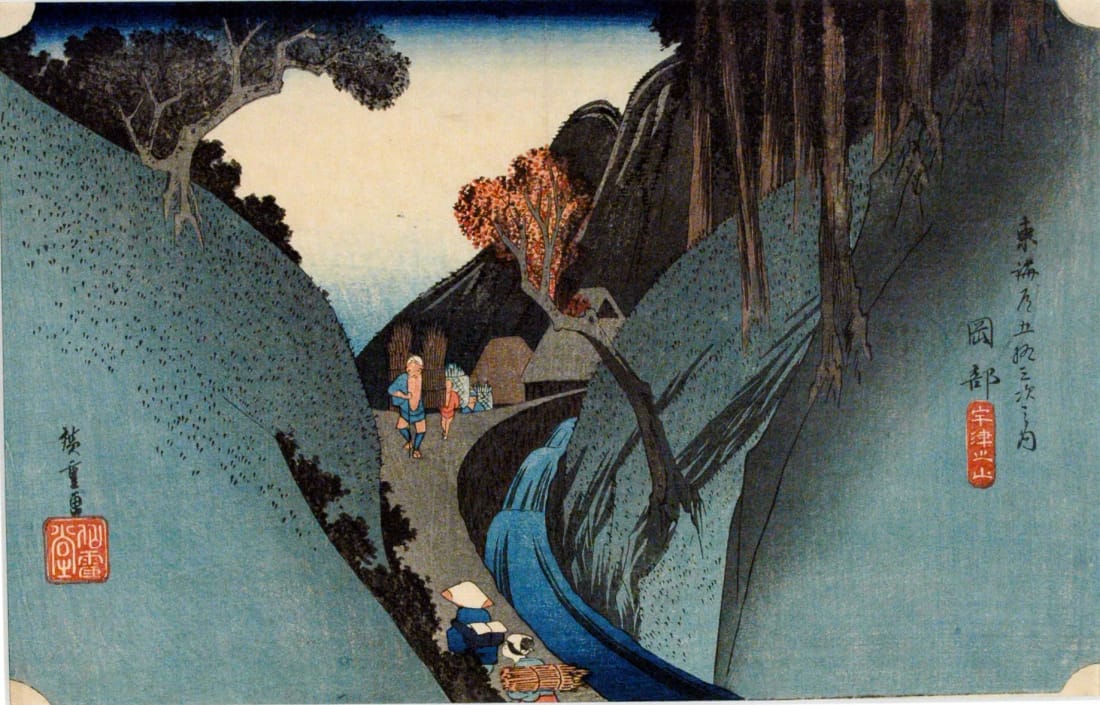
Title: Okabe: Utsu Mountain (The Fifty-three Stations of the Tōkaidō)
Artist: Utagawa Hiroshige (1797–1858)
Year: c. 1832–1833
Medium: Woodblock print; ink and color on paper
Museum: The San Diego Museum of Art (this impression), San Diego
1 Find it! 絵の中から見つけて、○でかこもう。
- ☐ Mountain stream
- ☐ People on the pass
- ☐ Carrying firewood
- ☐ Red autumn tree
2 First look 最初に見たときの感想を書こう。
When I first saw this painting, I felt ______________ because ______________________.
Three colors I can see: ①__________ ②__________ ③__________
3 Words — Match them. 英語と日本語を線で結ぼう。
- valley ●
- firewood ●
- stream ●
- narrow ●
- ● せまい、細い
- ● たきぎ
- ● 谷
- ● 小川
Okabe: Utsu Mountain (The Fifty-three Stations of the Tōkaidō)
4 Fill in the blanks. 下の箱から選んで、( )に入れよう。形を変えるものもあります。
- A narrow path runs through the .
- The villagers carry on their backs.
- A flows beside the road.
- The mountain road is dark and .
5 Read and answer — True or False? 英文を読んで、正しければ T、ちがえば F。
This is a road in a deep valley. The mountains are green. A small blue river runs by the road. People carry wood on their backs. A very old poem tells about this road.
A narrow, deep valley path runs between steep mountains. A stream flows beside the road, and people carrying firewood come and go. In the back, one tree has turned red. This is from Utagawa Hiroshige's Fifty-three Stations of the Tōkaidō (Hōeidō edition). It shows the Utsunoya Pass between Mariko and Okabe, the 21st post town from Edo.
- In the Meiji era, a tunnel was dug under this pass. T / F
- This picture shows the Hakone mountains in snow. T / F
6 Quiz — Choose the best answer. 正しいものを選ぼう。
Which Heian-period classic mentions this pass?
- The Tale of Genji
- The Tales of Ise
- The Tale of the Bamboo Cutter
- The Tale of the Heike
Okabe: Utsu Mountain (The Fifty-three Stations of the Tōkaidō)
7 Put the words in order. 語を正しく並べかえて、文を書こう。
- narrow / winds / through / A / green / the / path / valley .
- between / a / narrow / This / green / is / mountains / valley .
8 Complete the description. 箱の語を(1)〜(4)に入れて、絵の説明を完成させよう。
This is a narrow (1) (2) (3) mountains. A path and a (4) stream run through the middle. In the foreground, some people are carrying firewood. In the background, one tree has red leaves.
9 Describe the painting in English. この絵を英語で説明しよう(3文以上)。
10 Think & Talk 考えて、ペアやグループで話し合おう。
How would you feel walking alone on this road?
Why do you think Hiroshige added one red tree?
11 My favorite part いちばん好きなところを英語で。
I like the ____________ because ____________________________.
Answers & Notes
1 Find it!
Mountain stream=谷の小川/People on the pass=峠の人々/Carrying firewood=たきぎを運ぶ人/Red autumn tree=紅葉した木
2 First look
自由に書けたら正解。I felt calm / surprised / happy … などの形容詞を使おう。
3 Words
1–c(valley=谷) 2–b(firewood=たきぎ) 3–d(stream=小川) 4–a(narrow=せまい、細い)
4 Fill in the blanks
- valley A narrow path runs through the valley.
細い道が谷を通っています。 - firewood The villagers carry firewood on their backs.
村の人たちはたきぎを背負っています。 - stream A stream flows beside the road.
道のそばを小川が流れています。 - narrow The mountain road is dark and narrow.
山道は暗くてせまいです。
5 Read — T / F
【本文の訳】これは深い谷の道です。山は緑色です。小さな青い川が道のそばを流れています。人々は木を背負って運んでいます。とても古い歌に、この道のことが出てきます。
【本文の訳】両側から山がせまる、せまく深い谷の道。道ぞいには小川が流れ、たきぎを背負った人たちが行きかいます。奥には一本だけ赤く色づいた木。歌川広重の「東海道五十三次」(保永堂版)の一枚で、鞠子(まりこ)と岡部のあいだにある宇津ノ谷峠を描いています。岡部は江戸から21番目の宿場(今の静岡県藤枝市)です。
- T 明治時代、この峠の下にトンネルが掘られた。
解説:1876年に開通し、日本初の有料トンネルとされています。 - F この絵は、雪の箱根の山を描いたものだ。
解説:描かれているのは、岡部の近くの宇津ノ谷峠。雪もありません。
6 Quiz
B 問:この峠が登場する、平安時代の古典は?
選択肢:A 『源氏物語』/B 『伊勢物語』/C 『竹取物語』/D 『平家物語』
解説:『伊勢物語』で、主人公が宇津の山で歌をよむ場面があります。
7 Put the words in order
- A narrow path winds through the green valley.
細い道が緑の谷をくねくねと通っています。 - This is a narrow valley between green mountains.
これは緑の山にはさまれた、せまい谷です。
💡 wind through(〜をくねくねと通る):道や川が曲がりくねって進むときの表現。wind は「ワインド」と読み、風の wind とは発音がちがいます。
8 Complete the description
(1) valley (2) between (3) green (4) small
9 Describe(模範解答)
This is a narrow valley between green mountains. A path and a small stream run through the middle. In the foreground, some people are carrying firewood. In the background, one tree has red leaves.
これは緑の山にはさまれた、せまい谷です。まん中を道と小川が通っています。手前では、何人かがたきぎを運んでいます。奥には赤い葉の木が一本あります。
10 Think & Talk(問いの訳)
- How would you feel walking alone on this road?
この道を一人で歩くとしたら、どんな気持ちになると思いますか? - Why do you think Hiroshige added one red tree?
広重はなぜ、赤い木を一本だけ入れたと思いますか?
正解のない問いです。理由をつけて話せたら◎。
Fun Fact(訳)
千年前の恋の歌の舞台 『伊勢物語』の主人公は、宇津の山でうす暗く細い道にさしかかり、都の恋しい人を思って「うつつにも夢にも人にあはぬなりけり」と歌をよみます。この物語を知る広重の時代の旅人も、峠でこの歌を思い出したかもしれません。
