

 PDF をダウンロード
Let's Look at Art!
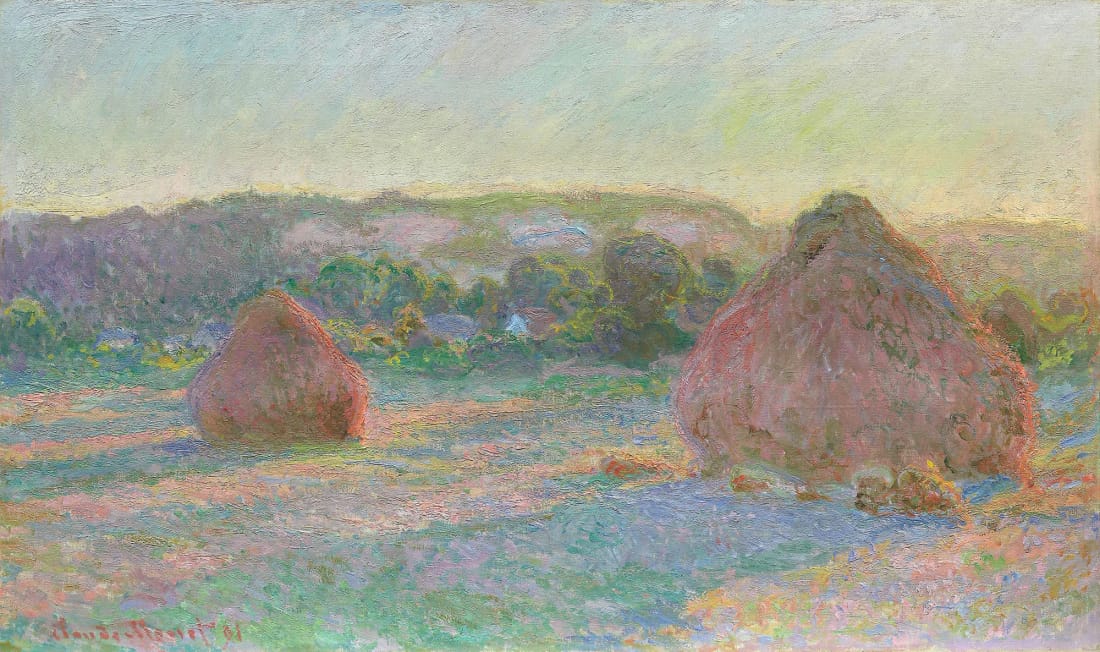
Title: Stacks of Wheat (End of Summer)
Artist: Claude Monet (1840–1926)
Year: 1890–1891
Medium: Oil on canvas
Museum: The Art Institute of Chicago, Chicago
1 Find it! 絵の中から見つけて、○でかこもう。
- ☐ Large wheat stack
- ☐ Small wheat stack
- ☐ Village houses
- ☐ Glowing sky
2 First look 最初に見たときの感想を書こう。
When I first saw this painting, I felt ______________ because ______________________.
Three colors I can see: ①__________ ②__________ ③__________
3 Words — Match them. 英語と日本語を線で結ぼう。
- wheat ●
- harvest ●
- series ●
- glow ●
- ● かがやく、光る
- ● 小麦
- ● 連作、シリーズ
- ● 収穫
Stacks of Wheat (End of Summer)
4 Fill in the blanks. 下の箱から選んで、( )に入れよう。形を変えるものもあります。
- Farmers piled up the after the harvest.
- The field is empty after the .
- Monet painted a of wheat stacks.
- The stacks in the evening sun.
5 Read and answer — True or False? 英文を読んで、正しければ T、ちがえば F。
These are big piles of wheat in a field. The evening sun makes them orange. Monet painted the same piles about 25 times. Each picture has different light. One of them sold for over 100 million dollars!
At the end of summer, two stacks of wheat, one large and one small, stand in a field after the harvest. Low sunlight makes one side of the stacks glow orange, while the shadows turn purple and blue. This field was right next to Monet's house in Giverny. Monet's signature and '91' appear at the lower left.
- Monet painted the same stacks many times in different weather and seasons. T / F
- None of them sold at the 1891 exhibition. T / F
6 Quiz — Choose the best answer. 正しいものを選ぼう。
Which painter wrote that this series helped lead him to abstract art?
- Picasso
- Van Gogh
- Kandinsky
- Renoir
Stacks of Wheat (End of Summer)
7 Put the words in order. 語を正しく並べかえて、文を書こう。
- a / of / This / wheat / one / of / paintings / of / stacks / is / series .
- This / afternoon / field / late / is / in / a / the .
8 Complete the description. 箱の語を(1)〜(4)に入れて、絵の説明を完成させよう。
This is a (1) in the late afternoon. On the right, there is a big (2) of wheat. On the left, there is a (3) one. In the background, there are (4), houses and low hills.
9 Describe the painting in English. この絵を英語で説明しよう(3文以上)。
10 Think & Talk 考えて、ペアやグループで話し合おう。
Why do you think Monet painted something so simple again and again?
What everyday thing would you like to paint at different times of the day?
11 My favorite part いちばん好きなところを英語で。
I like the ____________ because ____________________________.
Answers & Notes
1 Find it!
Large wheat stack=大きな積みわら/Small wheat stack=小さな積みわら/Village houses=村の家/Glowing sky=かがやく空
2 First look
自由に書けたら正解。I felt calm / surprised / happy … などの形容詞を使おう。
3 Words
1–b(wheat=小麦) 2–d(harvest=収穫) 3–c(series=連作、シリーズ) 4–a(glow=かがやく、光る)
4 Fill in the blanks
- wheat Farmers piled up the wheat after the harvest.
農家の人たちは収穫のあと小麦を積み上げた。 - harvest The field is empty after the harvest.
収穫のあと、畑はがらんとしている。 - series Monet painted a series of wheat stacks.
モネは積みわらの連作を描いた。 - glow The stacks glow in the evening sun.
積みわらが夕日にかがやいている。
5 Read — T / F
【本文の訳】これは畑にある大きな麦の山です。夕日で山がオレンジ色になっています。モネは同じ山を約25回も描きました。どの絵も光がちがいます。そのうちの1枚は、1億ドル以上で売れました!
【本文の訳】夏の終わりの夕方近く、収穫のあとの畑に大小2つの積みわら(麦の束を積み上げた山)が立っています。低い日の光で、山の片側がオレンジ色にかがやき、影は紫や青にそまっています。モネの家があるジヴェルニーの、家のすぐそばの畑の景色です。画面の左下には、モネのサインと「91」の年号が見えます。
- T モネは同じ積みわらを、天気や季節を変えて何枚も描いた。
解説:1890〜91年に約25枚描きました。 - F 1891年の展覧会では、1枚も売れなかった。
解説:多くの作品にすぐ買い手がつき、展覧会は成功しました。
6 Quiz
C 問:この連作を見て、抽象画へ進むきっかけになったと書いた画家は?
選択肢:A ピカソ/B ゴッホ/C カンディンスキー/D ルノワール
解説:1896年にモスクワで見て、何の絵かわからないのに強く心を動かされました。
7 Put the words in order
- This is one of a series of paintings of wheat stacks.
これは積みわらを描いた連作の一枚です。 - This is a field in the late afternoon.
これは午後おそくの畑です。
💡 a series of(一連の〜、〜の連作):同じテーマで何枚も描いた作品を説明するときに。one of a series で「連作の一つ」。
8 Complete the description
(1) field (2) stack (3) smaller (4) trees
9 Describe(模範解答)
This is a field in the late afternoon. On the right, there is a big stack of wheat. On the left, there is a smaller one. In the background, there are trees, houses and low hills.
これは午後おそくの畑です。右側には大きな麦の山があります。左側には、それより小さな山があります。奥には木々や家、低い丘があります。
10 Think & Talk(問いの訳)
- Why do you think Monet painted something so simple again and again?
モネはなぜ、こんなにシンプルなものを何度も描いたと思いますか? - What everyday thing would you like to paint at different times of the day?
身のまわりの何を、一日のいろいろな時間に描いてみたいですか?
正解のない問いです。理由をつけて話せたら◎。
Fun Fact(訳)
カンディンスキーが「何の絵かわからなかった」 1896年、モスクワの展覧会で積みわらの絵を見た若きカンディンスキーは、カタログを見るまで何が描いてあるかわかりませんでした。それでも色の力に心をゆさぶられ、のちに形のない「抽象画」を生み出すきっかけになったと書いています。
