

 PDF をダウンロード
Let's Look at Art!
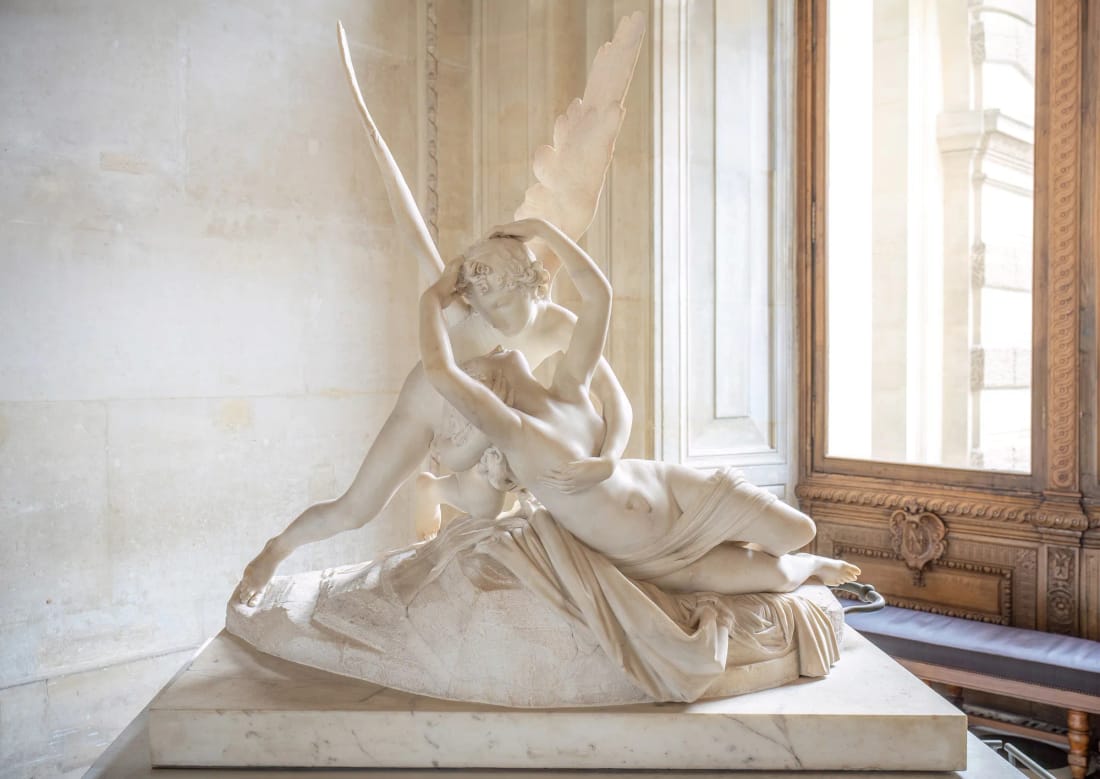
Title: Psyche Revived by Cupid's Kiss
Artist: Antonio Canova (1757–1822)
Year: 1787–1793
Medium: Marble
Museum: Musée du Louvre, Paris
1 Find it! 絵の中から見つけて、○でかこもう。
- ☐ Faces close together
- ☐ Cupid's wings
- ☐ Psyche's body and cloth
- ☐ The handle
2 First look 最初に見たときの感想を書こう。
When I first saw this painting, I felt ______________ because ______________________.
Three colors I can see: ①__________ ②__________ ③__________
3 Words — Match them. 英語と日本語を線で結ぼう。
- marble ●
- wing ●
- revive ●
- graceful ●
- ● 優美な
- ● 生き返らせる・よみがえらせる
- ● 大理石
- ● 羽・つばさ
Psyche Revived by Cupid's Kiss
4 Fill in the blanks. 下の箱から選んで、( )に入れよう。形を変えるものもあります。
- The sculpture is carved from white .
- Cupid's are spread wide.
- The sculpture shows Cupid Psyche with a kiss.
- Their bodies make a shape.
5 Read and answer — True or False? 英文を読んで、正しければ T、ちがえば F。
This is a statue made of white stone. The boy with wings is Cupid. The girl is Psyche. She is sleeping. In this statue, Cupid wakes her with a kiss. There is a handle on the base to turn it!
This is a story from Roman myth about Cupid, the god of love, and Psyche, a human girl. Psyche opened a box she had been told never to open, and she fell into a deathlike sleep. In the ancient story, Cupid takes away the sleep and wakes her with a prick of his arrow. Canova imagined the rescue as a kiss and showed that moment in marble. The photo shows it on display in the Louvre.
- This statue stayed in the house of the British officer who ordered it. T / F
- Canova made a second version of this statue. T / F
6 Quiz — Choose the best answer. 正しいものを選ぼう。
What was the metal handle on the base probably for?
- To turn the statue around
- To carry the statue
- To hold a candle
- To stop thieves
Psyche Revived by Cupid's Kiss
7 Put the words in order. 語を正しく並べかえて、文を書こう。
- of / marble / is / block / carved / a / The / statue / from / single / white .
- a / statue / is / This / marble / white .
8 Complete the description. 箱の語を(1)〜(4)に入れて、絵の説明を完成させよう。
This is a white marble statue. A boy with big (1) is holding a girl. The girl is (2) back, and her arms are around his head. Their faces are very (3). On the right, you can see a window and a (4) wall.
9 Describe the painting in English. この絵を英語で説明しよう(3文以上)。
10 Think & Talk 考えて、ペアやグループで話し合おう。
Why do you think Canova wanted people to walk around his statue?
How can a hard stone look soft? What tricks can you find?
11 My favorite part いちばん好きなところを英語で。
I like the ____________ because ____________________________.
Answers & Notes
1 Find it!
Faces close together=見つめあう顔/Cupid's wings=アモルの羽/Psyche's body and cloth=プシュケの体と布/The handle=台座の取っ手
2 First look
自由に書けたら正解。I felt calm / surprised / happy … などの形容詞を使おう。
3 Words
1–c(marble=大理石) 2–d(wing=羽・つばさ) 3–b(revive=生き返らせる・よみがえらせる) 4–a(graceful=優美な)
4 Fill in the blanks
- marble The sculpture is carved from white marble.
この彫刻は白い大理石から彫られています。 - wings Cupid's wings are spread wide.
アモルの羽は大きく広げられています。 - reviving The sculpture shows Cupid reviving Psyche with a kiss.
この彫刻では、アモルが口づけでプシュケをよみがえらせています。 - graceful Their bodies make a graceful shape.
二人の体は優美な形をつくっています。
5 Read — T / F
【本文の訳】これは白い石でできた像です。羽のある少年はアモル(キューピッド)です。少女はプシュケです。彼女は眠っています。この像では、アモルが口づけで彼女を目覚めさせます。台には、像を回すための取っ手がついています!
【本文の訳】ローマ神話の愛の神アモル(キューピッド)と、人間の娘プシュケの物語です。プシュケは「開けてはいけない」と言われた小箱を開けてしまい、死んだような眠りに落ちます。古い物語では、アモルは眠りを取りのぞき、矢で軽くつついて彼女を起こします。カノーヴァはそれを、口づけでよみがえる一瞬として白い大理石で表しました。写真はルーヴル美術館の展示のようすです。
- F この像は、注文したイギリスの軍人の家にずっと飾られていた。
解説:注文主には渡らず、ミュラの手を経て1824年にルーヴルに入りました。 - T カノーヴァは、この像の2つ目の版も作った。
解説:2つ目の版はロシアのユスポフ公が買い、今はエルミタージュ美術館にあります。
6 Quiz
A 問:台座についている金属の取っ手は、何のためと考えられている?
選択肢:A 像を回転させるため/B 像を運ぶため/C ろうそくを立てるため/D どろぼうよけ
解説:台ごと回して、いろいろな方向から見られるようにしたと考えられています。
7 Put the words in order
- The statue is carved from a single block of white marble.
この像は白い大理石のかたまりから彫られています。 - This is a white marble statue.
これは白い大理石の像です。
💡 is carved from(〜から彫られている):彫刻の素材は is carved from +石の名前。is made of より「彫った」感じがはっきり出ます。
8 Complete the description
(1) wings (2) lying (3) close (4) wooden
9 Describe(模範解答)
This is a white marble statue. A boy with big wings is holding a girl. The girl is lying back, and her arms are around his head. Their faces are very close. On the right, you can see a window and a wooden wall.
これは白い大理石の像です。大きな羽のある少年が、少女をかかえています。少女は後ろにもたれ、腕で彼の頭をつつんでいます。二人の顔はとても近くにあります。右側には、窓と木の壁が見えます。
10 Think & Talk(問いの訳)
- Why do you think Canova wanted people to walk around his statue?
カノーヴァはなぜ、人々に像のまわりを歩いて見てほしかったのだと思いますか? - How can a hard stone look soft? What tricks can you find?
固い石が、どうしてやわらかく見えるのでしょう?どんな工夫が見つかりますか?
正解のない問いです。理由をつけて話せたら◎。
Fun Fact(訳)
台座の取っ手で、像を回した!? プシュケの足の近くに金属の取っ手がついています。これは像を台ごと回転させて、いろいろな角度から見るためのものと考えられています。カノーヴァはこうした回る台をよく使いました。
