

 PDF をダウンロード
Let's Look at Art!
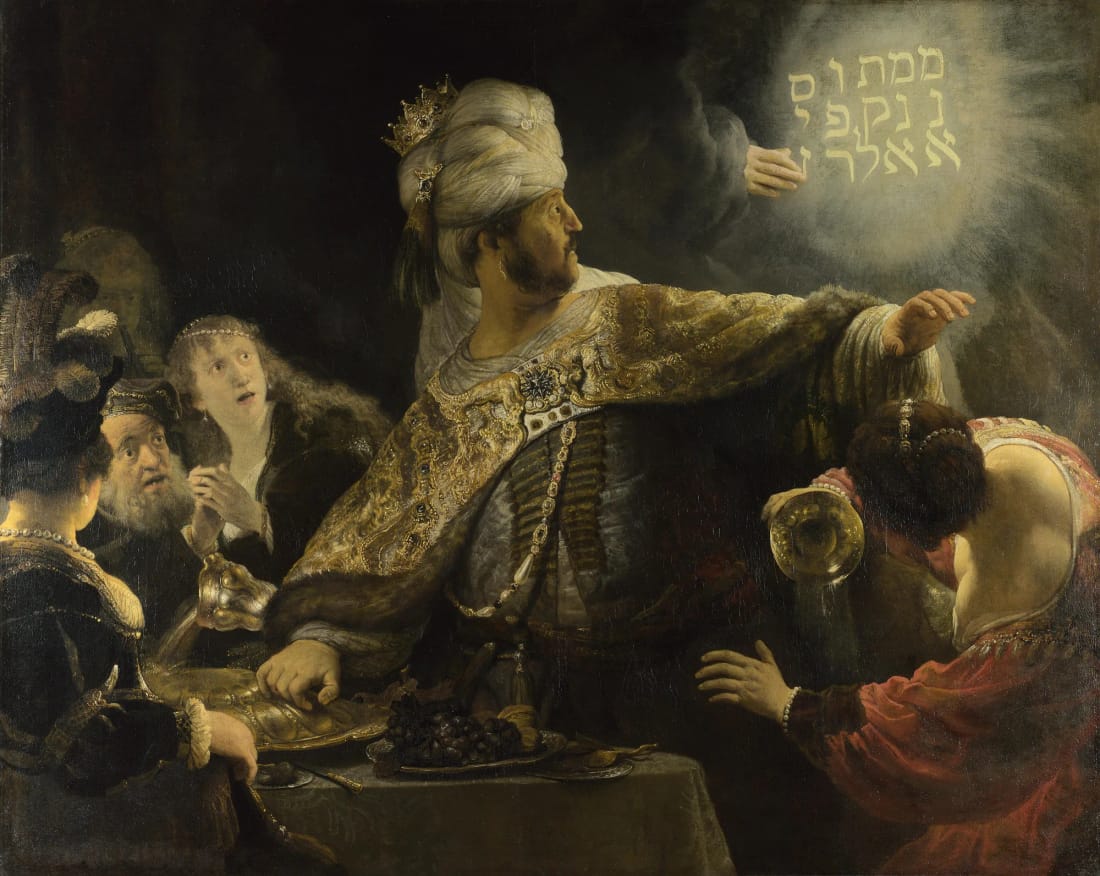
Title: Belshazzar's Feast
Artist: Rembrandt van Rijn (1606–1669)
Year: c. 1636–1638
Medium: Oil on canvas
Museum: The National Gallery, London, London
1 Find it! 絵の中から見つけて、○でかこもう。
- ☐ The glowing words and hand
- ☐ The shocked king
- ☐ The spilling cup
- ☐ The frightened woman
2 First look 最初に見たときの感想を書こう。
When I first saw this painting, I felt ______________ because ______________________.
Three colors I can see: ①__________ ②__________ ③__________
3 Words — Match them. 英語と日本語を線で結ぼう。
- feast ●
- prophet ●
- spill ●
- terrified ●
- ● 宴会・ごちそう
- ● おびえた
- ● こぼれる・こぼす
- ● 預言者
Belshazzar's Feast
4 Fill in the blanks. 下の箱から選んで、( )に入れよう。形を変えるものもあります。
- The king is holding a great .
- The Daniel read the words.
- Wine from the golden cup.
- The guests look .
5 Read and answer — True or False? 英文を読んで、正しければ T、ちがえば F。
A king is having a big party. Suddenly, a hand writes on the wall. The words shine with light! The king is very scared. The words say his kingdom will end.
A king in golden robes turns around in shock. In the middle of a feast, a hand has appeared from nowhere and written glowing words on the wall. The king is Belshazzar, a ruler of ancient Babylon in the Book of Daniel in the Old Testament. Rembrandt painted this around 1636 to 1638, when he was about 30. It is now in the National Gallery in London.
- The Hebrew words in the painting are written in rows from right to left. T / F
- The National Gallery got this painting in the 20th century. T / F
6 Quiz — Choose the best answer. 正しいものを選ぼう。
Who read the words on the wall?
- The king's cook
- The king's wife
- Rembrandt
- The prophet Daniel
Belshazzar's Feast
7 Put the words in order. 語を正しく並べかえて、文を書こう。
- wall / the / When / the / king / was / the / saw / the / writing / words, / on .
- room / a / is / a / at / dark / This / feast .
8 Complete the description. 箱の語を(1)〜(4)に入れて、絵の説明を完成させよう。
This is a dark room at a (1). In the (2), a king in gold clothes turns around. In the upper right, a hand is (3) glowing letters on the wall. On the right, a woman spills wine from a (4) cup.
9 Describe the painting in English. この絵を英語で説明しよう(3文以上)。
10 Think & Talk 考えて、ペアやグループで話し合おう。
If you saw writing appear on the wall, what would you do?
Look at each guest's face. Who looks the most scared? Why?
11 My favorite part いちばん好きなところを英語で。
I like the ____________ because ____________________________.
Answers & Notes
1 Find it!
The glowing words and hand=光る文字と手/The shocked king=おどろく王/The spilling cup=こぼれる器/The frightened woman=おびえる女性
2 First look
自由に書けたら正解。I felt calm / surprised / happy … などの形容詞を使おう。
3 Words
1–a(feast=宴会・ごちそう) 2–d(prophet=預言者) 3–c(spill=こぼれる・こぼす) 4–b(terrified=おびえた)
4 Fill in the blanks
- feast The king is holding a great feast.
王は盛大な宴会を開いています。 - prophet The prophet Daniel read the words.
預言者ダニエルがその文字を読みました。 - spills Wine spills from the golden cup.
金の器からワインがこぼれています。 - terrified The guests look terrified.
客たちはおびえているように見えます。
5 Read — T / F
【本文の訳】王さまが大きなパーティーを開いています。とつぜん、手が壁に文字を書きます。文字は光っています!王さまはとてもこわがります。文字は、王国が終わることを告げていたのです。
【本文の訳】金の衣をまとった王が、ぎょっとしてふり返ります。宴会の最中、どこからか手が現れ、壁に光る文字を書いたのです。王の名はベルシャザル。旧約聖書『ダニエル書』に登場する古代バビロンの王です。描いたのはレンブラント。1636〜38年ごろ、30歳前後の作品で、今はロンドンのナショナル・ギャラリーにあります。
- F 絵の中のヘブライ文字は、右から左へ横書きで書かれている。
解説:ふつうとちがい、たての列に並べて書かれています。 - T ナショナル・ギャラリーがこの絵を手に入れたのは20世紀になってから。
解説:1964年に手に入れました。それまではダービー伯爵家にありました。
6 Quiz
D 問:壁の文字を読み解いたのはだれ?
選択肢:A 王の料理人/B 王の妻/C レンブラント/D 預言者ダニエル
解説:王の学者たちはだれも読めず、預言者ダニエルが意味を告げました。
7 Put the words in order
- When the king saw the words, the writing was on the wall.
王が文字を見たとき、もう終わりの前ぶれははっきりしていました。 - This is a dark room at a feast.
これは宴会中の暗い部屋です。
💡 the writing is on the wall(悪いことが起こる前ぶれがはっきりしている):まさにこの絵の物語から生まれた英語の決まり文句。ニュースでもよく使われます。
8 Complete the description
(1) feast (2) center (3) writing (4) golden
9 Describe(模範解答)
This is a dark room at a feast. In the center, a king in gold clothes turns around. In the upper right, a hand is writing glowing letters on the wall. On the right, a woman spills wine from a golden cup.
これは宴会中の暗い部屋です。中央では、金色の服の王がふり向いています。右上では、手が壁に光る文字を書いています。右では、女性が金の器からワインをこぼしています。
10 Think & Talk(問いの訳)
- If you saw writing appear on the wall, what would you do?
もし目の前の壁に文字が現れたら、あなたはどうしますか? - Look at each guest's face. Who looks the most scared? Why?
客ひとりひとりの顔を見てみましょう。いちばんこわがっているのはだれ?それはなぜ?
正解のない問いです。理由をつけて話せたら◎。
Fun Fact(訳)
文字はなぜか「たて書き」 ヘブライ文字はふつう右から左へ横に書きますが、この絵では文字がたてにならんでいます。同じ珍しいならべ方は、アムステルダムのユダヤ教学者メナセ・ベン・イスラエルの1639年の本にもあります。彼が画家に助言したという説もありますが、確かな証拠はありません。たて書きだから王の学者たちは読めなかった、という解釈もあります。
