

 PDF をダウンロード
Ukiyo-e
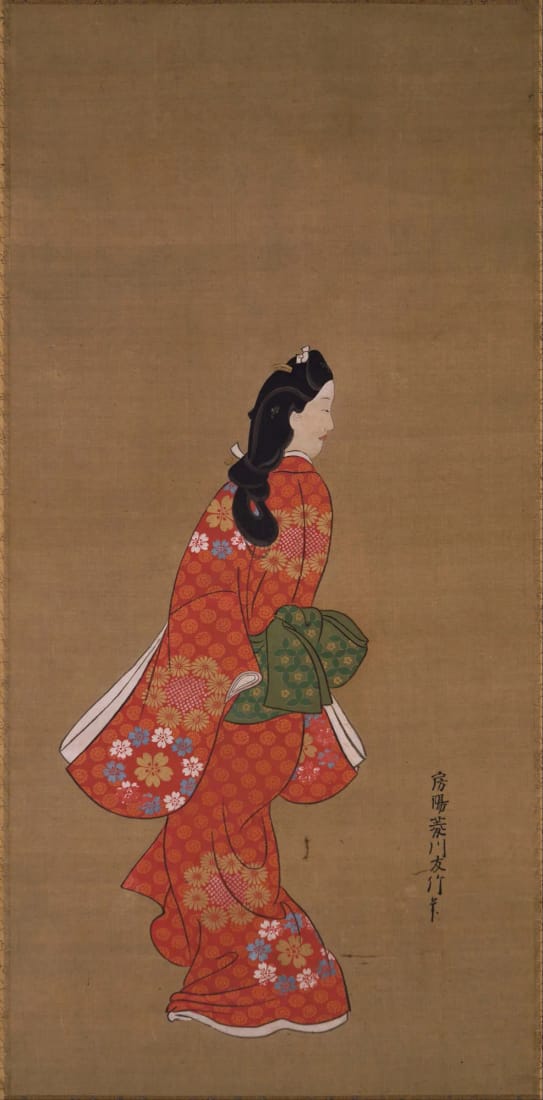
Hishikawa Moronobu, late 17th century
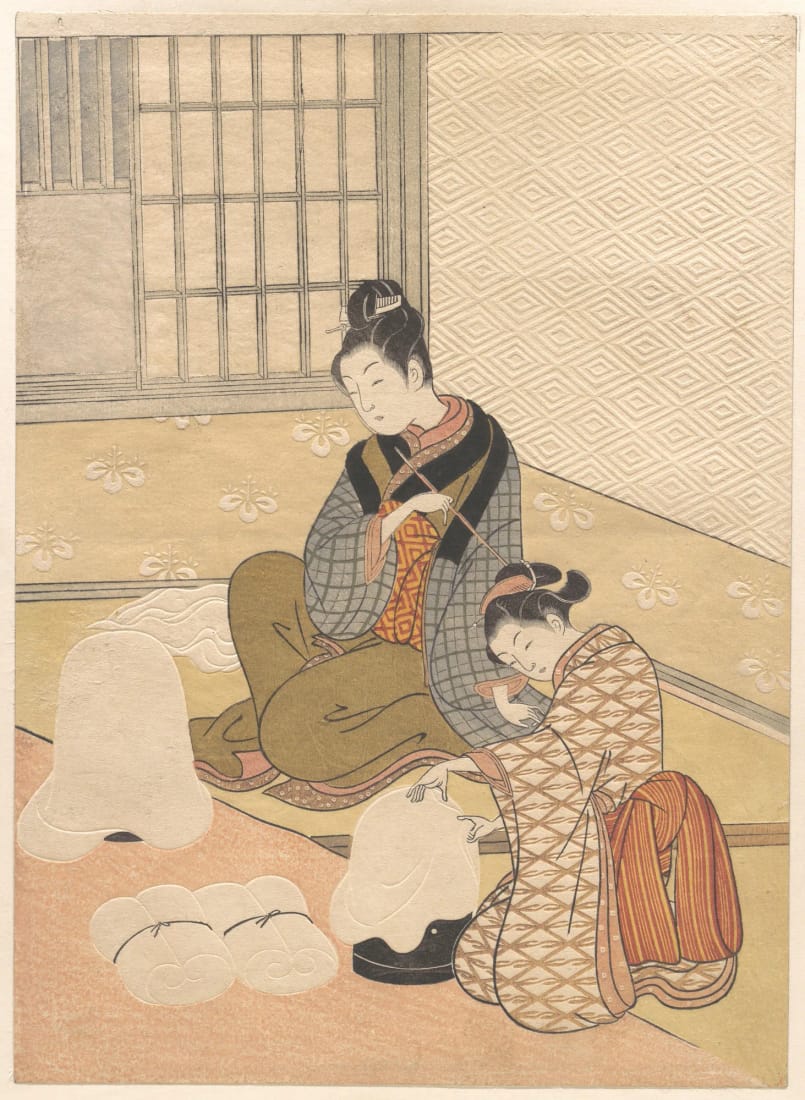
Suzuki Harunobu, Design c. 1766 (this impression: late 18th century)
1 How to spot it 2つの絵で見つけたら ✓ をつけよう。
| A | B | |
|---|---|---|
| Clear outlines and flat areas of color. | ☐ | ☐ |
| A bright blue called Prussian blue is used for sky and water. | ☐ | ☐ |
| Famous places and seasons: Mount Fuji, bridges, roads, rain and snow. | ☐ | ☐ |
| Popular actors or beauties shown in big close-ups of the face. | ☐ | ☐ |
| The artist's name, the title and the publisher's mark appear in a corner. | ☐ | ☐ |
2 Read 英文を読もう。
Ukiyo once meant 'the sad world', but in the Edo period it came to mean 'the floating world', a cheerful world of enjoying the moment. Ukiyo-e, 'pictures of the floating world', showed the fashions of Edo, popular actors, beautiful women and famous places. In the late 17th century, Hishikawa Moronobu helped spread them by making prints that many people could buy.
Write one thing you learned:
Ukiyo-e
3 Art words — Match them. 英語と日本語を線で結ぼう。
- woodblock print ●
- Prussian blue ●
- publisher ●
- nishiki-e ●
- ● 錦絵
- ● ベロ藍(プルシアンブルー)
- ● 版元
- ● 木版画
4 Quiz
In ukiyo-e, what is the person who carves the wood block called?
- Eshi (designer)
- Surishi (printer)
- Hanmoto (publisher)
- Horishi (carver)
5 Quiz
How many prints are in Hokusai's Thirty-six Views of Mount Fuji?
- 36
- 53
- 46
- 100
6 Which do you like better, A or B? Why? AとB、どちらが好き?理由も英語で。
I like ____ better because ________________________________.
Answers & Notes
1 How to spot it(訳)
- Clear outlines and flat areas of color.
輪郭線がはっきりして、色が平らにぬられている。 - A bright blue called Prussian blue is used for sky and water.
空や水に、あざやかな青(ベロ藍)が使われている。 - Famous places and seasons: Mount Fuji, bridges, roads, rain and snow.
富士山、橋、街道、雨や雪など、名所と季節の風景。 - Popular actors or beauties shown in big close-ups of the face.
人気の役者や美人が、顔の大きなアップで描かれている。 - The artist's name, the title and the publisher's mark appear in a corner.
すみに、絵師の名前や題名、版元のマークが入っている。
A:見返り美人図 B:坐鋪八景 塗桶の暮雪
2 Read(訳)
「浮世」とは、もともと「つらい世の中(憂き世)」という意味でしたが、江戸時代には「今を楽しむ、うきうきした世の中」という意味で使われるようになりました。浮世絵は、そんな江戸の人々の流行や、人気の役者や美人、名所の風景を描いた絵です。17世紀後半に菱川師宣が、版画で多くの人に届けたことから広がりました。
3 Art words
1–d(woodblock print=木版画:木の板を彫って絵の具をのせ、紙に摺る版画。同じ絵をたくさん作れる。)
2–b(Prussian blue=ベロ藍(プルシアンブルー):ヨーロッパで作られた合成の青。あざやかで色あせにくく、北斎や広重が使った。)
3–c(publisher=版元:浮世絵の企画・制作・販売をした出版社。今でいうプロデューサー。)
4–a(nishiki-e=錦絵:多色摺りの浮世絵。錦の織物のように美しいことから名づけられた。)
4 Quiz
D 問:浮世絵版画で、板に絵を彫る職人を何という?
選択肢:A 絵師/B 摺師/C 版元/D 彫師
解説:絵師が描き、彫師が彫り、摺師が摺る。版元がそれをまとめて売り出しました。
5 Quiz
C 問:北斎の『冨嶽三十六景』は、全部で何枚ある?
選択肢:A 36枚/B 53枚/C 46枚/D 100枚
解説:人気が出たので10枚が追加され、46枚になりました。
Fun Fact(訳)
写楽は、たった10か月で消えた 東洲斎写楽は、1794年5月から翌年のはじめごろまでのおよそ10か月に、約140点もの作品を出し、そのあと姿を消しました。正体は長くなぞでしたが、今は阿波藩に仕えた能役者・斎藤十郎兵衛だという説が有力です。
