

 PDF をダウンロード
Ink Painting
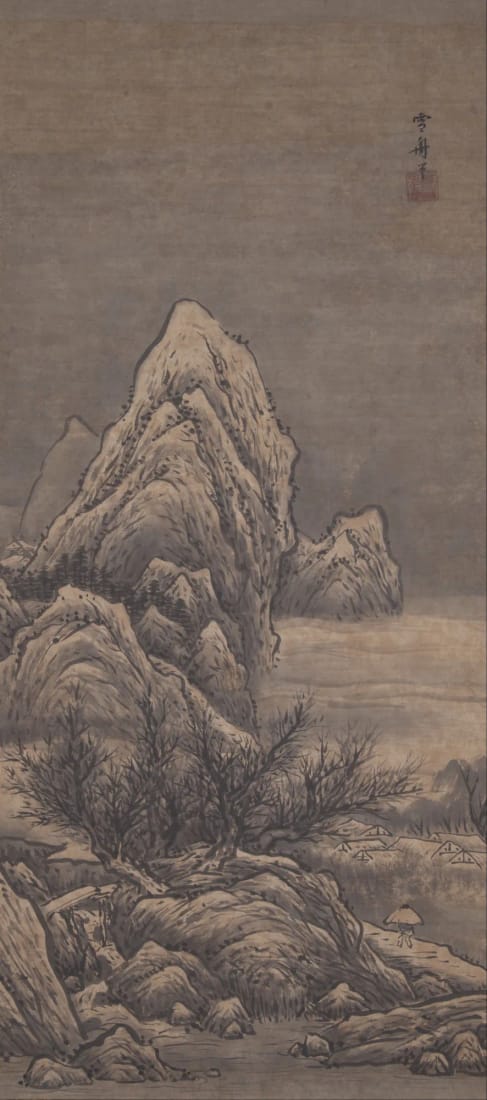
Sesshū Tōyō, Late 15th–early 16th century
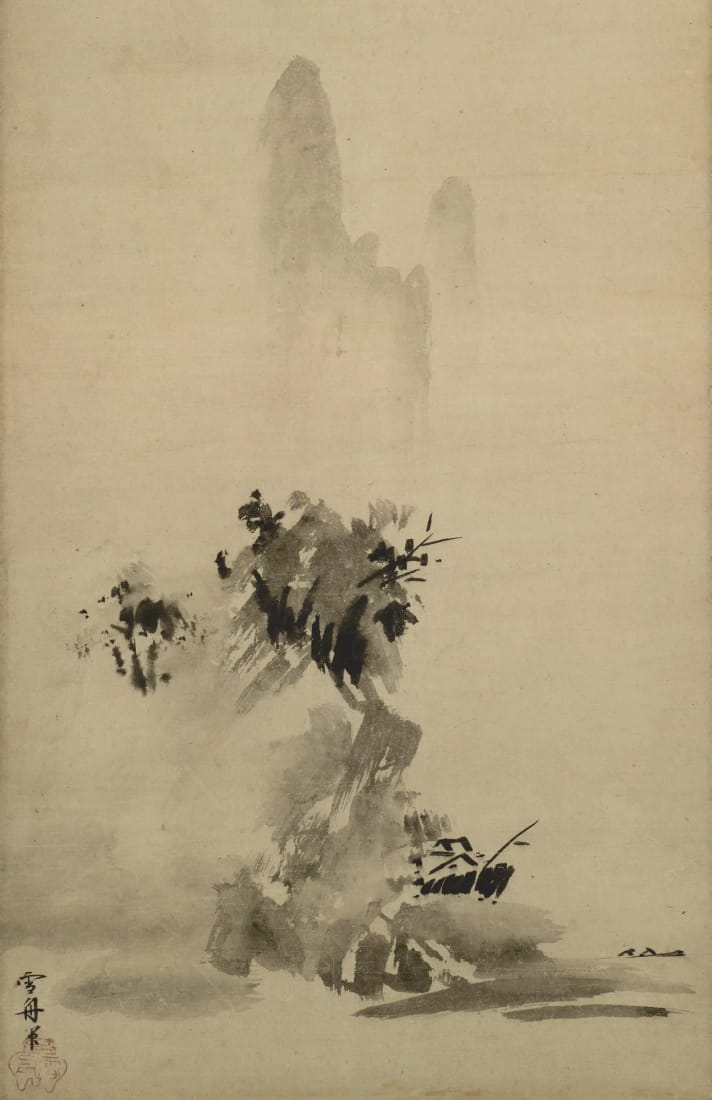
Sesshū Tōyō, 1495
1 How to spot it 2つの絵で見つけたら ✓ をつけよう。
| A | B | |
|---|---|---|
| There is no color, only black and shades of gray. | ☐ | ☐ |
| Blank white paper becomes mist, sky or water. | ☐ | ☐ |
| Thick lines, dry scratchy strokes and blurs show the energy of the brush. | ☐ | ☐ |
| Rough mountains and rocks are drawn with strong lines. | ☐ | ☐ |
| Faraway things are painted in paler, softer ink. | ☐ | ☐ |
2 Read 英文を読もう。
Ink painting uses only black ink, in darker and lighter tones, soft blurs and dry, scratchy strokes. It developed in China and came to Japan with Zen Buddhism in the Kamakura period. Zen monks became its painters, and in the Muromachi period the shoguns eagerly collected Chinese masterpieces, so ink painting flourished in Japan. Because there is no color, the scene grows in the viewer's own mind.
Write one thing you learned:
Ink Painting
3 Art words — Match them. 英語と日本語を線で結ぼう。
- ink wash ●
- negative space ●
- Zen ●
- brushwork ●
- ● 余白
- ● 筆づかい(筆法)
- ● 禅
- ● 水墨(墨のぼかし)
4 Quiz
Where did Sesshū travel to study ink painting?
- Korea
- India
- China (Ming)
- The Netherlands
5 Quiz
In ink painting, what do we call the white areas left unpainted?
- A draft
- Negative space (yohaku)
- Line drawing
- Gold ground
6 Which do you like better, A or B? Why? AとB、どちらが好き?理由も英語で。
I like ____ better because ________________________________.
Answers & Notes
1 How to spot it(訳)
- There is no color, only black and shades of gray.
色がなく、黒と灰色だけで描かれている。 - Blank white paper becomes mist, sky or water.
何も描かずに残した白い紙が、霧や空、水に見える。 - Thick lines, dry scratchy strokes and blurs show the energy of the brush.
筆の勢いが感じられる、太い線・かすれた線・にじみ。 - Rough mountains and rocks are drawn with strong lines.
山や岩のごつごつした形が、力強い線で描かれている。 - Faraway things are painted in paler, softer ink.
遠くのものほど墨がうすく、ぼんやりしている。
A:秋冬山水図(冬景) B:破墨山水図
2 Read(訳)
水墨画は、墨の濃い・うすい、にじみやかすれだけで描く絵です。中国で発達し、鎌倉時代に禅宗とともに日本へ伝わりました。禅寺のお坊さんたちが描き手となり、室町時代には将軍家も中国の名画を熱心に集めたことから、日本で大きく花開きました。色を使わないからこそ、見る人の心の中で景色が広がるのです。
3 Art words
1–d(ink wash=水墨(墨のぼかし):墨を水でうすめ、濃さを変えて描く方法。色がなくても奥行きが出せる。)
2–a(negative space=余白:何も描かずに残した部分。見る人の想像で、霧や空間に変わる。)
3–c(Zen=禅:座禅などの修行で心を見つめる仏教の一派。水墨画を日本に広めた。)
4–b(brushwork=筆づかい(筆法):筆の動かし方。線の太さや速さに、描いた人の個性が表れる。)
4 Quiz
C 問:雪舟が水墨画を学ぶために渡った国は?
選択肢:A 朝鮮/B インド/C 中国(明)/D オランダ
解説:1467年に明へ渡り、各地の風景を見て本場の絵を学びました。
5 Quiz
B 問:水墨画で、何も描かずに残した白い部分を何という?
選択肢:A 下書き/B 余白/C 白描/D 金地
解説:余白は、見る人の想像力で霧や光、空気に変わる大切な部分です。
Fun Fact(訳)
涙でネズミを描いた少年雪舟? お寺で修行中に柱にしばられた少年雪舟が、こぼれた涙を足の指で描いたネズミが、本物と見まちがえるほどだった、という有名な話があります。ただしこれは江戸時代の本などで広まった伝説で、本当にあったかはわかっていません。
