

 PDF をダウンロード
The Northern Renaissance
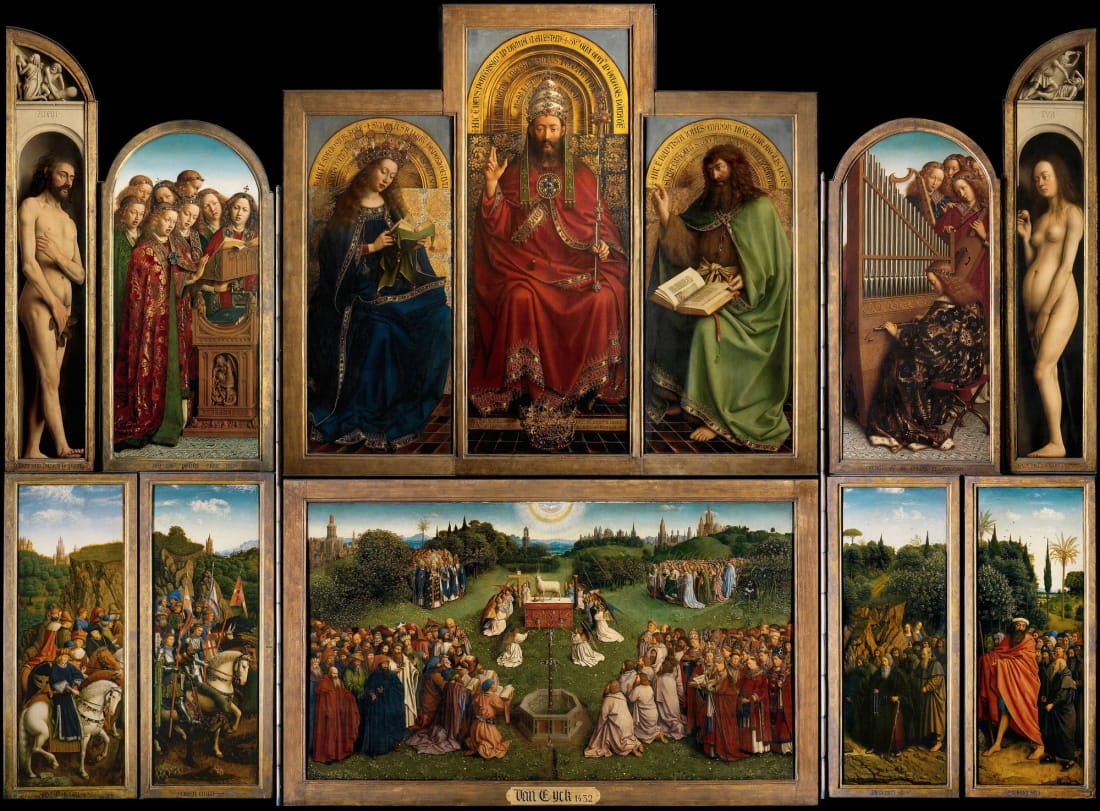
Hubert and Jan van Eyck, 1432
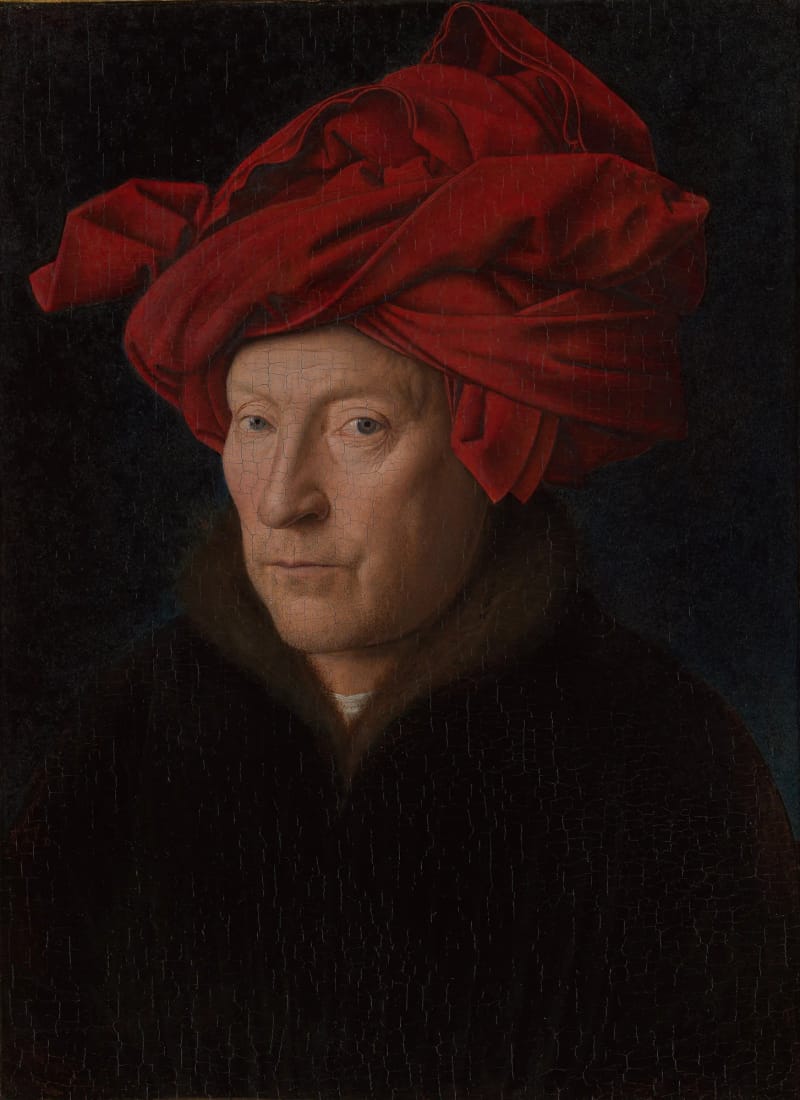
Jan van Eyck, 1433
1 How to spot it 2つの絵で見つけたら ✓ をつけよう。
| A | B | |
|---|---|---|
| Fur, jewels, glass and metal are so detailed you want a magnifying glass. | ☐ | ☐ |
| Tiny landscapes and people appear even through windows and in mirrors. | ☐ | ☐ |
| Faces are not idealized. Every wrinkle and whisker is shown. | ☐ | ☐ |
| Colors are deep and glossy, almost like glass, thanks to layers of oil paint. | ☐ | ☐ |
| Everyday things like a dog, an apple or a candle may carry a hidden meaning. | ☐ | ☐ |
2 Read 英文を読もう。
While the Renaissance was blooming in Italy, a new kind of painting was born north of the Alps, in Flanders, around today's Belgium and the Netherlands. Jan van Eyck and others mastered oil paint. By building up many thin layers, they painted the sparkle of jewels, the softness of fur and light on metal in amazing detail.
Write one thing you learned:
The Northern Renaissance
3 Art words — Match them. 英語と日本語を線で結ぼう。
- oil paint ●
- glaze ●
- engraving ●
- anamorphosis ●
- ● 油絵の具
- ● アナモルフォーシス(ゆがみ絵)
- ● グレーズ(うすい色の重ね)
- ● エングレービング(銅版画)
4 Quiz
What is reflected in the round mirror in The Arnolfini Portrait?
- A view of the sea
- A group of angels
- Nothing at all
- The room and the people in it
5 Quiz
Which animal did Dürer make a print of without ever seeing one?
- An elephant
- A rhinoceros
- A giraffe
- A lion
6 Which do you like better, A or B? Why? AとB、どちらが好き?理由も英語で。
I like ____ better because ________________________________.
Answers & Notes
1 How to spot it(訳)
- Fur, jewels, glass and metal are so detailed you want a magnifying glass.
毛皮、宝石、ガラス、金属のつやが、虫めがねで見たいほど細かい。 - Tiny landscapes and people appear even through windows and in mirrors.
窓の外や鏡の中にまで、小さな風景や人がびっしり描かれている。 - Faces are not idealized. Every wrinkle and whisker is shown.
顔をきれいに整えず、しわやひげの一本まで本人そっくり。 - Colors are deep and glossy, almost like glass, thanks to layers of oil paint.
色がつやつやと深く、ガラスのような光沢がある(油絵の具の重ね塗り)。 - Everyday things like a dog, an apple or a candle may carry a hidden meaning.
犬・りんご・ろうそくなど、ふつうの物にこっそり意味がこめられていることがある。
A:ヘントの祭壇画(神秘の子羊) B:ターバンの男の肖像(自画像?)
2 Read(訳)
イタリアでルネサンスが花開いていたころ、アルプスの北、フランドル地方(今のベルギーやオランダのあたり)でも新しい絵画が生まれていました。ファン・エイクたちは油絵の具を使いこなし、うすい色を何度も重ねることで、宝石のきらめき、毛皮のやわらかさ、金属に映る光まで、信じられないほど細かく描きました。
3 Art words
1–a(oil paint=油絵の具:色の粉を油で練った絵の具。乾くのがおそく、細かい表現やぼかしに向く。)
2–c(glaze=グレーズ(うすい色の重ね):すきとおる色をうすく何度も重ねる方法。奥から光るような色になる。)
3–d(engraving=エングレービング(銅版画):銅の板に線を彫ってインクを詰め、刷る版画。デューラーの得意技。)
4–b(anamorphosis=アナモルフォーシス(ゆがみ絵):ななめなど決まった角度から見たときだけ、正しい形に見える絵。)
4 Quiz
D 問:『アルノルフィーニ夫妻の肖像』の奥の丸い鏡には、何が映っている?
選択肢:A 海の景色/B 天使の群れ/C 何も映っていない/D 部屋と人の姿
解説:夫妻のうしろ姿と、入口に立つ2人の人物が映っています。そのひとりは画家本人だという説もあります。
5 Quiz
B 問:デューラーが本物を見ないで版画にした動物は?
選択肢:A ゾウ/B サイ/C キリン/D ライオン
解説:手紙とスケッチだけをたよりに描いたので、よろいを着たような姿になりました。
Fun Fact(訳)
「油絵を発明したのはファン・エイク」はまちがい! 長いあいだ、ファン・エイクが油絵の具を発明したといわれてきましたが、油で絵の具を練る方法はそれより前からありました。ファン・エイクのすごさは、発明ではなく、その技術をだれも追いつけないほど完璧にみがき上げたことなのです。
