

 PDF をダウンロード
Neoclassicism
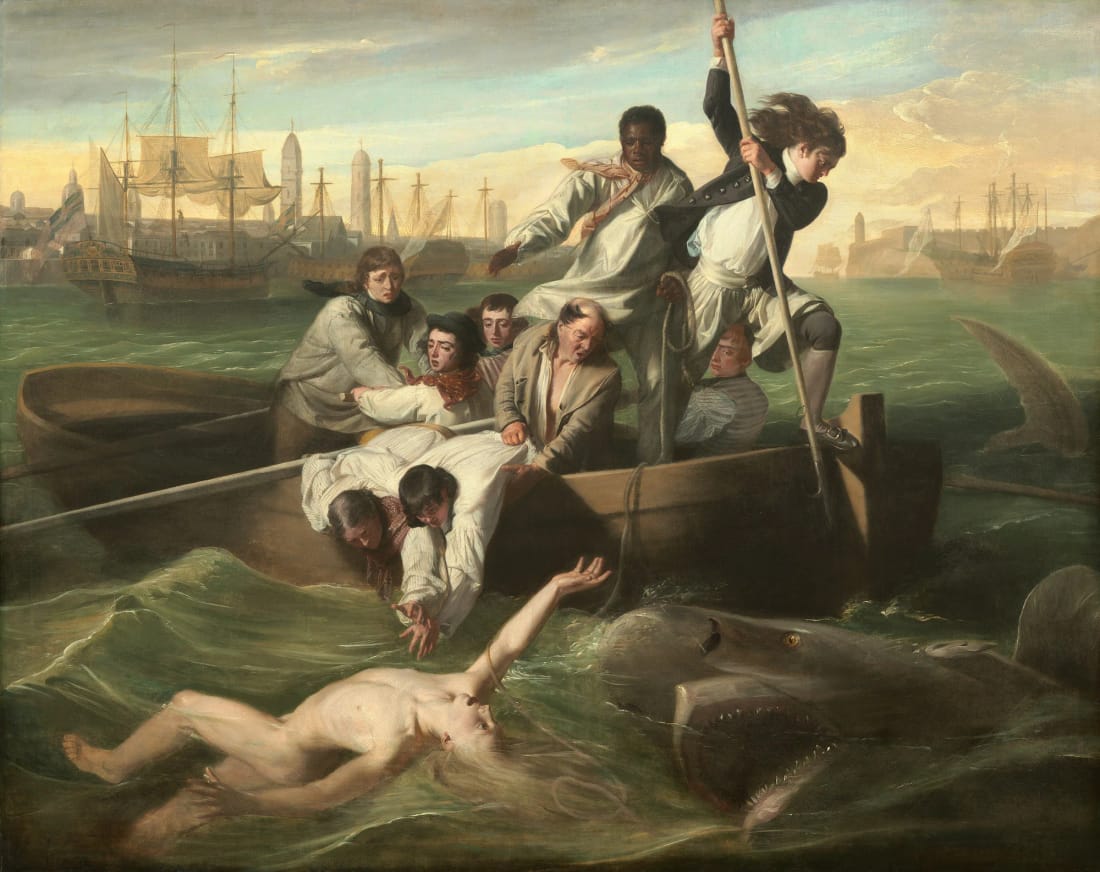
John Singleton Copley, 1778
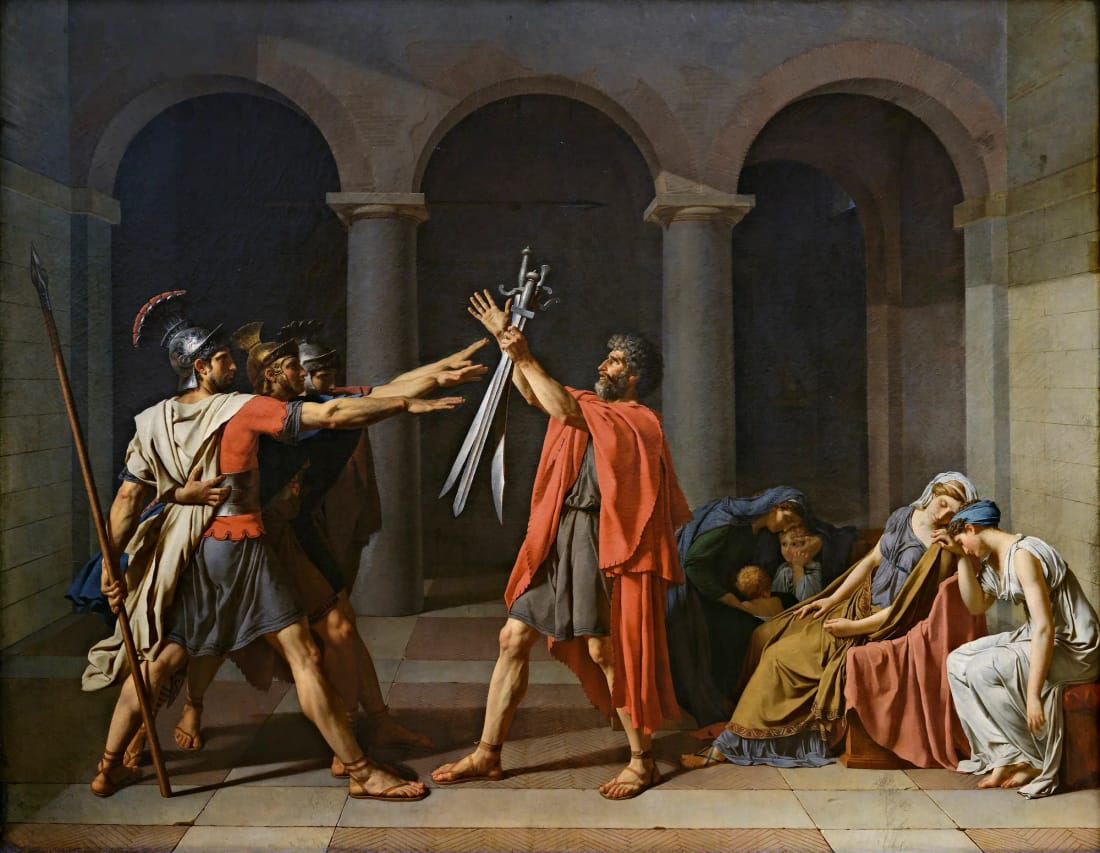
Jacques-Louis David, 1784–1785
1 How to spot it 2つの絵で見つけたら ✓ をつけよう。
| A | B | |
|---|---|---|
| Classical columns, armor or togas appear. | ☐ | ☐ |
| Sharp outlines and a smooth surface with almost no visible brushstrokes. | ☐ | ☐ |
| Figures stand in a row like actors on a stage, in carefully fixed poses. | ☐ | ☐ |
| The theme is a serious lesson, such as patriotism, courage or sacrifice. | ☐ | ☐ |
| Sculptures are white marble with calm, quiet faces. | ☐ | ☐ |
2 Read 英文を読もう。
In the mid-18th century, the ancient Roman towns of Pompeii and Herculaneum, buried by a volcano, were being dug up. Europe went crazy for the ancient world. People tired of sweet Rococo decoration wanted serious, strong and balanced beauty like that of ancient Greece and Rome. This was Neoclassicism.
Write one thing you learned:
Neoclassicism
3 Art words — Match them. 英語と日本語を線で結ぼう。
- classical ●
- history painting ●
- the Grand Tour ●
- propaganda ●
- ● グランドツアー
- ● 古典的な
- ● 歴史画
- ● プロパガンダ(宣伝)
4 Quiz
What animal is Napoleon said to have actually ridden across the Alps?
- A reindeer
- A white horse
- An elephant
- A mule
5 Quiz
Which ancient Roman town, buried by a volcano, helped start the craze for antiquity?
- Athens
- Pompeii
- Carthage
- Troy
6 Which do you like better, A or B? Why? AとB、どちらが好き?理由も英語で。
I like ____ better because ________________________________.
Answers & Notes
1 How to spot it(訳)
- Classical columns, armor or togas appear.
古代ギリシャ・ローマ風の柱、よろい、トーガ(長い布の服)が出てくる。 - Sharp outlines and a smooth surface with almost no visible brushstrokes.
輪郭がくっきりして、筆のあとがほとんど見えない、なめらかな画面。 - Figures stand in a row like actors on a stage, in carefully fixed poses.
人物が舞台の役者のように横に並び、ポーズがきっちり決まっている。 - The theme is a serious lesson, such as patriotism, courage or sacrifice.
愛国心・勇気・犠牲など、まじめな教えがテーマになっている。 - Sculptures are white marble with calm, quiet faces.
彫刻なら白い大理石で、静かで落ち着いた表情。
A:ワトソンと鮫 B:ホラティウス兄弟の誓い
2 Read(訳)
18世紀の半ば、イタリアのポンペイやヘルクラネウムで、火山の灰にうもれた古代ローマの町の発掘が進み、ヨーロッパに古代ブームが起こりました。甘くかざったロココにあきた人々は、古代ギリシャ・ローマのような、まじめで力強く、ととのった美しさを求めるようになります。これが新古典主義です。
3 Art words
1–b(classical=古典的な:古代ギリシャ・ローマの文化や美術にならった、という意味。)
2–c(history painting=歴史画:歴史・神話・聖書の場面を描く絵。当時いちばん格が高いとされた。)
3–a(the Grand Tour=グランドツアー:イギリスなどの若い貴族が、教養のためにイタリアなどを旅した習慣。)
4–d(propaganda=プロパガンダ(宣伝):政治的な考えや人物を、よく見せるために広めること。)
4 Quiz
D 問:アルプス越えのとき、ナポレオンが実際に乗っていたといわれる動物は?
選択肢:A トナカイ/B 白馬/C ゾウ/D ラバ
解説:山道に強いラバで越えたといわれます。白馬の姿は、英雄らしく見せるための演出でした。
5 Quiz
B 問:古代ブームのきっかけになった、火山の灰にうもれた古代ローマの町は?
選択肢:A アテネ/B ポンペイ/C カルタゴ/D トロイ
解説:ヴェスヴィオ火山の噴火でうもれたポンペイの発掘が、18世紀に進みました。
Fun Fact(訳)
アルプス越えのナポレオン、本当はラバに乗っていた! ダヴィッドの絵では、ナポレオンは前足を上げる白馬にまたがっていますが、実際は山道に強いラバで峠を越えたといわれます。ナポレオン本人が「荒馬の上で落ち着いた姿に」と注文し、モデルとしてポーズをとるのは断ったと伝えられます。
