

 PDF をダウンロード
Ancient Japan: Dogū and Haniwa
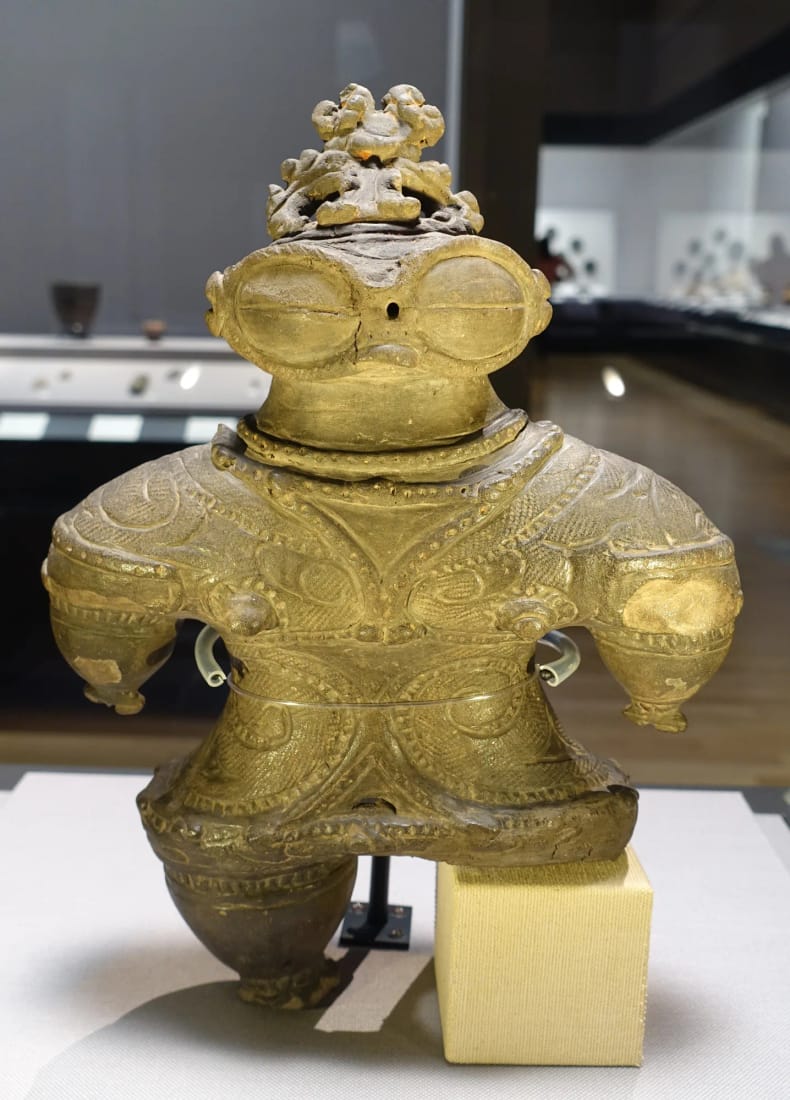
Unknown, c. 1000–400 BCE
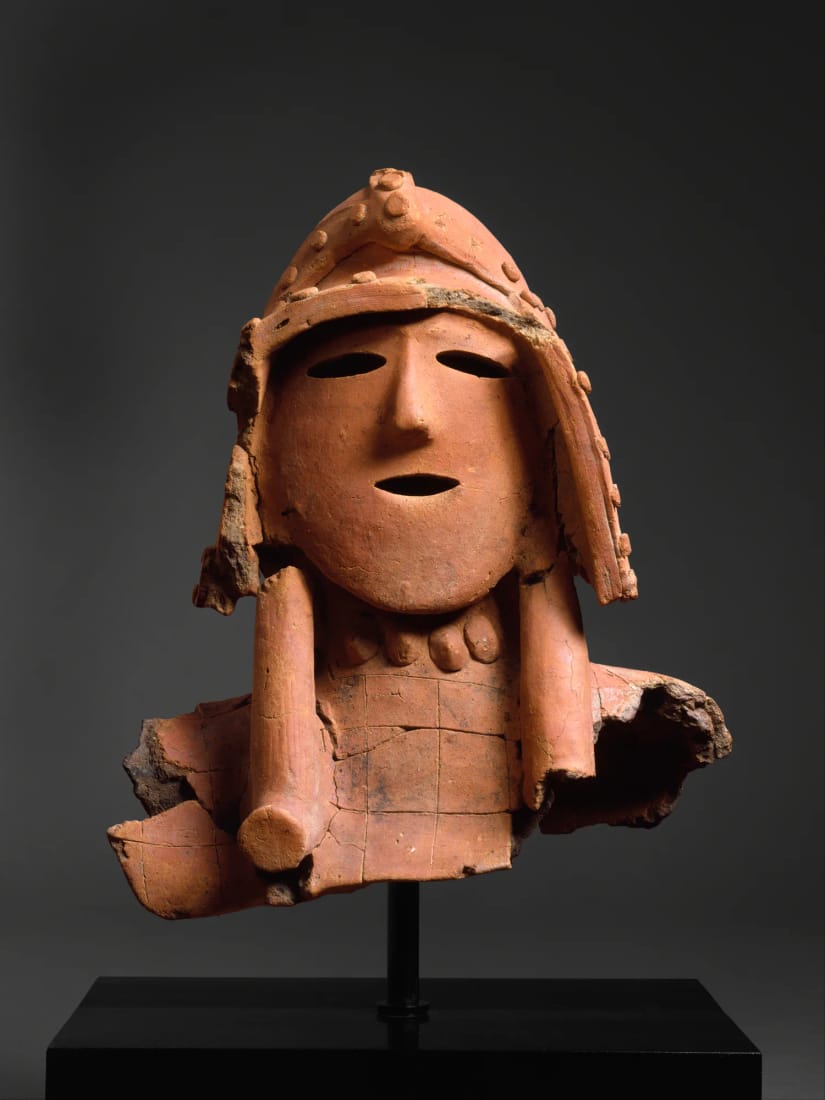
Unknown, 6th century
1 How to spot it 2つの絵で見つけたら ✓ をつけよう。
| A | B | |
|---|---|---|
| Fine lines that look like they were made by rolling a cord. | ☐ | ☐ |
| Some dogū have huge eyes shaped like goggles. | ☐ | ☐ |
| Haniwa are hollow, with simple holes for eyes and mouths. | ☐ | ☐ |
| Reddish-brown baked clay with no shiny glaze. | ☐ | ☐ |
| People and animals are made in very simple, cute shapes. | ☐ | ☐ |
2 Read 英文を読もう。
The history of Japanese art goes back more than 10,000 years to the Jōmon period. Jōmon people made pottery decorated by rolling cords over wet clay. The name Jōmon, meaning 'cord pattern', comes from these marks. Some pots, like the 'flame-style' pots with decorations like rising fire, have bold designs that go far beyond everyday use.
Write one thing you learned:
Ancient Japan: Dogū and Haniwa
3 Art words — Match them. 英語と日本語を線で結ぼう。
- clay figurine ●
- earthenware ●
- burial mound ●
- cord-marked ●
- ● 縄目模様の
- ● 古墳
- ● 土器
- ● 土偶
4 Quiz
Where does the name Jōmon come from?
- The name of the discoverer
- The place where it was first found
- Ropes for carrying pots
- Patterns made by rolling cords
5 Quiz
What are the clay figures placed on and around burial mounds called?
- Dogū
- Haniwa
- Dōtaku
- Buddhist statues
6 Which do you like better, A or B? Why? AとB、どちらが好き?理由も英語で。
I like ____ better because ________________________________.
Answers & Notes
1 How to spot it(訳)
- Fine lines that look like they were made by rolling a cord.
縄を転がしたような、細かいすじの模様がある。 - Some dogū have huge eyes shaped like goggles.
目が大きく、ゴーグルのような形をした土偶もある。 - Haniwa are hollow, with simple holes for eyes and mouths.
埴輪は中が空洞で、目と口が穴で表されている。 - Reddish-brown baked clay with no shiny glaze.
赤茶色の素焼きで、つやのある上ぐすりがかかっていない。 - People and animals are made in very simple, cute shapes.
人や動物が、とても単純でかわいらしい形にまとめられている。
A:遮光器土偶 B:埴輪 挂甲の武人頭部
2 Read(訳)
日本の美術の歴史は、1万年以上前の縄文時代にさかのぼります。縄文の人々は、粘土に縄を転がしてつけた模様のある土器を作りました。「縄文」という名前は、この模様から来ています。燃えあがる炎のような飾りをもつ「火焔型土器」のように、使いやすさをこえた大胆なデザインも生まれました。
3 Art words
1–d(clay figurine=土偶:縄文時代に作られた、人の形をした小さな焼き物。使い道はなぞ。)
2–c(earthenware=土器:低い温度で焼いた、上ぐすりのない焼き物。縄文土器は世界でも古い。)
3–b(burial mound=古墳:土を高く盛り上げて作った古代のお墓。大きなものは長さ400メートルをこえる。)
4–a(cord-marked=縄目模様の:縄を押しつけたり転がしたりしてつけた模様のこと。縄文の名前のもと。)
4 Quiz
D 問:「縄文」という名前は、何に由来する?
選択肢:A 発見した人の名前/B 最初に見つかった地名/C 土器を運ぶための縄/D 縄を転がしてつけた模様
解説:土器の表面に、縄を転がしてつけた模様があることから名づけられました。
5 Quiz
B 問:古墳の上やまわりに並べられた、素焼きの焼き物は?
選択肢:A 土偶/B 埴輪/C 銅鐸/D 仏像
解説:埴輪は古墳時代のもの。土偶はそれよりずっと前の縄文時代のものです。
Fun Fact(訳)
「縄文」のもとは英語だった!? 1877年、東京の大森貝塚を発掘したアメリカの動物学者エドワード・モースは、出てきた土器を英語で「cord marked pottery(縄目の模様の土器)」と報告しました。のちに植物学者の白井光太郎がこれを「縄紋土器」と訳し、やがて「縄文」という書き方が広まりました。
