

 PDF をダウンロード
Ancient Art
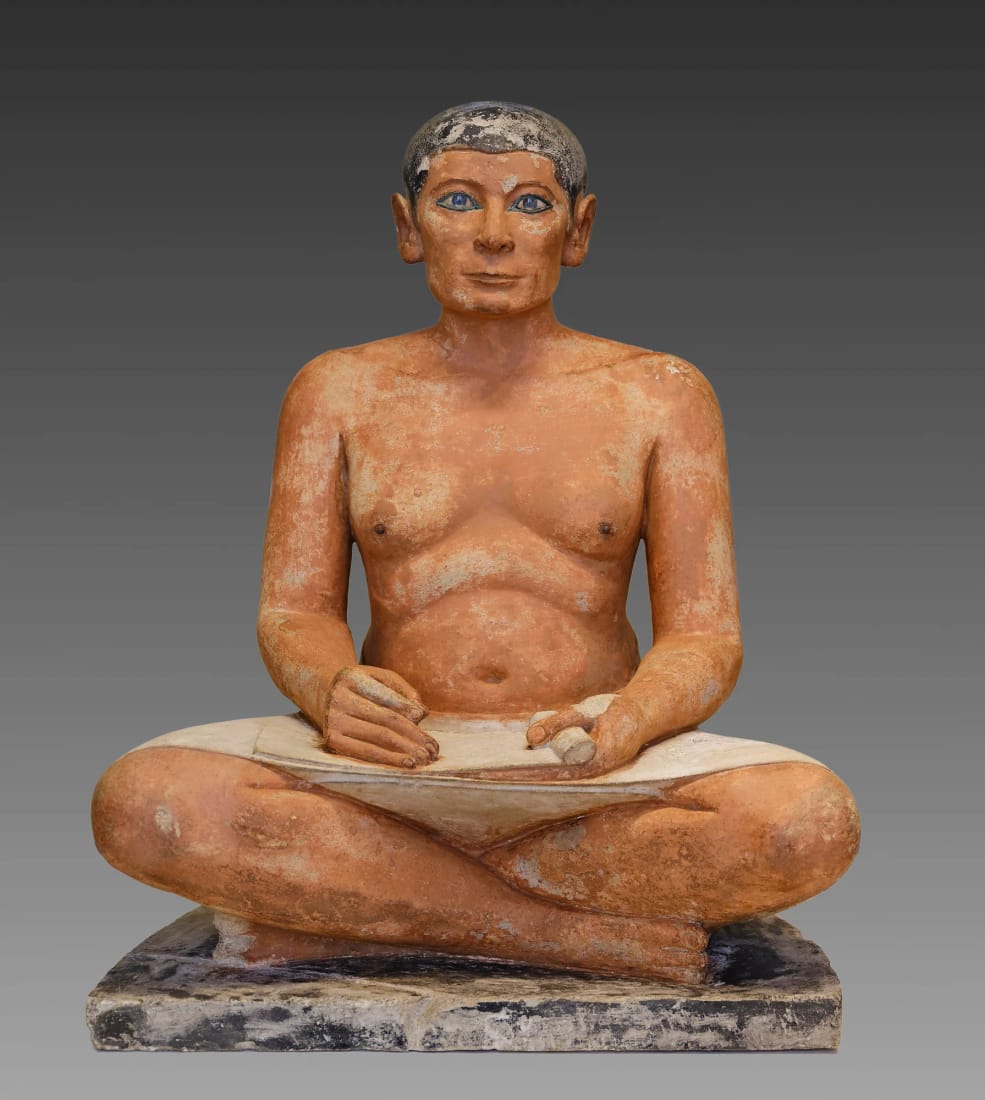
Unknown (ancient Egyptian sculptor), c. 2620–2500 BC
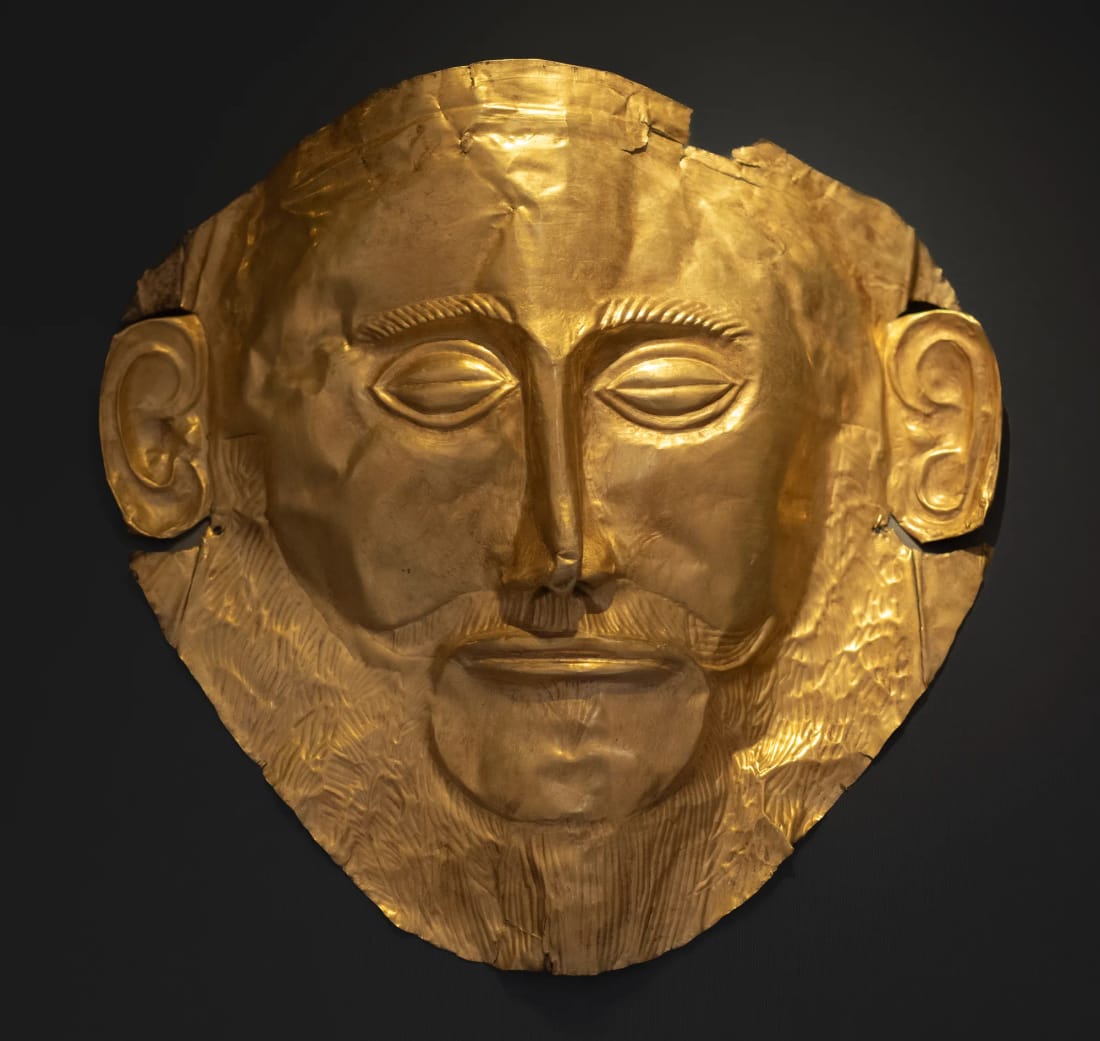
Unknown (Mycenaean goldsmith), c. 1550–1500 BC
1 How to spot it 2つの絵で見つけたら ✓ をつけよう。
| A | B | |
|---|---|---|
| A face in profile with a front-facing eye and shoulders means Egypt. | ☐ | ☐ |
| A relaxed stance with the weight on one leg and tilted hips is Greek style. | ☐ | ☐ |
| Realistic faces with wrinkles and personality are typical of Roman portraits. | ☐ | ☐ |
| Gods and kings are shown bigger than others, because size means importance. | ☐ | ☐ |
| Missing arms or noses may show that a work lay underground or under the sea for centuries. | ☐ | ☐ |
2 Read 英文を読もう。
Our journey begins around the time writing was invented. In ancient Egypt, people believed the king, or pharaoh, lived on after death. His tomb was filled with gold masks, paintings and statues to protect him. Artists followed strict rules: the face was shown from the side, but the eye and shoulders faced forward. This style stayed much the same for about 3,000 years.
Write one thing you learned:
Ancient Art
3 Art words — Match them. 英語と日本語を線で結ぼう。
- contrapposto ●
- marble ●
- hieroglyph ●
- terracotta ●
- ● ヒエログリフ(聖刻文字)
- ● 大理石
- ● コントラポスト(片足重心)
- ● テラコッタ(素焼き)
4 Quiz
Which readable script helped people decode the Rosetta Stone?
- Hieroglyphs
- Greek
- Chinese characters
- Latin
5 Quiz
Which emperor had the Terracotta Army made?
- Emperor Wu of Han
- Emperor Xuanzong of Tang
- The First Emperor of Qin
- The Yongle Emperor of Ming
6 Which do you like better, A or B? Why? AとB、どちらが好き?理由も英語で。
I like ____ better because ________________________________.
Answers & Notes
1 How to spot it(訳)
- A face in profile with a front-facing eye and shoulders means Egypt.
顔は横向きなのに、目と肩は正面を向いている不思議なポーズならエジプト。 - A relaxed stance with the weight on one leg and tilted hips is Greek style.
片足に体重をのせ、腰が少しかたむいた自然な立ち方ならギリシャ風。 - Realistic faces with wrinkles and personality are typical of Roman portraits.
しわや個性まで写した、本人そっくりの顔の像はローマの肖像に多い。 - Gods and kings are shown bigger than others, because size means importance.
神さまや王など、えらい人ほど大きく表されている(大きさ=大切さ)。 - Missing arms or noses may show that a work lay underground or under the sea for centuries.
腕や鼻が欠けていたら、長いあいだ土の中や海の底にあった証拠かもしれません。
A:書記座像 B:アガメムノンの黄金のマスク
2 Read(訳)
美術館の旅は、文字が生まれたころの世界から始まります。古代エジプトでは、王(ファラオ)は死んだあとも生き続けると信じられ、お墓には黄金のマスクや、命を守るための絵や彫刻がおさめられました。人の姿は「顔は横向き、目と肩は正面」という決まりで描かれ、その描き方は約3000年ものあいだ、大きくは変わりませんでした。
3 Art words
1–c(contrapposto=コントラポスト(片足重心):片足に体重をかけ、腰と肩がかたむく自然な立ち方。ギリシャの彫刻家が見つけた。)
2–b(marble=大理石:白くなめらかな石。ギリシャやローマの彫刻家が好んで使った。)
3–a(hieroglyph=ヒエログリフ(聖刻文字):古代エジプトの絵のような文字。鳥や目などの形が音や意味を表す。)
4–d(terracotta=テラコッタ(素焼き):粘土を焼いて作ったもの。イタリア語で「焼いた土」。兵馬俑もこれ。)
4 Quiz
B 問:ロゼッタ・ストーンの解読で、手がかりになった読める文字は?
選択肢:A ヒエログリフ/B ギリシャ文字/C 漢字/D ラテン文字
解説:同じ内容がギリシャ語でも書かれていたので、それを手がかりにヒエログリフが読めるようになりました。
5 Quiz
C 問:兵馬俑を作らせた皇帝は?
選択肢:A 漢の武帝/B 唐の玄宗/C 秦の始皇帝/D 明の永楽帝
解説:紀元前3世紀に中国を初めて統一した秦の始皇帝のお墓を守るために作られました。
Fun Fact(訳)
白い彫刻は、本当はカラフルだった!? ギリシャやローマの大理石像の多くは、もともと肌や服、目に色が塗られていました。長い年月のあいだに絵の具がはがれ、白い姿だけが残ったのです。科学調査で、表面にわずかに残った絵の具のあとが見つかっています。
