New Year's Day · Worksheet 1
Why Does the Year Start in Winter?
Read the story. 英文を読もう。
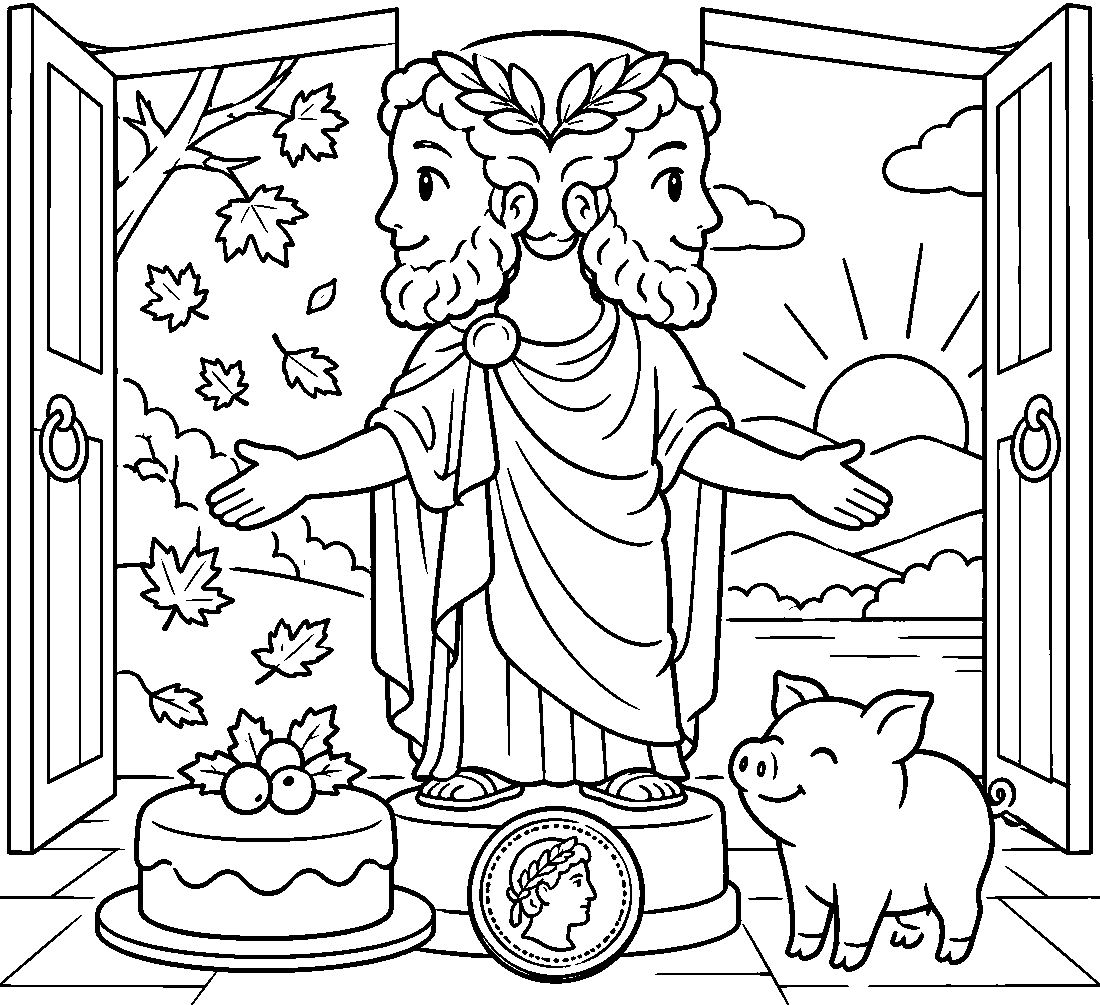
1Why does the new year start on January 1, in the middle of winter? For a long time, it did not. In ancient Rome, the year started in March, when spring came. That is why September means "seventh month" in Latin, but today it is the ninth month.
2In 153 BC, there was a war in Spain. Rome needed its new consuls, the top leaders, to start work early. So they started their year on January 1. Later, Julius Caesar made a new calendar, and January 1 became New Year's Day. The name January comes from Janus, a Roman god with two faces. One face looks back at the old year, and the other looks forward.
3But the story did not end there. In the Middle Ages, many places in Europe started the year on other days, like Christmas or March 25. England moved its New Year to January 1 only in 1752. Because of this change, the year 1751 in England was very short. It had only 282 days.
4Today, people spend January 1 in many different ways. In California, crowds watch the Rose Parade, and every float is covered with flowers and seeds. In Vienna, a famous orchestra plays happy waltzes, and the audience claps along to the last march. In the Netherlands, thousands of people run into the cold North Sea.
5Food is important, too. In the southern United States, people eat black-eyed peas, because each pea looks like a coin. In Haiti, families eat soup joumou, a pumpkin soup. Long ago, enslaved people there were not allowed to eat it. On January 1, 1804, Haiti became free, and the soup became a symbol of freedom. So for many Haitians, the first meal of the year tastes like freedom.
- calendar 暦、カレンダー
- ancient 古代の、大昔の
- consul (古代ローマの)執政官
- god 神
- forward 前へ、前方に
- Middle Ages 中世
- float (パレードの)山車
- orchestra オーケストラ、管弦楽団
- audience 観客、聴衆
- clap along (音楽に)合わせて手拍子する
- enslaved 奴隷にされた
- symbol しるし、象徴