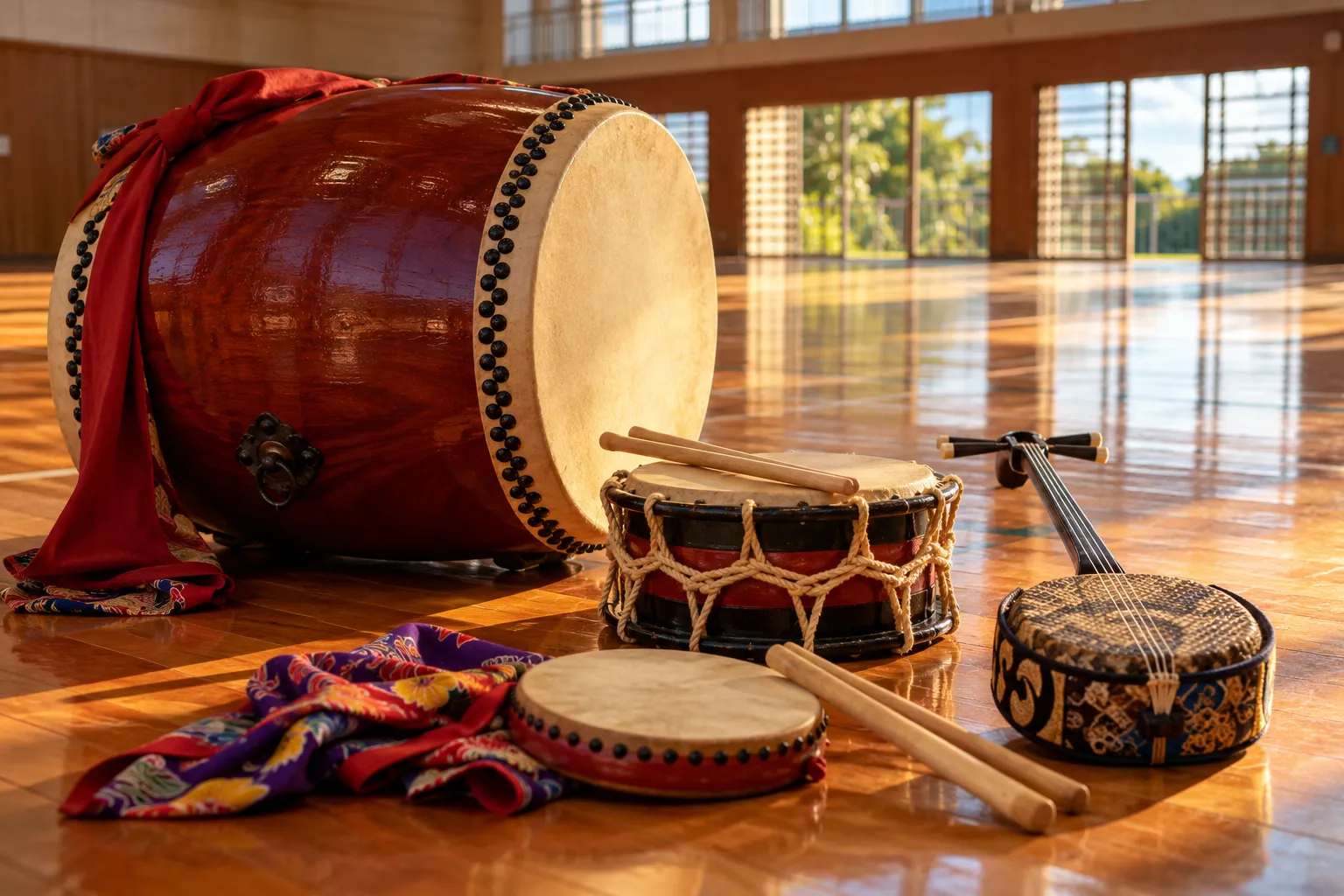
🥁 エイサー体験(本部町民体育館)
Eisa Dance Experience (Motobu Town Gymnasium)太鼓を打って、沖縄の夏の祈りを体で知る
Beat the drum and feel Okinawa's summer prayer
エイサーは、旧暦のお盆(旧盆)に若者たちが太鼓を打ち、歌い、踊りながら地域を回る沖縄の伝統芸能。先祖の霊を送り、地域の幸せを願う。2日目の夕方(16:20〜17:30)、本部町民体育館で太鼓と踊りを体験する。Eisa is a traditional performing art of Okinawa. During Obon in the old calendar, young people walk through their town, beating drums, singing and dancing to send off the spirits of their ancestors. On the evening of Day 2, from 4:20 to 5:30, we try Eisa drums and dance at the Motobu Town Gymnasium.
3種類の太鼓
直径約50cmの大太鼓(ウフデークー)、約30cmの締太鼓(シメデークー)、約20cmの小さなパーランクー。大太鼓はリズムをつくって全体を引っぱり、締太鼓はそろった動きで見せ場をつくる。There are three kinds of drums: the big drum, about 50 centimeters wide, the shime drum, about 30 centimeters, and the small paranku, about 20 centimeters. The big drum leads the rhythm for everyone.
地謡(じかた)と三線
三線をひきながら歌う人たちが地謡。踊り手のテンポをリードする、エイサーの「指揮者」のような役。The jikata are singers who play the sanshin. They lead the tempo of the dancers, like conductors.
手踊り
太鼓を持たずに手の動きで踊る。男性の踊りはイキガモーイ、女性の踊りはイナグモーイと呼ばれ、女性はかすりの着物にたすきをかけて踊ることが多い。Some dancers do not use drums and dance with their hands. Women often wear a kasuri kimono with a sash across the body.
旗頭(はたがしら)
列の先頭で高さ3〜4mの大きな旗を、音楽に合わせてふる役。青年会どうしが出会うと、旗をふる速さを競う「ガーエー」をすることもある。The hatagashira carries a big flag, three to four meters tall, at the front of the line. When two groups meet, they sometimes compete to wave their flags faster.
エイサーの起源には「念仏踊り」説がある。1603年から1606年ごろ、浄土宗の僧・袋中上人(たいちゅうしょうにん)が琉球に来て、念仏(仏の名前をとなえること)をしながら踊る念仏踊りを伝え、それがエイサーに発展したと言われている。One idea is that Eisa came from a Buddhist dance. Around 1603 to 1606, a monk named Taichu came to Ryukyu and taught people to dance while chanting prayers. It is said this dance grew into Eisa.
「エイサー」という名前は、念仏歌の間に入るはやしことば「エイサー、エイサー、ヒヤルガエイサー」から来たという説が有力。古い歌集『おもろさうし』の言葉が元という説もあるが、どちらもはっきりしていない。The name Eisa may come from a chant in the old songs: Eisa, Eisa, Hiyaruga Eisa. Another idea says it comes from an old book of songs, but nobody knows for sure.
エイサーは旧盆の最終日、先祖を送る「ウークイ」の夜に行うのが本来の形。最近はお迎えの「ウンケー」から何日か続けて踊る地域も多い。家々を回る行進は「道ジュネー」と呼ばれ、もらったご祝儀は青年会の活動資金になる。Eisa is traditionally danced on the last night of Obon, when families send off the spirits. The parade from house to house is called michijune, and the money people give helps the youth groups.
沖縄でいちばん大きなエイサーの祭り「沖縄全島エイサーまつり」は、1956年に旧コザ市(今の沖縄市)で開かれた「全島エイサーコンクール」が始まり。2026年は9月4日〜6日に第71回が開かれた。The biggest Eisa festival in Okinawa began in 1956 as a contest in Koza City, now Okinawa City. In 2026, the 71st festival was held from September 4 to 6.
沖縄市は2007年6月13日に「エイサーのまち」宣言をした。中部地域は太鼓エイサーがいちばんさかんな地域とされている。Okinawa City declared itself the town of Eisa on June 13, 2007. Central Okinawa is known as the area where drum Eisa is most popular.
那覇の国際通りでは1995年から「一万人のエイサー踊り隊」が開かれ、2026年は10月18日(日)に第32回が行われた。3日目に歩く国際通りで、ほんの12日前にたくさんの人がエイサーを踊っていたことになる。Since 1995, a big Eisa event has been held on Kokusai Street in Naha. The 32nd event was on October 18, 2026, only twelve days before we walk there.
エイサーにはいくつかのスタイルがある。今いちばん多いのは大太鼓と締太鼓を中心にした「太鼓エイサー」。本島北部のいくつかの地域には手踊りだけのエイサーが残り、こちらがもっとも古い形かもしれないと言われている。There are several styles of Eisa. The most common today is drum Eisa. In some places in the north of the island, people dance with only their hands, and this may be the oldest style.
列のまわりで観客を笑わせたり、列を整えたりする道化役がいる。「サナジャー」と呼ばれ、ベテランが受け持つことが多い。「チョンダラー(京太郎)」とも呼ばれるが、京太郎は本来、念仏に由来する顔を白くぬった道化役のことで、厳密には少し意味がちがう。There is a clown role that makes people laugh and keeps the line in order. It is called sanaja, and usually an experienced dancer plays it. People also call it chondara, but chondara first meant a clown with a white painted face that came from the Buddhist chants.
地域によっては、男性はまず手踊り(イキガモーイ)を身につけないと太鼓を持たせてもらえない。太鼓は「上手になったらもらえる役」なのだ。In some groups, young men must learn the hand dance first before they are allowed to hold a drum. Holding a drum is an honor.
エイサーの始まりはもっと古いという説もある。1479年の朝鮮の記録『李朝実録』に那覇のようすが書かれていて、そのころから500年以上続いていると言う人もいる。ただし、はっきりした証拠はない。Some people say Eisa is even older, more than 500 years old, based on a Korean record from 1479 about Naha. But there is no clear proof.
📖 Let's Dance Eisa! A2
文をタップすると、その文だけ聞けます。
Eisa is a traditional dance of Okinawa. Young people dance it during Obon in summer. They walk through their town with drums and send off the spirits of their ancestors.
Some people say Eisa came from a Buddhist dance. A monk named Taichu came to Ryukyu around 1603 and taught people to dance while they prayed. There are three kinds of drums. The big drum is about 50 centimeters wide, and the small paranku is about 20 centimeters wide.
Singers play the sanshin and lead the dancers. The biggest Eisa festival started in Okinawa City in 1956, and it is still held every summer. Today it is our turn. Hold the drum, listen to the music, and move with the beat!
🔤 単語 Words
🗣️ ここで使える英語 Useful Phrases
- Could you show me that move again?その動きをもう一度見せてもらえますか。💡 踊りの動きが分からなかったとき
- Is this the right way to hold the drum?太鼓の持ち方はこれで合っていますか。💡 持ち方を確かめるとき
- That was so much fun. Thank you for teaching us!とても楽しかったです。教えてくださってありがとうございました!💡 体験の最後にお礼を言うとき
✅ 読めたかな?クイズ
動きやすい服で、体育館シューズなどの指示を確認しよう。太鼓を打つ前に、指導の人の手の高さや足のふみ出し方をよく見てまねるのがコツ。
汗をかくので水分補給を忘れずに。バチや太鼓は借り物なので、ていねいにあつかう。
はやしことば(かけ声)は恥ずかしがらずに大きな声で。声をそろえると太鼓のリズムもそろいやすい。
- 場所
- 本部町 (Motobu Town)
- 住所
- 沖縄県国頭郡本部町
- 公式
- www.town.motobu.okinawa.jp/doc/2023112200067
- 地図
- Google マップで開く