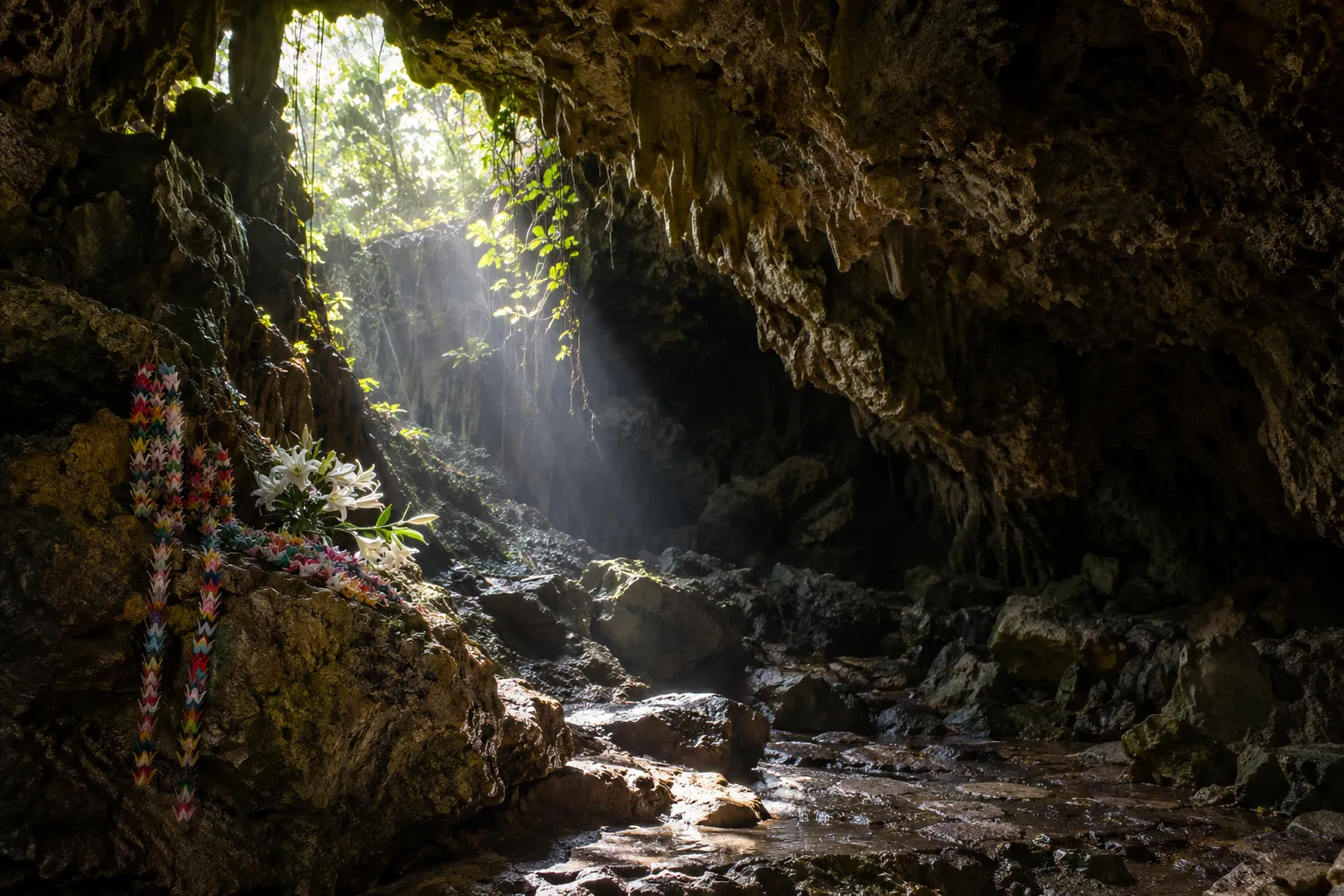
🕯️ ガマとは? 沖縄戦と自然の洞くつ
What Is a Gama? Caves and the Battle of Okinawa1日目、クラスごとに一つのガマ(壕)に入ります。真っ暗で、ひんやりして、静かな場所。80年以上前、そこには何百人もの人がいました。入る前に、ガマのことを知っておきましょう。On Day 1, each class will go into one gama, or cave. It is dark, cool and quiet. More than 80 years ago, hundreds of people were inside. Let's learn about gama before we go in.
🪨 ガマってなに?
What Is a Gama?沖縄のことばで「洞くつ」
ガマは、沖縄のことばで自然にできた洞くつ(どうくつ)のことです。人が掘った穴は「壕(ごう)」と呼びますが、自然のガマを戦争中に壕として使った所も多く、「〇〇壕」と「〇〇ガマ」の両方の名前で呼ばれる場所があります。In Okinawan, a gama is a natural cave. A hole dug by people is called a go. Many natural caves were used as shelters in the war, so some places have both names.
サンゴ礁がとけてできた
沖縄本島の南部は、大昔のサンゴ礁が持ち上がってできた「琉球石灰岩(りゅうきゅうせっかいがん)」という石でできています。石灰岩は雨水にとけやすいため、長い時間をかけて地下に大小たくさんの洞くつができました。だから南部にはガマがとても多いのです。Southern Okinawa is made of limestone from old coral reefs. Rainwater slowly melts limestone, so over a very long time many caves formed underground.
戦争の前は、お墓や祈りの場所
戦争の前、ガマは村の人にとって、お墓や拝所(うがんじゅ:祈りの場所)、水をくむ場所でもありました。神聖で、ふだんはあまり入らない場所だったのです。Before the war, some caves were used as graves, places of prayer, or places to get water. They were special places that people did not usually enter.
🕯️ 沖縄戦のとき、ガマで何があったか
What Happened in the Caves in 1945住民の避難場所
1945年3月末にアメリカ軍の攻撃が始まると、家を失った住民は、空からの爆撃や海からの艦砲射撃をさけるためガマに逃げこみました。真っ暗で、湿っていて、何週間も外に出られないこともありました。When the American attacks began in late March 1945, people ran into caves to escape bombs and shells. Some stayed in the dark, wet caves for weeks.
日本軍の陣地・病院に
日本軍もガマを陣地や司令部、野戦病院として使いました。ひめゆり学徒や白梅学徒など、10代の女子生徒が看護要員として動員されたのも、こうしたガマや壕の病院です。The Japanese army also used caves as bases and field hospitals. Teenage schoolgirls, such as the Himeyuri and Shiraume students, worked as nurses in these cave hospitals.
軍と住民が同じガマに
戦いが南部に移ると、軍と住民が同じガマに入りました。住民が軍によってガマから追い出されたり、泣き声で見つかるのをおそれて幼い子どもの命がうばわれたりしたという証言が、今回見学するガマにも残っています。When the fighting moved south, soldiers and local people stayed in the same caves. Survivors say that some people were forced out of caves by soldiers, and that even small children lost their lives.
動けない患者への命令
陸軍病院の壕が閉じられるとき、歩けない重症の患者には青酸カリ(毒薬)が配られたという証言があります。ヌヌマチガマでは約500人がそうして亡くなったと言われています。When cave hospitals were closed, survivors say that patients who could not walk were given poison. About 500 people are said to have died this way at Nunumachi Gama.
今回見学するガマ(クラスによってちがいます)
The Caves We Visitアンディラガマ(真壁千人壕)
Andira Gama Cave (Makabe)住民の避難場所が、やがて軍と住民の混在する場所に
ヌヌマチガマ(第24師団第一野戦病院 新城分院)
Nunumachi Gama Cave (Former Field Hospital Branch)千人をこえる負傷兵が運びこまれた野戦病院のガマ
師範健児之塔のガマ(摩文仁)
Cave behind the Okinawa Normal School Memorial (Mabuni)先生をめざした男子学徒たちが最後にいた丘のガマ
山城本部壕(沖縄陸軍病院本部壕跡・サキアブ)
Yamashiro Headquarters Cave (Former Okinawa Army Hospital Headquarters)ひめゆり学徒もいた、陸軍病院の最後の本部
⚖️ 二つのガマ ― チビチリガマとシムクガマ
Two Caves: Chibichiri and Shimukuチビチリガマ(読谷村)
アメリカ軍が上陸した翌日の1945年4月2日、読谷村波平(よみたんそん・はんざ)のチビチリガマでは、「捕まったらひどい目にあう」と信じこまされていた住民が、家族どうしで命を絶つ「集団自決(強制集団死)」が起こりました。避難していた約140人のうち83人が亡くなり、その半分以上は子どもだったと伝えられています。On April 2, 1945, the day after the Americans landed, 83 of about 140 people hiding in Chibichiri Gama in Yomitan died in a mass suicide. They had been taught that the enemy would do terrible things to them. More than half of them are said to have been children.
シムクガマ(読谷村)― 外国を知る2人が約1000人を救った
すぐ近くのシムクガマには約1000人の住民が避難していました。ハワイに移民して帰ってきた比嘉平治(ひが・へいじ)さんと比嘉平三(ひが・へいぞう)さんが、竹やりで突撃しようとした少年たちを止めてアメリカ兵と話し、「アメリカーガー、チュォクルサンドー(アメリカ人は人を殺さないよ)」とみんなを必死に説得してガマを出たため、ほとんどの人が助かりました。About 1,000 people were hiding in Shimuku Gama, very close by. Two men who had lived in Hawaii stopped some boys from attacking, talked with the American soldiers, and told everyone, 'Americans will not kill people.' Almost everyone came out alive.
外国を知る・ことばを学ぶ意味
2つのガマの運命を分けたのは、相手(外国)について正しく知っていたかどうかでした。外国のことばや文化を学ぶことは「相手を知ること」であり、ときに命を守る力にもなります。今回見学するガマではありませんが、ぜひ覚えておきたい話です。What made the difference was knowing the truth about other people. Learning other languages and cultures helps us understand others, and it can even save lives.
🔦 ガマに入るときのやくそく(しおりより)
Rules in the Caveここはお墓と同じ
戦争で多くの方が亡くなった場所です。くれぐれも失礼のないように。入る前と出たあとに手を合わせましょう。Many people died here. Be respectful, and put your hands together before you go in and after you come out.
ガイドと先生の誘導に絶対にしたがう
中は暗く、せまく、坂もあります。特に雨のときはすべるので足もとに注意。ふざけて大声を出さず、ガイドさんの話の間は私語をつつしみます。It is dark, narrow and steep inside, and slippery after rain. Follow your guide, don't shout, and listen quietly.
スマートフォンは持ちこまない
スマートフォンは貴重品と一緒にバスの中に置いていきます。写真をとる場所ではありません。Leave your smartphone on the bus. This is not a place for photos.
軍手・懐中電灯・よごれてもいい服とくつ
クラスによっては軍手と懐中電灯を持っていきます。中の物(石や遺骨・遺品)には絶対に手をふれず、何も持ち帰りません。Some classes bring work gloves and a flashlight. Never touch or take anything inside the cave.
💭 見学のあとに考えたいこと
Questions to Think About暗やみの中で、何を感じた?
ガイドさんによっては、明かりを消して、当時の暗やみを体験させてくれることがあります。何週間もこの中にいた人は、何を考えていたでしょうか。Some guides turn off the lights for a moment. What do you think people felt when they stayed in the dark for weeks?
軍隊は住民を守ったのか?
住民を追い出したガマ、住民と兵士が助け合ったガマ、正しい情報で多くの人が助かったガマ。同じ戦争の中で、何が人の生死を分けたのかを考えてみましょう。Some caves saved people and some did not. What made the difference between life and death?
命どぅ宝(ぬちどぅたから)
「命こそ宝」という意味の沖縄のことばです。ガマで感じたことを、自分のことばで、日本語でも英語でも書き残してみましょう。Nuchi du takara means 'life is the greatest treasure.' Write down what you felt in the cave, in Japanese or in English.
英語で読む「ガマの中で」
Read in English📖 Inside a Gama A2
文をタップすると、その文だけ聞けます。
In Okinawa, a natural cave is called a gama. Southern Okinawa is made of old coral, so there are many caves under the ground. Before the war, some caves were graves or places to pray.
In 1945, the Battle of Okinawa began. Many families ran into the caves to stay safe from bombs. Soldiers also used the caves as bases and hospitals. It was dark, wet and crowded, and there was not enough food or water. Many people died inside the caves.
In one cave, about one thousand people were saved. Two men who had lived in Hawaii talked with the American soldiers and told everyone to come out. When you go into a gama, please be quiet and think about the people who were there. Life is the greatest treasure.
🔤 単語
🗣️ 感じたことを英語で
- It was so dark that I couldn't see my hand.暗すぎて自分の手も見えませんでした。💡 ガマの感想を言うとき
- I can't imagine staying there for weeks.そこに何週間もいるなんて想像できません。💡 感じたことを伝えるとき
- We must never forget what happened here.ここで起きたことを決して忘れてはいけません。💡 英語日記・感想文に
- Thank you for telling us your story.お話をしてくださって、ありがとうございました。💡 ガイドさん・語り部さんへのお礼