🌀 台風と沖縄の家 Typhoons and Okinawan Houses
台風に負けない! 沖縄の家にかくれた知恵
📖 Typhoons and Okinawan Houses in 30 Seconds A2
文をタップすると、その文だけ聞けます。
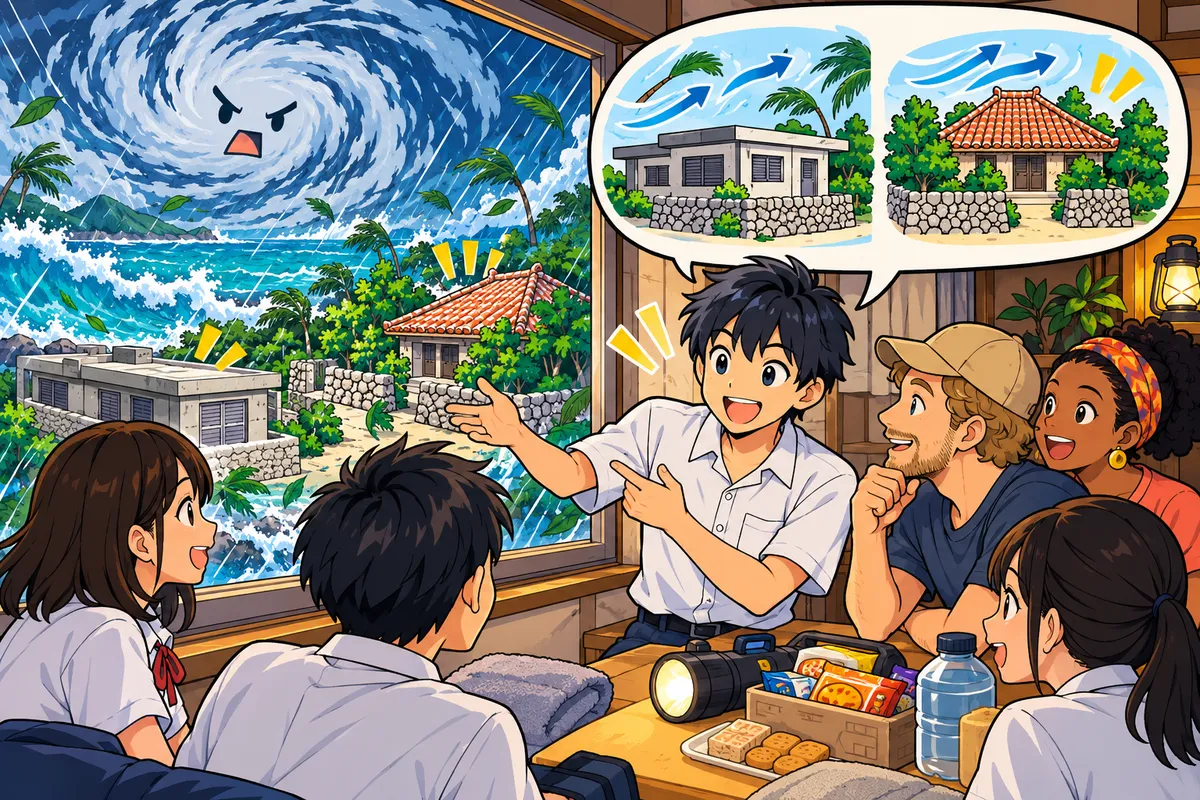
Many typhoons come close to Okinawa every year. So many houses in Okinawa are made of concrete. Traditional houses have stone walls and trees around them to block the wind.
📖 Typhoons and Okinawan Houses B1
文をタップすると、その文だけ聞けます。
On average, about eight typhoons come close to Okinawa and Amami every year. That is why houses in Okinawa are built to be strong against wind. Because of typhoons and termites, many houses came to be built with concrete. Traditional houses have red tile roofs. The tiles are fixed with white plaster. The houses are also surrounded by stone walls made of limestone. In some villages, like Bise in Motobu, people planted fukugi trees around their houses to block the wind. You may also see white water tanks on roofs. In the past, Okinawa often had water shortages, so people stored water in these tanks. From 1981 to 1982, water use was limited for 326 days.
🔤 キーワード Key Words
🧩 この説明で使える「型」
protect A from B で「AをBから守る」。沖縄の家の工夫や、シーサー・石敢當の説明にも使えます。
- Stone walls protect houses from strong winds.石垣は強い風から家を守ります。
- Fukugi trees protect the village from typhoons.フクギの木は台風から集落を守ります。
🙋 観光客にこう聞かれたら?
友だちと観光客役・自分役に分かれて練習しよう。
💡 先生の「へえー!」豆知識
沖縄の伝統的な家には「雨端(あまはじ)」と呼ばれる長いひさしがあります。雨や強い日差しをさえぎり、部屋の中を風が通りぬけるように工夫されています。Traditional Okinawan houses have long roofs over the edge of the house called amahaji. They block rain and strong sunlight, and let the wind pass through the rooms.