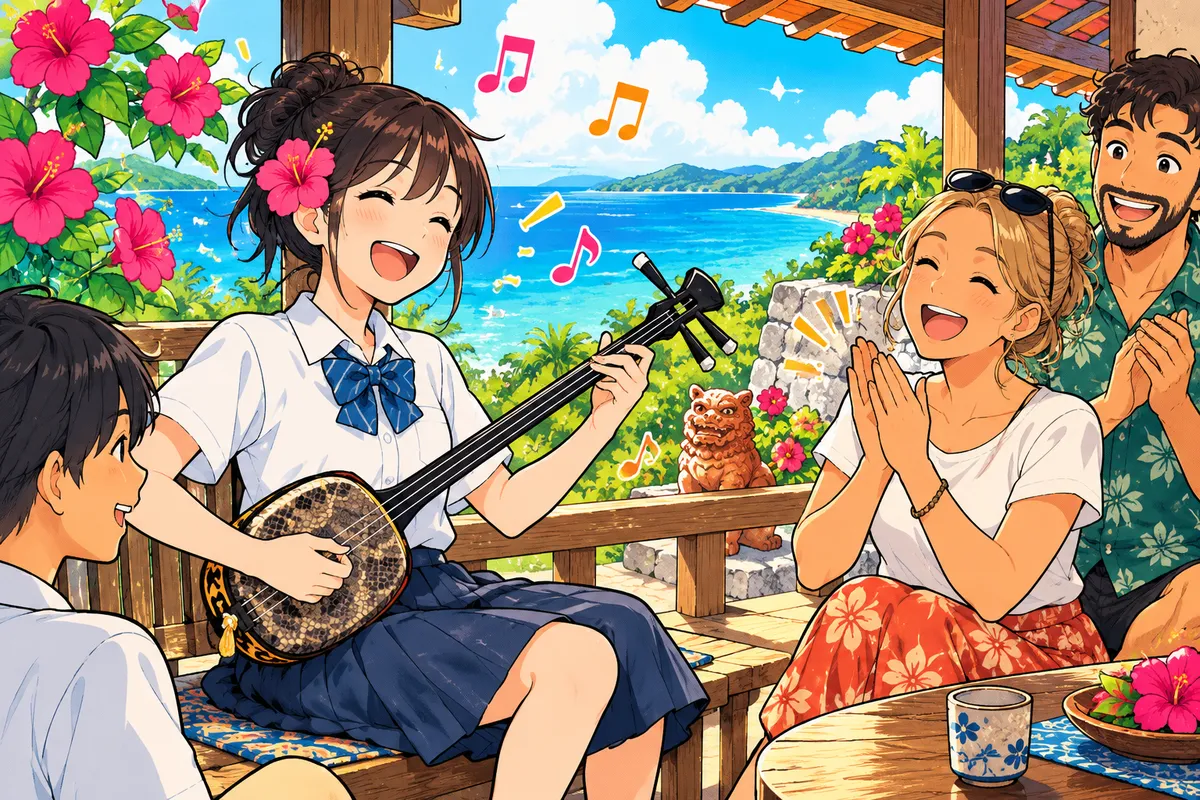
🪕 三線(さんしん) Sanshin
ヘビの皮を張った、沖縄の音のふるさと
📖 Sanshin in 30 Seconds A2
文をタップすると、その文だけ聞けます。
This is a sanshin. It is a traditional instrument of Okinawa. It has three strings, and its body is covered with snake skin. You can hear it at festivals, parties and even shops on Kokusai Street.
📖 Sanshin B1
文をタップすると、その文だけ聞けます。
The sanshin is a string instrument with three strings. San means three. It is said that it came from the Fujian area of China about six hundred years ago. Its body is traditionally covered with python skin. Later, the sanshin went to the mainland of Japan, and it became one of the roots of the shamisen. On the mainland, snake skin was hard to get, so people used cat or dog skin instead. Sanshin music is written in a special way called kunkunshi. It uses Chinese characters, not musical notes. After the war, people had very little, so they made sanshin from empty cans. These are called kankara sanshin. March 4 is Sanshin Day, because three and four sound like san and shin in Japanese. On that day, people all over Okinawa play the same song together at set times.
🔤 キーワード Key Words
🧩 この説明で使える「型」
現在完了(継続)。昔から今まで続いていることを表します。for のあとに期間を入れます。
- The sanshin has been loved in Okinawa for hundreds of years.三線は何百年もの間、沖縄で愛されてきました。
- My grandfather has played the sanshin for fifty years.祖父は50年間、三線をひいています。
🙋 観光客にこう聞かれたら?
友だちと観光客役・自分役に分かれて練習しよう。
💡 先生の「へえー!」豆知識
戦後の物がない時代、人々は空き缶を胴にした「カンカラ三線」を作りました。ほかにも、パラシュートの布やセメント袋などを材料にした三線もあったそうです。After the war, when there was almost nothing, people made kankara sanshin with empty cans. Some people even used parachute cloth or cement bags.