🥁 エイサー Eisa
太鼓がおなかにひびく、ご先祖さまの送りおどり
📖 Eisa in 30 Seconds A2
文をタップすると、その文だけ聞けます。
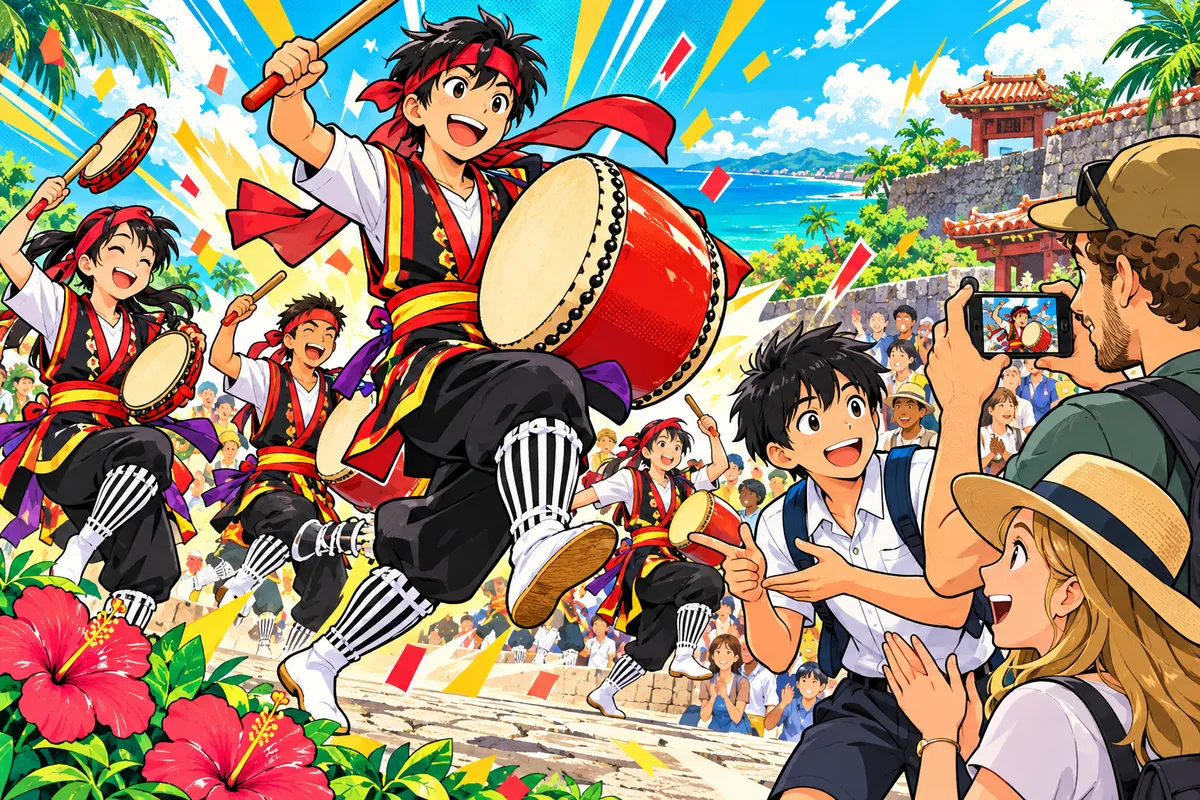
Eisa is a traditional dance of Okinawa. People dance it in summer to welcome and send off the spirits of their ancestors. Dancers play big drums and move to the sound of the sanshin.
📖 Eisa B1
文をタップすると、その文だけ聞けます。
Eisa is a dance for the Bon season in summer. In Okinawa, Bon follows the old calendar, so the dates change every year. On the last night of Bon, young people dance through their town to send the spirits of their ancestors back. It is said that eisa started from a Buddhist dance called nenbutsu odori about four hundred years ago. Men play big drums called odaiko and smaller drums called shimedaiko. In many groups, women dance with their hands and do not use drums. In 1956, an eisa contest started in Koza City, now called Okinawa City. This contest made eisa more powerful and exciting, and it became the Okinawa Zento Eisa Matsuri. Since 1995, a big eisa event has also been held on Kokusai Street every August.
🔤 キーワード Key Words
🧩 この説明で使える「型」
目的を表す to+動詞の原形。「何のために」を説明するときに使います。
- People dance eisa to send off the spirits of their ancestors.人々はご先祖さまの霊を送り出すためにエイサーをおどります。
- Many people come to Okinawa City to watch the festival.多くの人がそのまつりを見るために沖縄市に来ます。
🙋 観光客にこう聞かれたら?
友だちと観光客役・自分役に分かれて練習しよう。
💡 先生の「へえー!」豆知識
1400年代の終わりごろ、沖縄に流れ着いた朝鮮の人たちが「お盆の時期に、仮面をつけた人々が笛や太鼓を鳴らして王宮へ向かっていた」と書き残しています。こうした古い習わしも、エイサーのルーツの一つと考えられています。In the late 1400s, people from Korea who drifted to Okinawa wrote that during Bon, people in masks played flutes and drums on their way to the palace. Old customs like this are thought to be one of the roots of eisa.