雑節
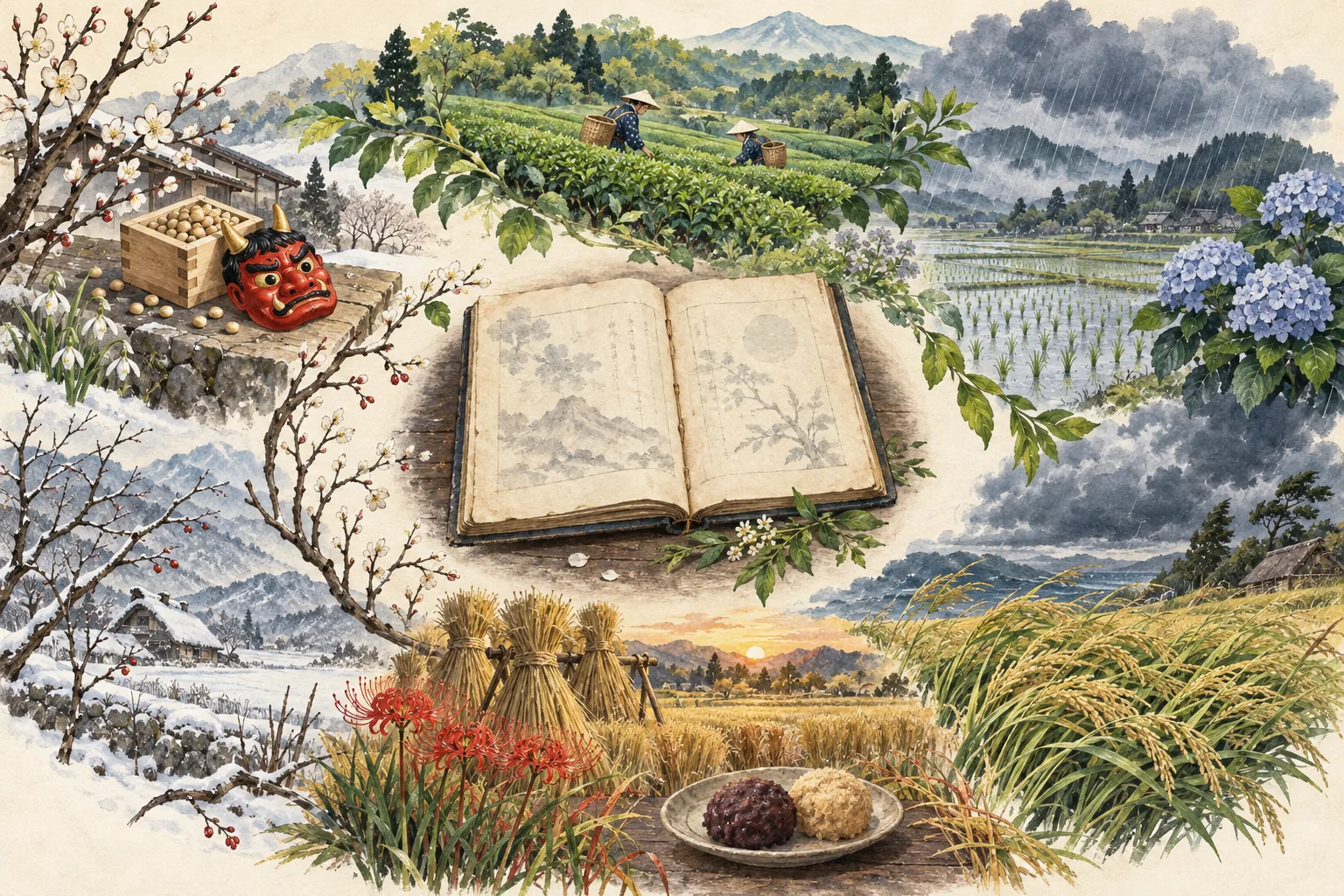
壱In one line一言で言うと
Zassetsu are seasonal markers Japan added to the Chinese calendar because the imported one did not fit Japanese weather.
弐In 30 seconds30秒で説明する
The twenty-four solar terms came from China and sat badly on Japan's rice-growing year. Japan added its own markers: setsubun, the equinoctial weeks, the eighty-eighth night, the start of the rainy season, hangesho, the doyo periods before each change of season, and the two hundred tenth day, a typhoon warning date. Most were farming dates. Several survive as food days and tea marketing.
参As a short speechスピーチ・英作文
The twenty-four solar terms were imported from China and did not match Japan's rice-growing year, so Japan added a set of its own markers called zassetsu, meaning miscellaneous seasonal days. The eighty-eighth night, counted from the first day of spring and falling around May 2nd, is the date after which late frost is unlikely, and the tea industry still uses it to sell the first picking.
Nyubai marks the calendar's start of the rainy season, as opposed to the weather agency's announcement. Hangesho, around July 2nd, was the deadline for finishing the rice planting, and some regions eat octopus on it. Doyo is the eighteen-day period before each change of season, and its summer stretch is known for the eel-eating day.
The two hundred tenth day, around September 1st, warned farmers that typhoons were due. The pattern is consistent: these are not festivals but working dates from an agricultural society, and the ones that survived are the ones a food industry could attach itself to.
雑節ざっせつzassetsuJapan's own seasonal markers, added to the imported calendar
八十八夜、入梅、半夏生、土用。中国の暦に日本が足した、日本の気候のための目印。
壱一言で言うとIn one line
雑節とは、中国から来た暦が日本の気候に合わないために、日本が独自に足した季節の目印です。
弐30秒で説明するIn 30 seconds
二十四節気は中国から来たもので、日本の稲作の一年には合いませんでした。そこで日本は独自の目印を足します。節分、彼岸、八十八夜、入梅、半夏生、土用、そして台風に備える二百十日です。多くは農事の日付でした。いくつかは今も食べ物の日やお茶の宣伝として残っています。
参スピーチ・英作文As a short speech
二十四節気は中国から輸入したもので、日本の稲作の一年には合いませんでした。そこで日本は独自の目印を足します。これを雑節と言います。八十八夜は立春から数えて八十八日目、五月二日ごろで、遅霜がもう来ないとされる日。お茶の業界が新茶を売る日として今も使っています。
入梅は、気象庁が実際に宣言する梅雨入りとは別の、暦の上での梅雨の始まり。半夏生は七月二日ごろで、田植えを終える期限とされ、地域によって蛸や麦餅を食べる習わしがあります。土用は季節の変わり目の前の十八日間で、夏の土用は鰻の日として誰もが知っています。
二百十日は九月一日ごろ、台風に備えよという農家への警告でした。筋は一貫しています。これらは祭りではなく、農業社会の仕事の日付であり、生き残ったのは食品業界が結びつけられたものだ、ということです。
こう聞かれたらQuestions people actually ask
QIs nyubai the same as the real rainy season?
ANo. Nyubai is a calendar date around June 11th, while the Meteorological Agency announces the actual start region by region, and the two often differ by a week or more.
入梅は実際の梅雨入りと同じですか。違います。入梅は六月十一日ごろの暦の上の日付で、実際の梅雨入りは気象庁が地方ごとに発表します。一週間以上ずれることもよくあります。
QWhy eat octopus at hangesho?
AIt is a regional custom, strongest in the Kansai area, and the usual explanation is a wish that the rice roots take hold as firmly as an octopus grips. Other regions eat wheat cakes or a particular fish instead.
半夏生にどうして蛸を食べるのですか。関西を中心とした地域の習わしで、稲の根が蛸の足のようにしっかり張るように、という願いだと説明されます。別の地域では麦餅や特定の魚を食べます。
QHow many zassetsu are there?
AUsually counted as nine: setsubun, higan, shanichi, hachijuhachiya, nyubai, hangesho, doyo, nihyaku toka and nihyaku hatsuka. Some lists differ slightly.
雑節はいくつあるのですか。ふつう九つと数えます。節分、彼岸、社日、八十八夜、入梅、半夏生、土用、二百十日、二百二十日です。数え方が少し違うものもあります。
誤解されやすいA common misunderstanding
MYTHThe zassetsu came from China with the rest of the calendar.雑節も暦と一緒に中国から来た、と思われがちです。
FACTMost took shape in Japan because the imported solar terms did not fit Japan's climate and farming year, though a few, such as shanichi and doyo, have Chinese roots.多くは、輸入した節気が日本の気候と農事に合わなかったために日本で生まれたものです。ただし社日や土用のように、中国にもとがあるものもあります。
そのまま使えるフレーズPhrases you can use
- These are seasonal dates Japan added itself.日本が独自に足した季節の日付です。
- The eighty-eighth night is counted from the start of spring.八十八夜は立春から数えます。
- After that date, late frost is unlikely.その日を過ぎると遅霜はまず来ない、とされます。
- The two hundred tenth day was a typhoon warning.二百十日は台風への備えを促す日でした。
- They were working dates for farmers, not festivals.祭りではなく、農家にとっての仕事の日付でした。
豆知識Background
「夏も近づく八十八夜」で始まる文部省唱歌「茶摘」は1912年(明治45年)の『尋常小学唱歌』に載り、八十八夜と新茶の結びつきを広く知らせた。二百十日は立春から数えて二百十日目で、九月一日ごろにあたる。土用は年に四回あり、夏の土用の丑の日だけが広く知られている。社日は春分・秋分に最も近い戊(つちのえ)の日で、土地の神を祀る日とされた。
出典日本文化ナビ(原田英語.com)「雑節を英語で説明する(zassetsu)」https://www.haradaeigo.com/japanese-culture/w/zassetsu
- 文
- 日本文化ナビ編集部(原田英語.com)— 英文・和訳・解説はすべて独自に作成
- イラスト
- 日本文化ナビ オリジナル
- 発行
- 原田英語.com https://www.haradaeigo.com/
- 印刷日
- 2026.10.17
© 2026 Harada Eigo (原田英語.com). Text and illustration: Japan Culture Navi.
ページはこちら