百舌鳥・古市古墳群
壱In one line一言で言うと
Mozu-Furuichi Kofun are enormous burial mounds in Osaka, built from the late fourth to late fifth centuries.
弐In 30 seconds30秒で説明する
Forty-nine mounded tombs in two clusters in southern Osaka, built between the late fourth and late fifth centuries. The largest, Daisenryo, is one of the biggest tombs in the world by area. Many are administered by the Imperial Household Agency as imperial graves, so they cannot be entered or excavated, and their assigned occupants are traditional attributions rather than confirmed facts.
参As a short speechスピーチ・英作文
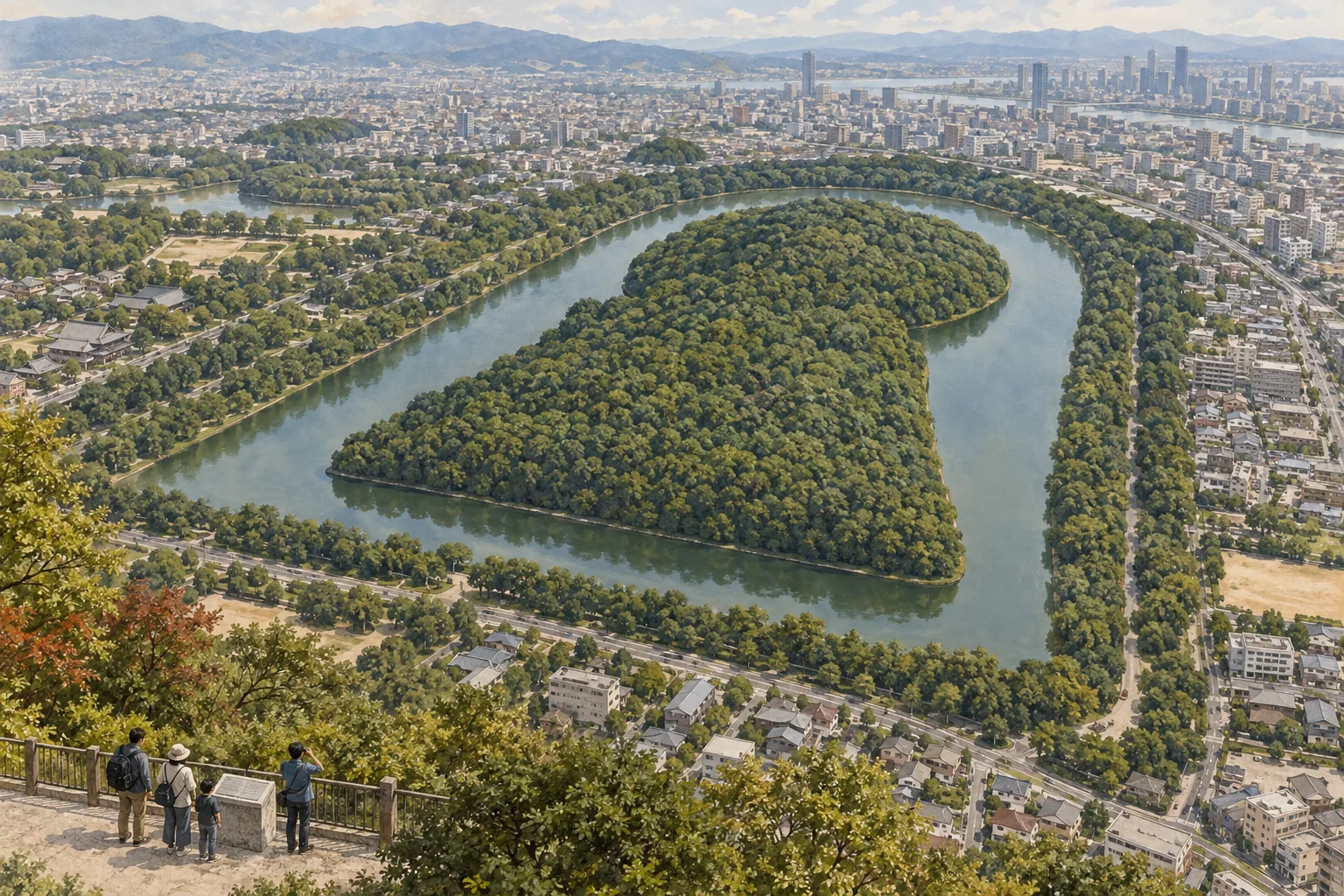
The Mozu and Furuichi tomb groups in southern Osaka are a strange monument, because what makes them famous is invisible from the ground. These are kofun, mounded tombs built between the late fourth and late fifth centuries, and the largest are keyhole-shaped: a round mound joined to a trapezoidal one, surrounded by moats.
The biggest, Daisenryo, is roughly 486 meters long, and by area of its precinct one of the largest tombs in the world, often mentioned alongside the Great Pyramid and the tomb of China's first emperor. But you cannot climb it, enter it, or really see it. The Imperial Household Agency administers it and dozens of others as imperial graves, which means no excavation and no public access, and from the road it looks like a wooded hill behind a moat.
There is an observation deck at the city hall and there are aerial photographs. Two things are worth saying carefully. The attribution of Daisenryo to Emperor Nintoku is traditional and is not confirmed by evidence, so scholars use the place name. And the restriction on excavation is itself debated in Japan.
百舌鳥・古市古墳群もずふるいちこふんぐんmozu furuichi kofunthe giant keyhole tombs you cannot go inside
世界最大級の墓なのに、入れないし、上からしか形が分からない。
壱一言で言うとIn one line
百舌鳥・古市古墳群とは、四世紀後半から五世紀後半に築かれた、大阪にある巨大な墳墓の集まりです。
弐30秒で説明するIn 30 seconds
大阪南部の二つの地域に広がる四十九基の墳墓で、四世紀後半から五世紀後半にかけて築かれました。最大の大仙陵古墳は、面積では世界でも有数の規模の墓です。多くは宮内庁が陵墓として管理しており、立ち入りも発掘もできません。葬られた人物とされているのも、伝承にもとづく比定であって、確定した事実ではありません。
参スピーチ・英作文As a short speech
大阪南部の百舌鳥と古市の古墳群は、変わった記念物です。有名にしているものが、地上からは見えないからです。これらは古墳、四世紀後半から五世紀後半に築かれた墳墓で、大きなものは前方後円墳、つまり円い墳丘に台形の墳丘をつなぎ、濠がめぐる形をしています。最大の大仙陵古墳は全長およそ486メートル。
墓域の面積で言えば世界でも有数で、ピラミッドや秦の始皇帝陵と並べて語られます。しかし登れませんし、入れませんし、そもそも見えません。宮内庁がここを含む多くを陵墓として管理しており、発掘も立ち入りもできません。道路から見えるのは、濠の向こうの木の茂った丘です。
市役所に展望室があり、航空写真があります。丁寧に言うべきことが二つあります。大仙陵古墳を仁徳天皇の墓とするのは伝承にもとづく比定で、証拠によって確かめられてはいません。だから研究では地名で呼びます。そして発掘できないこと自体が、日本国内で議論になっています。
こう聞かれたらQuestions people actually ask
QWhy can't they be excavated?
AThose designated as imperial graves are managed by the Imperial Household Agency, which treats them as places of worship for the imperial family. Archaeologists have repeatedly asked for access, and limited surveys have been allowed.
どうして発掘できないのですか。陵墓に指定されたものは宮内庁が管理し、皇室の祭祀の場として扱っています。考古学の側は繰り返し調査を求めており、限定的な立ち入りが認められた例もあります。
QIs it really Emperor Nintoku's tomb?
AThe identification was made in the Edo and Meiji periods from old records and is not established. Researchers usually call it Daisenryo Kofun, after the place.
本当に仁徳天皇の墓なのですか。この比定は江戸から明治にかけて古い記録をもとに行われたもので、確定していません。研究では地名をとって大仙陵古墳と呼ぶのがふつうです。
QIs it worth visiting if you can't see it?
AGo for the smaller tombs. Several in the groups can be walked around or even climbed, and nearby museums display haniwa and models that show what these looked like when new.
見えないのに行く値打ちはありますか。小さな古墳を目当てに行くとよいです。周りを歩いたり登ったりできるものがいくつかあり、近くの博物館では埴輪や模型から、築かれた当時の姿が分かります。
誤解されやすいA common misunderstanding
MYTHThe tombs are green hills that were always covered in trees.古墳は昔から木に覆われた緑の丘だ、と思われがちです。
FACTWhen built they were bare mounds faced with stones and ringed with clay figures called haniwa. The forest grew later.築かれたときは葺石で覆われ、埴輪が並ぶ裸の墳丘でした。木が茂ったのは後のことです。
そのまま使えるフレーズPhrases you can use
- They're burial mounds from the 400s.五世紀ごろの墳墓です。
- The big ones are keyhole-shaped, seen from above.大きなものは上から見ると鍵穴の形です。
- You can't go in — they're managed as imperial graves.陵墓として管理されており、入れません。
- Who is buried there isn't confirmed.誰の墓かは確定していません。
- Originally they were stone-faced, not wooded.もとは葺石で覆われ、木はありませんでした。
豆知識Background
2019年、「百舌鳥・古市古墳群」として49基がユネスコ世界遺産に登録された。最大の大仙陵古墳は墳丘の全長がおよそ486メートル、三重の濠を含めた墓域の面積では世界最大級とされる。宮内庁は仁徳天皇陵として管理しているが、被葬者の比定は確定していないため、学術的には「大仙陵古墳」「大山古墳」と呼ばれる。堺市役所21階の展望ロビーから全体の地形を見ることができる。
出典日本文化ナビ(原田英語.com)「百舌鳥・古市古墳群を英語で説明する(mozu furuichi kofun)」https://www.haradaeigo.com/japanese-culture/w/mozu-furuichi-kofun
- 文
- 日本文化ナビ編集部(原田英語.com)— 英文・和訳・解説はすべて独自に作成
- イラスト
- 日本文化ナビ オリジナル
- 発行
- 原田英語.com https://www.haradaeigo.com/
- 印刷日
- 2026.10.17
© 2026 Harada Eigo (原田英語.com). Text and illustration: Japan Culture Navi.
ページはこちら