高野山
壱In one line一言で言うと
Koyasan, or Mount Koya, is a monastic town south of Osaka, founded in 816, where over fifty temples take guests.
弐In 30 seconds30秒で説明する
Koyasan is a basin at about 800 meters, opened as a monastic center by the monk Kukai in 816 and now holding over a hundred temples. More than fifty of them take overnight guests, serving vegetarian temple food and letting you attend the morning service. Behind the town runs Okunoin, a two-kilometer cemetery path of over 200,000 graves under old cedars, ending at Kukai's mausoleum.
参As a short speechスピーチ・英作文
Koyasan is one of the easiest places in Japan to actually experience Buddhism rather than look at it. It is a flat basin at about 800 meters in the mountains south of Osaka, opened in 816 by the monk Kukai as a training center for the Shingon school, and it is still a working monastic town of more than a hundred temples.
Over fifty of them run shukubo, temple lodgings: you get a tatami room, a vegetarian dinner of the kind monks eat, and you are welcome at the six or seven o'clock morning service. Nobody asks what you believe.
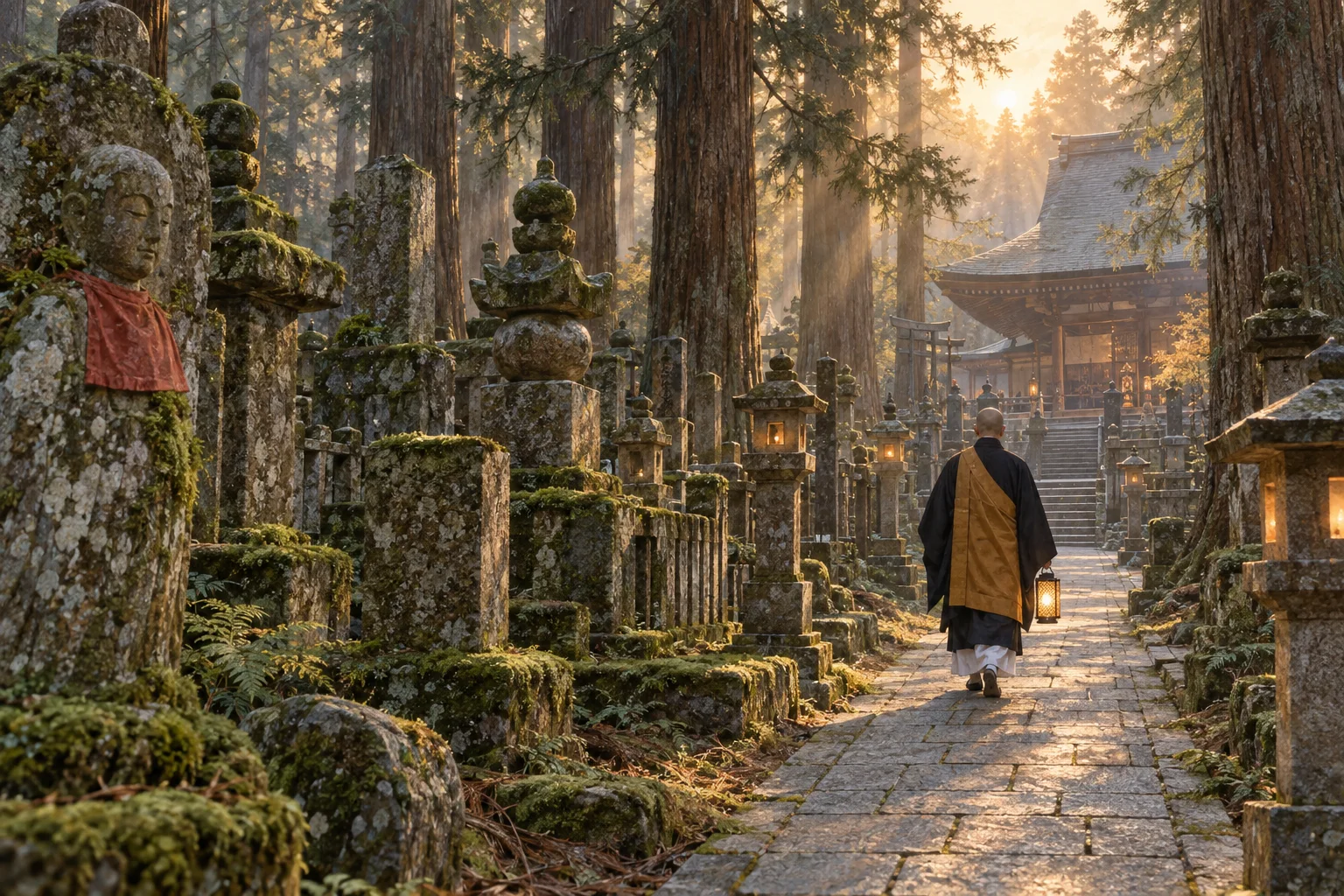
The other half of the visit is Okunoin, a cemetery path about two kilometers long running under cedars that are centuries old, with more than 200,000 graves along it, including those of famous warlords who fought each other in life. At the end is the mausoleum of Kukai, who by the doctrine of this school is not dead but in eternal meditation, and monks still carry him meals twice a day.
高野山こうやさんkoyasanthe mountain monastery where you can stay the night
標高800メートルの盆地に、寺が百以上。泊まれる寺が五十以上ある。
壱一言で言うとIn one line
高野山とは、816年に開かれた、大阪の南の山上にある寺の町で、五十を超える寺に泊まれる場所です。
弐30秒で説明するIn 30 seconds
高野山は標高およそ800メートルの盆地で、816年に空海が修行の場として開き、いまも百を超える寺があります。そのうち五十以上が宿坊として泊めてくれ、精進料理が出て、朝のお勤めにも参加できます。町の奥には奥之院。杉の古木の下を二キロ続く参道に二十万基を超える墓が並び、空海の御廟に至ります。
参スピーチ・英作文As a short speech
高野山は、日本で仏教を眺めるのではなく体験するのに、最も入りやすい場所の一つです。大阪の南、山中の標高八百メートルほどの平らな盆地で、816年に空海が真言宗の修行の場として開きました。いまも百を超える寺が働いている、現役の宗教都市です。
そのうち五十以上が宿坊を営みます。畳の部屋が与えられ、僧が食べるのと同じ精進料理が出て、朝六時か七時のお勤めに加わることができます。何を信じているかは誰も尋ねません。もう半分は奥之院です。何百年もの杉の下を二キロほど続く参道に、二十万基を超える墓が並びます。
生前は敵どうしだった戦国武将の墓も並んでいます。その先にあるのが空海の御廟。この宗派の教えでは空海は亡くなったのではなく、いまも瞑想の中にあるとされ、僧が一日に二度、食事を運び続けています。
こう聞かれたらQuestions people actually ask
QCan anyone stay at a temple?
AYes. Temple lodgings take bookings from anyone, including non-Buddhists and foreign visitors, and many have English information. You are a guest, not a trainee.
誰でも寺に泊まれますか。泊まれます。宿坊は誰でも予約でき、仏教徒でなくても、外国からでも受け入れます。英語の案内がある寺も多いです。修行者ではなく、客として迎えられます。
QDo I have to join the morning service?
AIt is optional, but it is the reason most people stay. It usually runs about forty minutes, starting around six, and you simply sit.
朝のお勤めには出ないといけませんか。任意ですが、多くの人はこれを目当てに泊まります。六時ごろから四十分ほどで、座っているだけで構いません。
QIs the food really all vegetarian?
AYes — no meat, no fish, and traditionally no onion or garlic either. Tell them in advance about allergies; the dashi is usually kelp-based here.
食事は本当にすべて精進ですか。そうです。肉も魚も使わず、伝統的には葱や大蒜も避けます。食べられないものは前もって伝えてください。ここの出汁は昆布が基本です。
誤解されやすいA common misunderstanding
MYTHKoyasan is a single temple you visit for an hour.高野山は、一時間ほどで見て回る一つの寺だ、と思われがちです。
FACTIt is a town of over a hundred temples with schools, shops and residents, and the cemetery path alone takes an hour to walk.百を超える寺があり、学校も店も住民もある一つの町です。奥之院の参道だけでも歩くのに一時間かかります。
そのまま使えるフレーズPhrases you can use
- You can stay overnight in a temple here.ここでは寺に泊まれます。
- Dinner is the vegetarian food the monks eat.夕食は僧が食べる精進料理です。
- The morning service starts around six.朝のお勤めは六時ごろからです。
- The cemetery path has over 200,000 graves.奥之院の参道には二十万基を超える墓があります。
- It was founded in 816 by the monk Kukai.816年に空海が開きました。
豆知識Background
高野山は816年(弘仁7年)、空海が嵯峨天皇から下賜されて開いたとされる。2004年に「紀伊山地の霊場と参詣道」の一部としてユネスコ世界遺産に登録された。奥之院の参道はおよそ2キロで、織田信長、武田信玄、上杉謙信、明智光秀らの供養塔が並ぶ。空海は835年に入定したとされ、真言宗では亡くなったのではなく禅定に入っているとされる。いまも一日二回、御廟に食事を運ぶ生身供が続けられている。
出典日本文化ナビ(原田英語.com)「高野山を英語で説明する(koyasan)」https://www.haradaeigo.com/japanese-culture/w/koyasan
- 文
- 日本文化ナビ編集部(原田英語.com)— 英文・和訳・解説はすべて独自に作成
- イラスト
- 日本文化ナビ オリジナル
- 発行
- 原田英語.com https://www.haradaeigo.com/
- 印刷日
- 2026.10.17
© 2026 Harada Eigo (原田英語.com). Text and illustration: Japan Culture Navi.
ページはこちら