介護
壱In one line一言で言うと
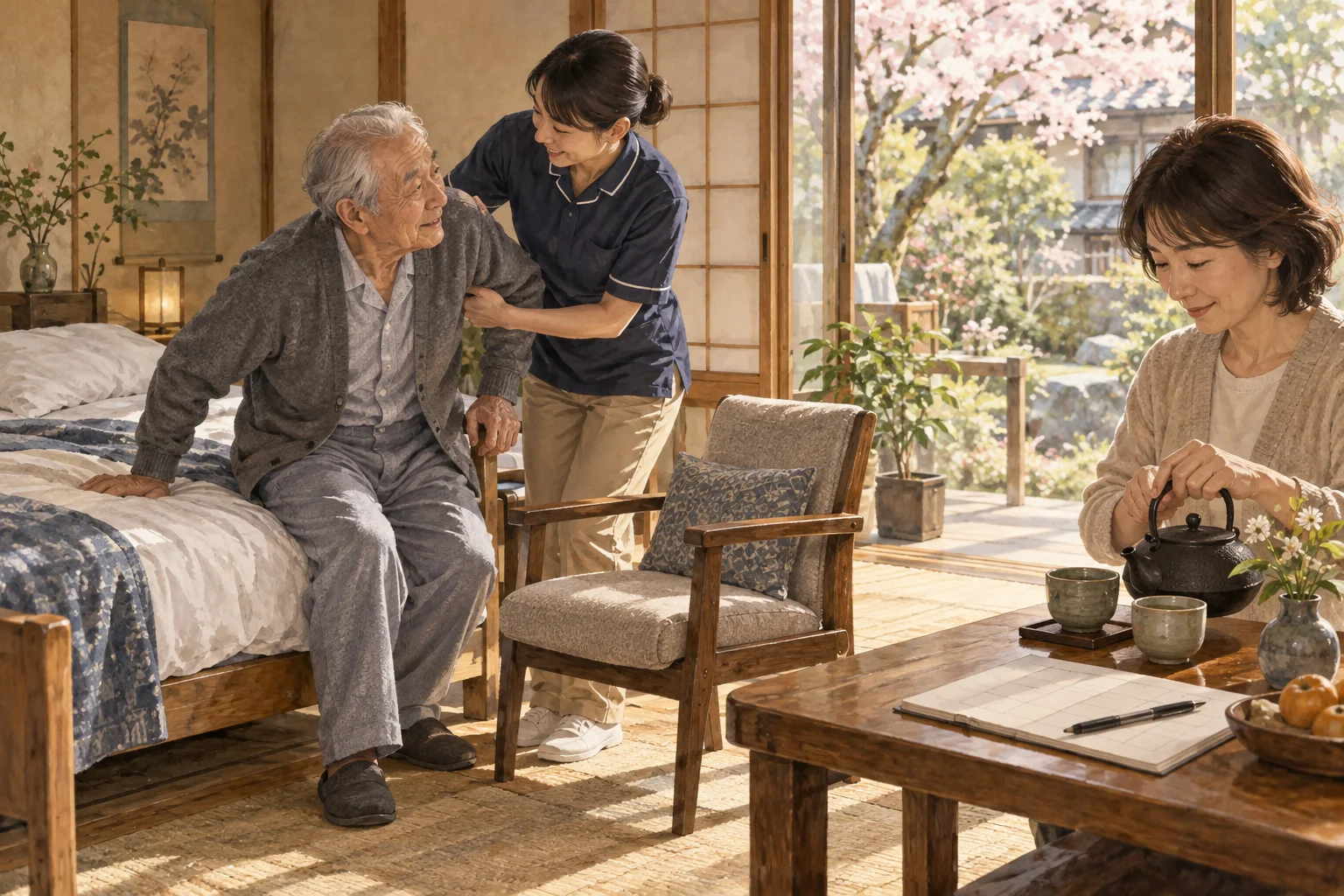
Kaigo, or long-term care, is support for older people who can't live alone, funded by insurance everyone pays from forty.
弐In 30 seconds30秒で説明する
Japan introduced long-term care insurance in 2000. Everyone aged forty and over pays a premium, and people who need care are assessed and given one of seven levels, two for support and five for care, which determines how much service they can use — home helpers, day centers, equipment, or a care home. Users pay a share of the cost. The system was built to move care off families, and it has only partly succeeded.
参As a short speechスピーチ・英作文
Kaigo means long-term care, and the thing worth explaining is the system behind it, because Japan built one earlier than most countries. Before 2000, care for an aged parent was assumed to be a family matter, and in practice it often fell on daughters-in-law.
Long-term care insurance changed the framework: everyone aged forty and over pays a premium alongside health insurance, and anyone who needs care applies to their municipality, is assessed by an examiner and a doctor, and is assigned a level from support level one up to care level five. That level sets a monthly budget of services — visits from a helper, a day center a few times a week, a bath service, a hospital bed at home, or a place in a facility — and a care manager puts a plan together.
The user pays ten to thirty percent depending on income. It genuinely reduced the burden, but not enough. Around a hundred thousand people a year still leave their jobs to care for a relative, facility waiting lists are long in cities, and the sector cannot recruit enough staff at the wages it can pay.
介護かいごkaigolong-term care, and the insurance system behind it
40歳になると保険料を払い始める。家族が全部抱えるのをやめるために作られた制度。
壱一言で言うとIn one line
介護とは、一人では暮らせなくなった高齢者の世話のことで、四十歳から全員が払う保険でまかなわれるものです。
弐30秒で説明するIn 30 seconds
日本は2000年に介護保険を始めました。四十歳以上の全員が保険料を払い、介護が必要になった人は認定を受けて、要支援一・二と要介護一から五までの七段階のどれかが決まります。その段階に応じて、訪問介護、通所、福祉用具、施設などを使える量が決まります。利用者は費用の一部を負担します。この制度は介護を家族の手から社会へ移すために作られましたが、その狙いは一部しか達していません。
参スピーチ・英作文As a short speech
介護は高齢者の世話のことですが、説明する値打ちがあるのは、その裏にある仕組みのほうです。日本は多くの国より早くこれを作りました。2000年より前、老いた親の世話は家の問題とされ、実際には多くの場合、嫁が担っていました。介護保険はその枠組みを変えます。
四十歳以上の全員が健康保険とあわせて保険料を払い、介護が必要になった人は市区町村に申請し、調査員と医師の判断を経て、要支援一から要介護五までの段階が決まります。この段階が、月に使えるサービスの量を決めます。訪問介護、週に数回の通所、入浴の介助、自宅に置く介護ベッド、あるいは施設の入所。
ケアマネジャーがその計画を組み立てます。利用者の負担は所得に応じて一割から三割です。家族の負担は確かに減りました。ただ、足りていません。介護のために仕事を辞める人はいまも年間十万人ほどいます。都市部では施設の待機が長く、この分野は、払える賃金では人を集めきれずにいます。
こう聞かれたらQuestions people actually ask
QWho pays for it?
AEveryone forty and over pays a premium, and public money covers about half. The person using the service pays ten to thirty percent of the cost, depending on income.
費用は誰が払うのですか。四十歳以上の全員が保険料を払い、公費がおよそ半分を負担します。使う人は所得に応じて一割から三割を払います。
QHow do you get care?
AYou apply to the municipality. An examiner visits, a doctor gives an opinion, and a committee assigns a level. A care manager then builds a plan from the services that level allows.
どうすれば使えるのですか。市区町村に申請します。調査員が訪問し、主治医が意見書を出し、審査会が段階を決めます。そのあと、ケアマネジャーが使えるサービスで計画を作ります。
QDo families still do the caring?
AVery much so. The insurance covers services, not all of the hours, and around a hundred thousand people a year still leave work to care for a relative.
家族が世話をすることは続いていますか。続いています。保険が見るのはサービスであって、時間のすべてではありません。介護のために離職する人は、いまも年に十万人ほどいます。
誤解されやすいA common misunderstanding
MYTHIn Japan, families look after their old people instead of using services.日本では施設を使わず家族が高齢者を見る、と思われがちです。
FACTThere is a national insurance system used by millions. Families still carry a great deal, but the framework is public, not purely domestic.全国の保険制度があり、何百万人も利用しています。家族の負担は大きいままですが、枠組みは家庭ではなく公のものです。
そのまま使えるフレーズPhrases you can use
- Everyone pays into care insurance from age forty.四十歳から全員が介護保険料を払います。
- You're assessed and given a care level.認定を受けて要介護度が決まります。
- The level decides how much service you can use.その段階で使えるサービスの量が決まります。
- A care manager puts the plan together.ケアマネジャーが計画を作ります。
- A lot of people still leave work to care for a parent.親の介護で仕事を辞める人は、いまも多いです。
豆知識Background
介護保険制度は2000年(平成12年)4月に始まった。40歳以上が被保険者となり、65歳以上を第1号、40〜64歳を第2号被保険者と呼ぶ。要介護認定は要支援1・2と要介護1〜5の7段階で、段階ごとに月の支給限度額が定められている。総務省の就業構造基本調査では、介護や看護を理由に離職した人は年間およそ10万人で推移している。
出典日本文化ナビ(原田英語.com)「介護を英語で説明する(kaigo)」https://www.haradaeigo.com/japanese-culture/w/kaigo
- 文
- 日本文化ナビ編集部(原田英語.com)— 英文・和訳・解説はすべて独自に作成
- イラスト
- 日本文化ナビ オリジナル
- 発行
- 原田英語.com https://www.haradaeigo.com/
- 印刷日
- 2026.10.17
© 2026 Harada Eigo (原田英語.com). Text and illustration: Japan Culture Navi.
ページはこちら