戦後の女性の地位の変化
壱In one line一言で言うと
Sengo no josei no chii no henka, women's changing status since 1945, is quick legal equality but gradual workplace change.
弐In 30 seconds30秒で説明する
Women received the vote in December 1945 and 39 were elected in the first postwar general election in April 1946. The new constitution guaranteed equality, and an equal employment law followed in 1985. Change in workplaces has been slower, and the share of women in management and parliament is lower than in most other wealthy countries.
参As a short speechスピーチ・英作文
The legal position of women in Japan changed abruptly after 1945. The law was revised in December of that year to allow women to vote, and in the first postwar general election in April 1946, thirty-nine women were elected to the lower house.
The 1947 constitution guaranteed equality under the law and equal rights in marriage, and the civil code was rewritten to end the old household system under which a family head held legal authority over its members. Later came an equal employment opportunity law in 1985 and a series of measures on childcare leave.
Many people point to a gap between law and practice: the share of women in management and in parliament is lower than in most developed countries, and many women still leave work at childbirth and return part-time. Views on causes and remedies differ, from quotas and public support to leaving choices to families and employers.
戦後の女性の地位の変化せんごのじょせいのちいのへんかsengo no josei no chii no henkawhat changed and what did not
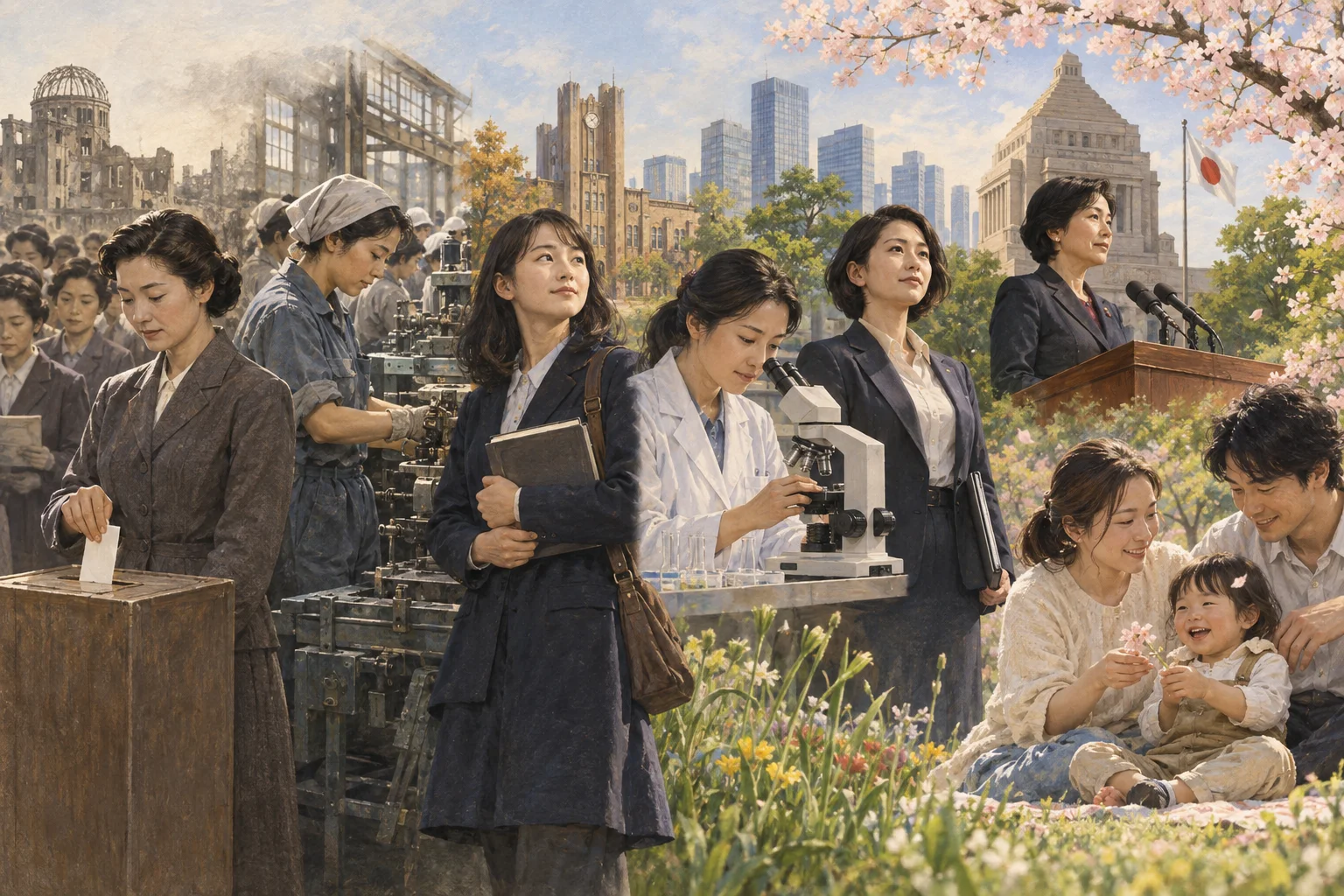
1946年、女性が初めて投票した総選挙で、39人の女性が衆議院に当選した。
壱一言で言うとIn one line
戦後の女性の地位の変化とは、法の上ではすぐに平等が定められた一方、職場の変化はゆるやかだったという移り変わりです。
弐30秒で説明するIn 30 seconds
女性は1945年12月に参政権を得て、1946年4月の戦後初の総選挙で39人が当選しました。新しい憲法は平等を保障し、1985年には男女雇用機会均等法が続きます。職場の変化はそれより緩やかで、管理職や国会に占める女性の割合は、多くの先進国より低い水準です。
参スピーチ・英作文As a short speech
日本の女性の法的な地位は、1945年を境に急に変わりました。同年12月に法が改められて女性が投票できるようになり、1946年4月の戦後初の総選挙では39人の女性が衆議院議員に当選しました。
1947年の憲法は法の下の平等と婚姻における同等の権利を保障し、民法は、戸主が家族に対して法的な権限を持つ旧来の家制度を終わらせる形に書き直されました。のちに1985年の男女雇用機会均等法が続き、育児休業をめぐる一連の制度も整えられます。法と実態の間に隔たりがあると指摘する人は多くいます。
管理職や国会に占める女性の割合は多くの先進国より低く、出産で仕事を離れて短時間の雇用で戻る女性も今なお多くいます。原因と対策についての意見はさまざまで、数値目標や公的な支援を求める声もあれば、家庭や企業の選択に任せるべきだという声もあります。
こう聞かれたらQuestions people actually ask
QWhat was the old household system?
AUnder the prewar civil code, a family was a legal unit headed by a household head, usually the eldest male, who held authority over members including consent to marriage. The postwar revision abolished it, though its vocabulary survives in daily speech.
かつての家制度とは何ですか。戦前の民法では、家は戸主を長とする法律上の単位で、戸主はふつう最年長の男性であり、婚姻への同意を含めて家族に対する権限を持っていました。戦後の改正でこれは廃止されましたが、その語彙は日常語に残っています。
QIs the surname issue related?
AYes. Japanese law requires a married couple to share one surname, and in practice the great majority take the husband's. Supporters of allowing separate surnames point to careers and personal identity, while opponents raise concerns about family unity and children's surnames, and the debate continues.
夫婦の姓の問題と関係がありますか。関係があります。日本の法律は夫婦が同じ姓を名乗ることを求めており、実際には圧倒的多数が夫の姓を選びます。別姓を認めるべきだという側は仕事上の不便や本人のアイデンティティを挙げ、反対する側は家族の一体感や子どもの姓への影響を心配しており、議論は今も続いています。
誤解されやすいA common misunderstanding
MYTHJapan gave women legal equality late compared with other developed countries.日本は先進国の中で女性の法的平等が遅かったと思われがちです。
FACTThe vote came in 1945, around the same time as in France and Italy, and constitutional equality followed in 1947. Most of today's discussion is about workplaces and politics rather than the wording of the law.参政権は1945年で、フランスやイタリアとほぼ同じ時期です。憲法上の平等は1947年に続きました。今の議論の多くは、法文ではなく職場と政治の実態をめぐるものです。
そのまま使えるフレーズPhrases you can use
- Women first voted in 1946.女性が初めて投票したのは1946年です。
- Thirty-nine women were elected that year.その年、39人の女性が当選しました。
- The law changed faster than workplaces did.法律は職場より速く変わりました。
- Married couples must share one surname.夫婦は同じ姓を名乗る決まりです。
豆知識Background
1945年12月の衆議院議員選挙法の改正により女性に参政権が認められ、1946年4月10日の総選挙で39人の女性が当選しました。1947年施行の憲法は第14条で法の下の平等を、第24条で婚姻における両性の同等の権利を定めています。1985年に男女雇用機会均等法が成立し、以後も改正が重ねられました。夫婦同姓を定める民法の規定について、最高裁は合憲と判断しています。選択的夫婦別姓の導入を求める意見と、家族の一体感などを理由に慎重な意見があり、国会での議論が続いています。
出典日本文化ナビ(原田英語.com)「戦後の女性の地位の変化を英語で説明する(sengo no josei no chii no henka)」https://www.haradaeigo.com/japanese-culture/en/womens-status-since-1945
- 文
- 日本文化ナビ編集部(原田英語.com)— 英文・和訳・解説はすべて独自に作成
- イラスト
- 日本文化ナビ オリジナル
- 発行
- 原田英語.com https://www.haradaeigo.com/
- 印刷日
- 2026.10.17
© 2026 Harada Eigo (原田英語.com). Text and illustration: Japan Culture Navi.
ページはこちら