関ヶ原の戦い
壱In one line一言で言うと
Sekigahara no tatakai, or the Battle of Sekigahara, is the 1600 clash that gave the Tokugawa 265 years of power.
弐In 30 seconds30秒で説明する
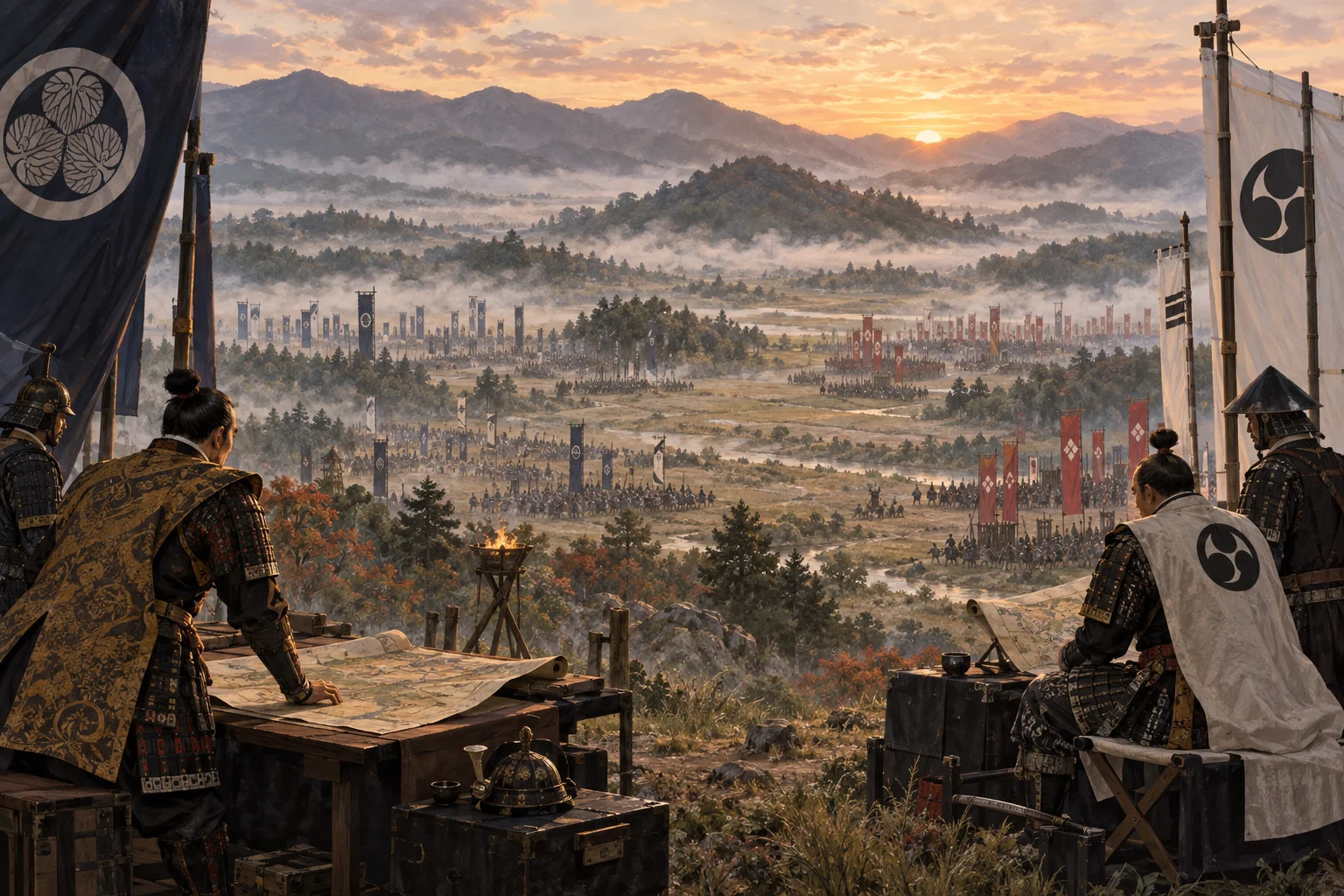
After Toyotomi Hideyoshi died, the lords of Japan split into two camps. On a foggy autumn morning in 1600 they met at Sekigahara, a valley in what is now Gifu prefecture. By traditional estimates around 160,000 men fought, and it was over in a day, decided when several commanders on one side changed sides during the battle. The winner, Tokugawa Ieyasu, became shogun three years later.
参As a short speechスピーチ・英作文
Sekigahara is the battle most Japanese people can name, because it decided the next two and a half centuries. Toyotomi Hideyoshi had unified the country and then died, leaving a five-year-old heir. The lords divided between those backing the Toyotomi administration and those backing Tokugawa Ieyasu, the most powerful of the regents.
They met in October 1600 in a narrow valley in Mino, about 160,000 men in total, in morning fog. On paper the western army had the better position, holding the high ground on three sides. In the traditional account, what decided it was defection.
Kobayakawa Hideaki, who commanded a large force on a hill overlooking the field, had been in secret contact with Ieyasu, and when he finally charged, he charged downhill into his own side. Other units followed. The fighting was finished by the afternoon. Ieyasu became shogun in 1603, and his family held power until 1868.
関ヶ原の戦いせきがはらのたたかいSekigahara no tatakaithe 1600 battle that decided who would rule Japan for 265 years
一日で決着した。寝返りが勝敗に大きく影響したとされる。
壱一言で言うとIn one line
関ヶ原の戦いとは、徳川に265年の世をもたらした1600年の合戦です。
弐30秒で説明するIn 30 seconds
豊臣秀吉の死後、大名たちは二つに割れました。1600年の霧の深い秋の朝、両軍はいまの岐阜県にある関ヶ原という盆地でぶつかります。参加したのは通説でおよそ16万、決着は一日。勝敗を分けたのは、戦いの最中に一方の何人かの武将が寝返ったことでした。勝った徳川家康は、3年後に将軍になります。
参スピーチ・英作文As a short speech
関ヶ原は、多くの日本人が名前を挙げられる合戦です。その後の二世紀半を決めたからです。豊臣秀吉が国をまとめ、そして死に、後継ぎは5歳でした。大名は、豊臣の政権を支える側と、五大老のうち最も力のある徳川家康につく側に割れます。
ぶつかったのは1600年10月、美濃の狭い盆地。両軍あわせておよそ16万、朝は霧でした。図の上では西軍が有利で、三方の高みを押さえていました。通説では、決めたのは裏切りです。
戦場を見下ろす松尾山に大軍を置いていた小早川秀秋は、ひそかに家康と通じており、ついに動いたとき、坂を駆け下りて味方に突っ込みました。ほかの部隊も続きます。戦いは午後には終わっていました。家康は1603年に将軍となり、その家は1868年まで続きます。
こう聞かれたらQuestions people actually ask
QHow long did it last?
AOne day, and the decisive phase only a few hours. For a battle of that size that is remarkably short, and it is why the defection mattered so much.
どれくらい続いたのですか。一日です。決着のついた局面は数時間にすぎません。この規模の合戦としては驚くほど短く、だからこそ寝返りが大きく効きました。
QCan you visit the battlefield?
AYes. Sekigahara is a small town on the main line through Gifu, and the positions of each commander are marked in the fields with signboards. From the hills you can see the whole valley at once, which explains the tactics.
戦場を訪ねられますか。訪ねられます。関ヶ原は岐阜を通る本線沿いの小さな町で、各武将の陣跡が田畑の中に標識で示されています。山の上からは盆地全体が一度に見渡せ、戦術の理由がよく分かります。
QWhy is it referenced so often?
ABecause it is the standard metaphor for a decisive showdown. Japanese newspapers call a make-or-break election or corporate fight a tenka wakeme no tatakai, the battle that divides the realm, which is the phrase for Sekigahara.
どうしてこれほど引き合いに出されるのですか。決戦の代名詞だからです。新聞は、命運を分ける選挙や企業の争いを「天下分け目の戦い」と呼びます。これは関ヶ原を指す言い方です。
そのまま使えるフレーズPhrases you can use
- It was fought in 1600 and lasted one day.1600年の合戦で、一日で決着しました。
- About 160,000 men are said to have taken part.およそ16万が参加したとされます。
- It was decided by commanders changing sides.勝敗を分けたのは寝返りでした。
- The winner became shogun three years later.勝者は3年後に将軍になりました。
- We call a decisive fight a Sekigahara.決戦のことを「関ヶ原」と呼びます。
豆知識Background
慶長5年9月15日、西暦1600年10月21日に、美濃国関ヶ原で東軍と西軍が激突した。東軍は徳川家康、西軍は毛利輝元を総大将に据え、実際の采配は石田三成が執った。松尾山に布陣した小早川秀秋の寝返りが流れを決めたとされるが、いつ、どのように動いたかについては史料によって食い違いがあり、近年の研究では従来の通説を見直す説も出ている。関ヶ原は東西を結ぶ街道が交わる地で、古代にも壬申の乱の戦場になっている。
出典日本文化ナビ(原田英語.com)「関ヶ原の戦いを英語で説明する(Sekigahara no tatakai)」https://www.haradaeigo.com/japanese-culture/en/the-battle-of-sekigahara
- 文
- 日本文化ナビ編集部(原田英語.com)— 英文・和訳・解説はすべて独自に作成
- イラスト
- 日本文化ナビ オリジナル
- 発行
- 原田英語.com https://www.haradaeigo.com/
- 印刷日
- 2026.10.17
© 2026 Harada Eigo (原田英語.com). Text and illustration: Japan Culture Navi.
ページはこちら