1964年の東京オリンピック
壱In one line一言で言うと
Senkyuhyaku rokujuyo nen no Tokyo Orinpikku, the 1964 Tokyo Olympics, are the games staged to show Japan's postwar recovery.
弐In 30 seconds30秒で説明する
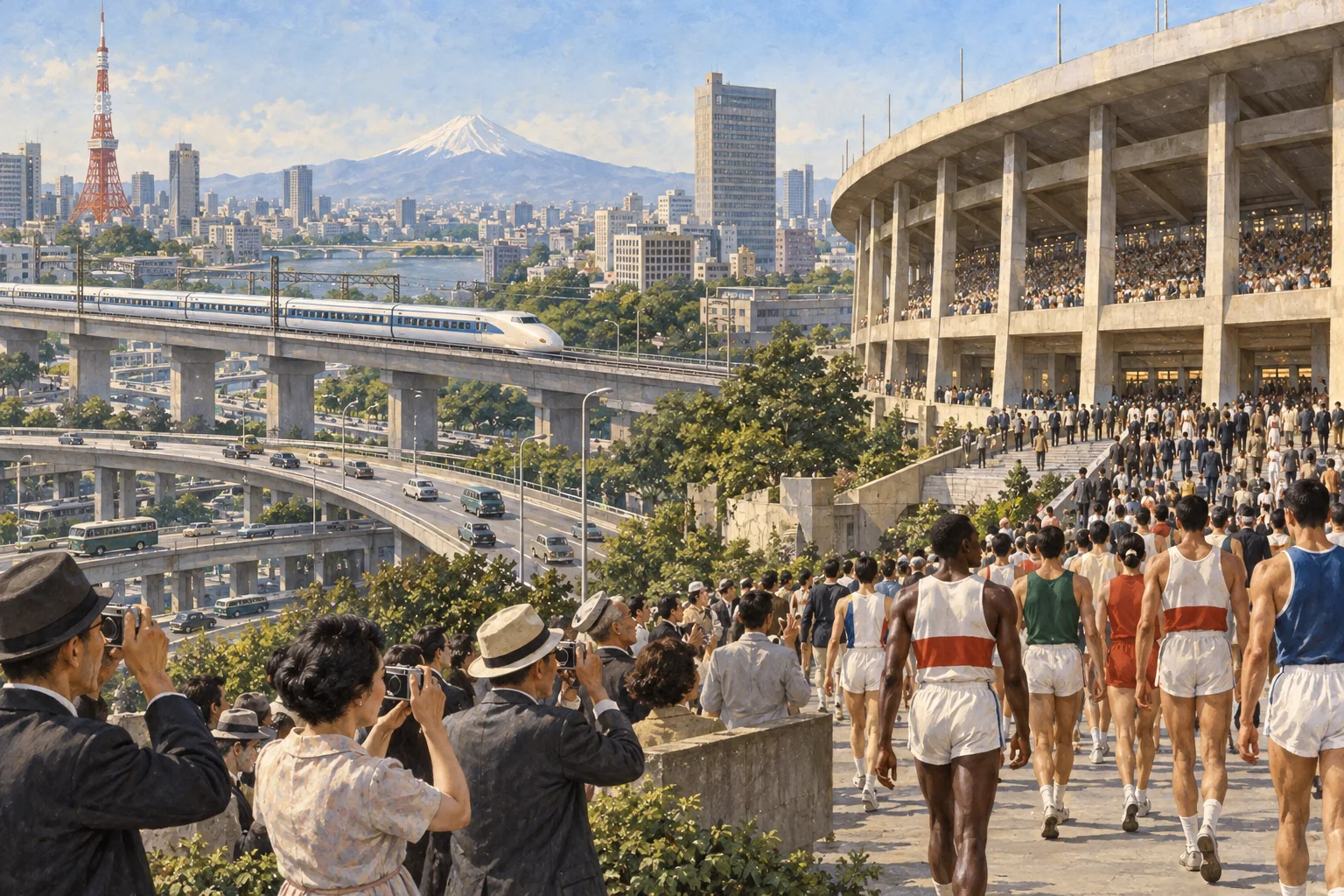
The Tokyo Olympics opened on October 10, 1964, the first games held in Asia. The country rebuilt around them: the first shinkansen line opened nine days before the opening ceremony, urban expressways were cut through Tokyo, and the games were the first broadcast internationally by satellite. For Japanese people of that generation they mark the end of the postwar period.
参As a short speechスピーチ・英作文
The 1964 Tokyo Olympics were the first games held in Asia, and Japan treated them as a statement. Nineteen years earlier Tokyo had been burned out; the point of 1964 was to show a rebuilt, modern, functioning country. The preparation reshaped the city.
The first shinkansen line between Tokyo and Osaka opened on the 1st of October, nine days before the opening ceremony. Urban expressways were driven through Tokyo on concrete piers above the rivers and canals, which is why parts of the city still look the way they do.
The games were the first to be broadcast live internationally by satellite, and they gave a big push to television sales in Japanese homes. The runner who carried the flame into the stadium had been born in Hiroshima Prefecture on the day of the bombing, which was not a coincidence. For the generation that watched it, 1964 is the year Japan came back.
1964年の東京オリンピックせんきゅうひゃくろくじゅうよねんのとうきょうおりんぴっくsenkyuhyaku rokujuyo nen no Tokyo Orinpikkuthe games that announced Japan's recovery
新幹線は開会式の9日前に開業した。間に合わせたのだ。
壱一言で言うとIn one line
1964年の東京オリンピックとは、日本が戦争から立ち直ったことを示すために開かれた大会です。
弐30秒で説明するIn 30 seconds
東京オリンピックは1964年10月10日に開幕しました。アジアで初めての大会です。国はこれに合わせて造り直されました。最初の新幹線は開会式の9日前に開業し、都市高速道路が東京を貫き、大会は衛星で国際中継された最初のものになりました。その世代の日本人にとって、これは戦後という時期の終わりを示す出来事です。
参スピーチ・英作文As a short speech
1964年の東京オリンピックはアジアで初めての大会で、日本はこれを一つの表明として扱いました。その19年前、東京は焼け野原でした。1964年の眼目は、建て直され、近代化し、きちんと動いている国を見せることでした。
準備は都市そのものを作り替えました。東京と大阪を結ぶ最初の新幹線は10月1日、開会式の9日前に開業します。都市高速道路は川や運河の上にコンクリートの橋脚を立てて東京を貫き、だから今も東京の一部はあのような姿をしています。
大会は衛星によって国際的に生中継された最初のもので、家庭へのテレビの普及を大きく後押ししました。聖火を持って競技場に入った走者は、原爆が投下された日に広島県で生まれた人でした。偶然ではありません。それを見た世代にとって、1964年は日本が戻ってきた年です。
こう聞かれたらQuestions people actually ask
QWhy does Tokyo have expressways above the rivers?
ABecause building them there avoided buying land, which was the fastest route to having them ready for 1964. The decision is now criticized for what it did to the waterfront, and one stretch is being moved underground.
どうして東京では川の上に高速道路があるのですか。そこに造れば土地を買わずに済み、1964年に間に合わせる最短の方法だったからです。水辺の景観を損ねたとして今では批判があり、一部の区間は地下へ移す工事が進んでいます。
QWhat was the significance of the final torchbearer?
AHe was a nineteen-year-old runner born in Hiroshima Prefecture on August 6, 1945, the day of the bombing. Choosing him to light the cauldron was a deliberate statement about what the country had come through.
最終聖火ランナーには、どんな意味があったのですか。最終走者は、原爆が投下された1945年8月6日に広島県で生まれた19歳の陸上選手でした。その人に点火させたことは、この国が何を経てきたかについての意図した表明でした。
そのまま使えるフレーズPhrases you can use
- It was the first Olympics held in Asia.アジアで初めてのオリンピックでした。
- The shinkansen opened nine days before.新幹線は9日前に開業しました。
- They were the first games broadcast by satellite.衛星中継された最初の大会です。
- For that generation, it marks the recovery.その世代にとっては復興の印です。
豆知識Background
東海道新幹線は1964年10月1日に開業し、開会式は10月10日でした。この日は長く「体育の日」として祝日でしたが、ハッピーマンデー制度により10月の第2月曜に移り、のちに「スポーツの日」と改称されました。1940年にも東京での開催が決まっていましたが、戦争のため返上されています。バレーボールの女子日本代表が金メダルを獲得した試合は、非常に高い視聴率を記録したと伝えられます。競技場や体育館のいくつかは今も使われています。
出典日本文化ナビ(原田英語.com)「1964年の東京オリンピックを英語で説明する(senkyuhyaku rokujuyo nen no Tokyo Orinpikku)」https://www.haradaeigo.com/japanese-culture/en/the-1964-tokyo-olympics
- 文
- 日本文化ナビ編集部(原田英語.com)— 英文・和訳・解説はすべて独自に作成
- イラスト
- 日本文化ナビ オリジナル
- 発行
- 原田英語.com https://www.haradaeigo.com/
- 印刷日
- 2026.10.17
© 2026 Harada Eigo (原田英語.com). Text and illustration: Japan Culture Navi.
ページはこちら