式年遷宮
壱In one line一言で言うと
Shikinen sengu is the rebuilding of Ise Jingu every twenty years, repeated for over a thousand years.
弐In 30 seconds30秒で説明する
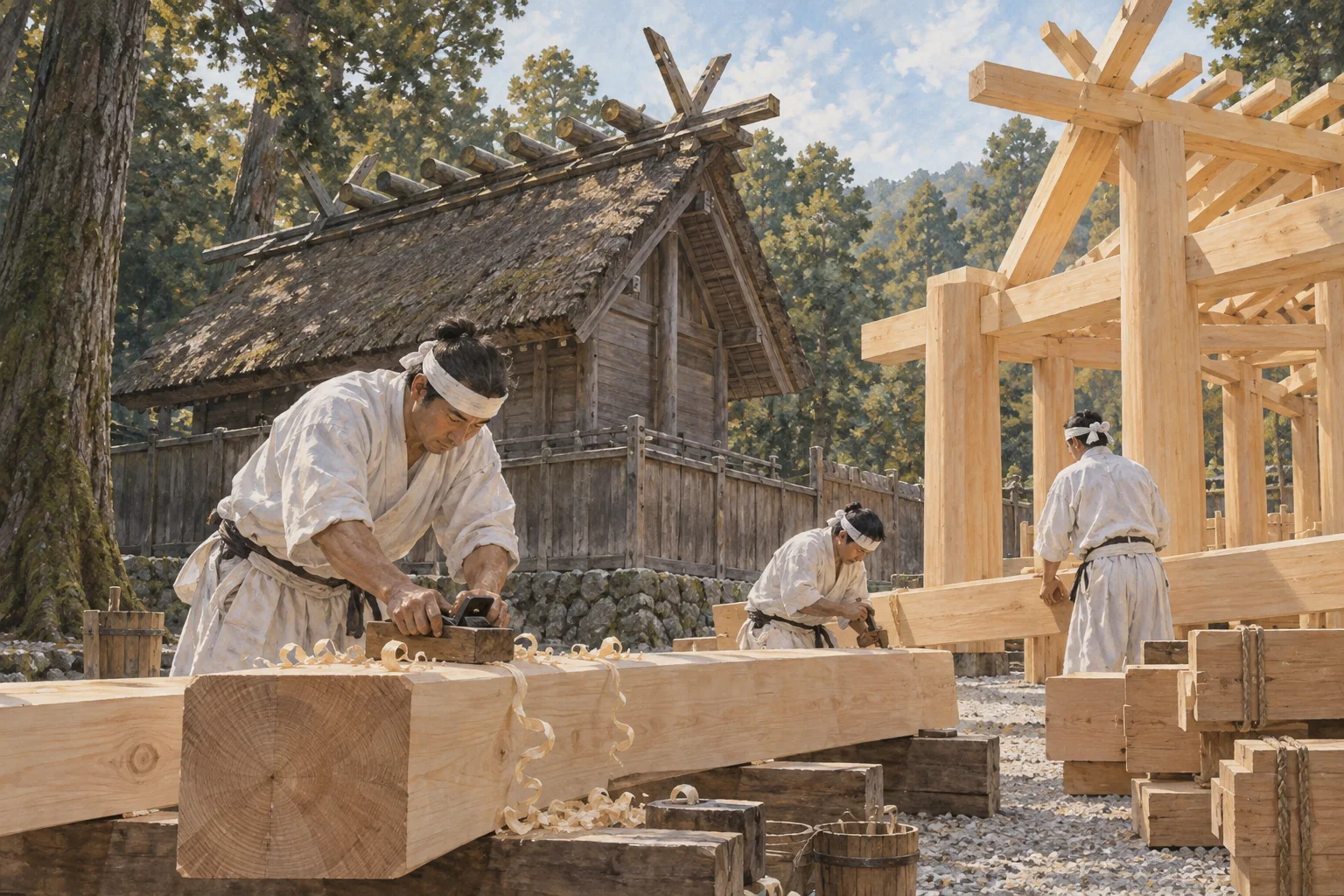
Every twenty years the main buildings of Ise Jingu are rebuilt from scratch on an adjacent plot, the deity is moved into the new buildings, and the old ones are dismantled. The practice is recorded from the seventh century. The most recent was in 2013, and the next is planned for 2033.
参As a short speechスピーチ・英作文
Shikinen sengu is the practice of rebuilding the main buildings of Ise Jingu every twenty years. Two identical plots sit side by side, and each cycle the new sanctuary is built on the empty one using the same plan, the same unpainted cypress and the same techniques, the sacred objects are moved across in a night ceremony, and the old buildings are taken down.
It has been done, with interruptions during the civil wars, since the seventh century. The point is not novelty. A wooden building with a thatched roof will not last a thousand years, but a set of skills will, if it is exercised regularly.
One common explanation is that twenty years is roughly a working generation: long enough that a carpenter who helped as a young man leads the next one, short enough that nobody has to learn it from a book. The timber, the tools, the roofing, the weaving, the metalwork and the ritual all get renewed together, which is why the practice is described as preserving the form by not preserving the building.
式年遷宮しきねんせんぐうshikinen sengurebuilding the shrine every twenty years
千三百年、二十年ごとに建て替えてきた。新しくすることで、古い形が残る。
壱一言で言うとIn one line
式年遷宮とは、伊勢神宮を二十年ごとに建て替える行事で、千年以上繰り返されてきました。
弐30秒で説明するIn 30 seconds
伊勢神宮では二十年ごとに、隣接する敷地に社殿を一から建て直し、神を新しい社殿へ遷し、古い社殿を解体します。この習わしは7世紀から記録されています。直近は2013年に行われ、次は2033年に予定されています。
参スピーチ・英作文As a short speech
式年遷宮とは、伊勢神宮の社殿を二十年ごとに建て替える習わしです。同じ広さの敷地が二つ並んでいて、その周期ごとに、空いているほうへ同じ設計、同じ彩色しない檜、同じ技法で新しい社殿を建て、夜の儀式で御神体を移し、古い社殿を解体します。
内乱による中断を挟みながら、7世紀から続いてきました。眼目は新しさではありません。茅葺きの木の建物は千年もちませんが、技は、繰り返し使われるならもちます。よく言われる説明では、二十年はおよそ働き手の一世代分です。
若いころに手伝った大工が次の遷宮を率いるには十分長く、誰かが書物から学び直さずに済むほど短い。木も道具も屋根も織物も金物も儀式も、一緒に更新されます。だからこの習わしは、建物を保存しないことによって形を保存していると説明されるのです。
こう聞かれたらQuestions people actually ask
QWhat happens to the old buildings?
AThey are dismantled and the timber is reused. Pieces go to shrines all over Japan for their own repairs and rebuilding, and the old main pillars become the torii gates at either end of the Uji Bridge, the entrance to the Inner Shrine, so almost nothing is wasted.
古い社殿はどうなるのですか。解体され、木材は再び使われます。全国の神社の修理や建て替えに配られ、古い正殿の柱は、内宮の入口にあたる宇治橋の両端の鳥居に生まれ変わります。ほとんど無駄が出ません。
QDoes that mean the shrine is not actually old?
AThe buildings are new; the design, the method and the continuity are very old. Which of those counts as the thing being preserved is exactly the question this practice raises, and it has been debated in heritage circles internationally.
では、その神社は古くないということですか。建物は新しく、設計と技法と連続性はきわめて古いものです。保存されているのがそのどれなのかという問いこそ、この習わしが投げかけるもので、文化遺産をめぐる国際的な議論でも取り上げられてきました。
そのまま使えるフレーズPhrases you can use
- It's rebuilt every twenty years.二十年ごとに建て替えます。
- The old timber goes to other shrines.古い木材は他の神社に使われます。
- The skills are what is being preserved.保たれているのは技のほうです。
- The next one is planned for 2033.次は2033年の予定です。
豆知識Background
式年遷宮は7世紀の持統天皇の時代に始まったと伝えられ、直近の第62回は2013年に行われました。次回は2033年が予定されています。社殿だけでなく、装束や神宝も新しく作り直され、関わる技術は多岐にわたります。準備は8年ほど前から始まり、御木曳や御白石持といった行事に地元の人々が参加します。解体された用材は全国の神社に譲られ、宇治橋の鳥居にも使われます。
出典日本文化ナビ(原田英語.com)「式年遷宮を英語で説明する(shikinen sengu)」https://www.haradaeigo.com/japanese-culture/en/shikinen-sengu
- 文
- 日本文化ナビ編集部(原田英語.com)— 英文・和訳・解説はすべて独自に作成
- イラスト
- 日本文化ナビ オリジナル
- 発行
- 原田英語.com https://www.haradaeigo.com/
- 印刷日
- 2026.10.17
© 2026 Harada Eigo (原田英語.com). Text and illustration: Japan Culture Navi.
ページはこちら