煮物
壱In one line一言で言うと
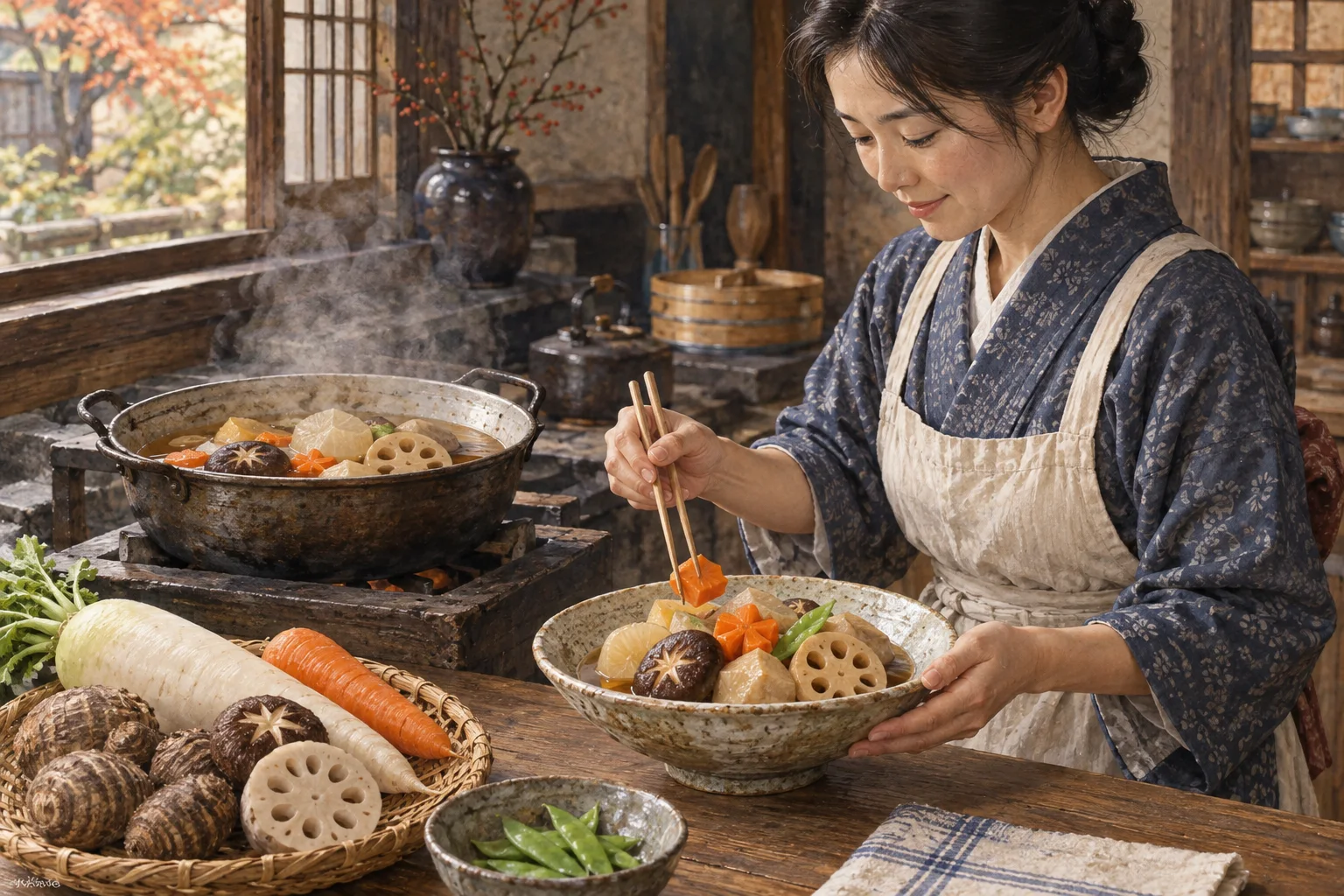
Nimono are vegetables, meat or fish gently simmered in a seasoned dashi broth, a staple of everyday Japanese home cooking.
弐In 30 seconds30秒で説明する
Nimono is not one dish but a whole method: ingredients are simmered slowly in dashi seasoned with soy sauce, sugar and mirin until the flavor soaks in. Unlike a Western stew, the broth is not thickened and the pieces are kept large and whole, not mashed together. Many households make a pot of nimono and eat it over several days, and it is often served warm or at room temperature rather than piping hot.
参As a short speechスピーチ・英作文
Nimono is one of the words worth knowing if you want to describe ordinary Japanese home cooking rather than restaurant food, because it covers some of the dishes families actually eat most often. It means anything simmered slowly in a broth built from dashi, soy sauce, sugar and mirin, until the seasoning has soaked into the ingredients rather than just coating them.
The style is different from a Western stew in a way that surprises people: the liquid is not thickened into a sauce, and the pieces of daikon, chicken or root vegetable are cut large and kept whole rather than broken down, so the dish still looks like its ingredients. Well-known examples include nikujaga, meat and potatoes, and chikuzenni, a mix of chicken and root vegetables served at New Year. Because the flavor develops as it cools, many households make a pot in advance and reheat portions over several days, which makes nimono as much a practical answer to a busy week as a specific taste.
煮物にものnimonoJapanese home-style simmered dishes
西洋の煮込みと違い、具はどろどろにせず、形を残したまま味を含ませる。
壱一言で言うとIn one line
煮物とは、野菜や肉、魚を出汁ベースの調味した汁でじっくり煮た料理で、日々の家庭料理の定番です。
弐30秒で説明するIn 30 seconds
煮物は一つの料理名ではなく、調理法そのものを指します。出汁に醤油、砂糖、みりんなどで味をつけ、具材にゆっくり味を含ませます。西洋の煮込みと違って汁にとろみはつけず、具は大きめに切って形を残したままにします。多くの家庭では鍋いっぱいに作って数日かけて食べ、熱々というより温かい、または常温に近い状態で出されることも多いです。
参スピーチ・英作文As a short speech
煮物は、レストランの料理ではなく、ふだんの日本の家庭料理を説明したいときに知っておく値打ちのある言葉です。実際に多くの家庭がよく食べている料理を指すからです。出汁に醤油、砂糖、みりんで味をつけた汁でゆっくり煮て、調味料が具材の表面をおおうだけでなく、中まで染み込むようにする料理全般を指します。
西洋の煮込み料理とは違う点があり、意外に思われがちです。汁にとろみはつけず、大根や鶏肉、根菜は大きめに切って形を保ったまま煮るので、出来上がっても素材の姿が見えます。よく知られる例に、肉とじゃがいもを煮る肉じゃが、正月に出す鶏肉と根菜を合わせた筑前煮があります。
冷めるあいだに味がなじむため、多くの家庭では一度にまとめて作り、数日かけて温め直しながら食べます。煮物は、特定の味というより、忙しい一週間への実際的な答えでもあるのです。
こう聞かれたらQuestions people actually ask
QIs nimono the same as a stew?
AClose, but not quite. The broth stays thin rather than thickened into a sauce, and the pieces of vegetable or meat are kept large and whole, so the dish still looks like its separate ingredients.
煮物はシチューと同じものですか。似ていますが、まったく同じではありません。汁はとろみをつけずさらっとしたままで、野菜や肉は大きめに切って形を保つので、出来上がっても素材がそれぞれ見分けられます。
QWhy is it often served just warm, not hot?
ANimono is believed to taste better once it has cooled a little and the seasoning has settled into the ingredients, and many households make it ahead of time rather than right before eating.
どうして熱々ではなく、温かい程度で出すことが多いのですか。少し冷めて味が具材によく染み込んでからのほうがおいしいと考えられており、多くの家庭では食べる直前ではなく、あらかじめ作っておくためです。
QWhat's a good nimono for a beginner to try?
ANikujaga, meat and potatoes in a soy-sweetened broth, is the most approachable. It is often held up as the classic taste of home cooking.
初めて食べるならどの煮物がよいですか。肉じゃがが取っつきやすいでしょう。醤油ベースの甘めの汁で肉とじゃがいもを煮たもので、家庭の味の代表として語られることが多い料理です。
そのまま使えるフレーズPhrases you can use
- This has been simmering since this morning.これは朝からずっと煮込んでいます。
- It tastes even better the next day.翌日のほうがもっとおいしくなります。
- The vegetables keep their shape.野菜は形が残っています。
- It's seasoned with dashi, soy sauce and mirin.出汁と醤油、みりんで味をつけています。
- We usually eat it warm, not hot.たいてい熱々ではなく、温かいくらいで食べます。
豆知識Background
煮物は出汁に醤油、砂糖、みりん、酒などを合わせた煮汁で具材に味を含ませる調理法の総称で、家庭ごとに配合や煮る時間が異なる。肉じゃがは、明治の海軍がイギリスのビーフシチューを再現しようとして生まれたとする説があるが、発祥地には諸説あるとされる。筑前煮は福岡県の郷土料理が全国に広まったもので、正月のおせちにも入る。冷めることで味が具材の中心まで入りやすくなるため、あえて時間を置いてから供する家庭も多い。
出典日本文化ナビ(原田英語.com)「煮物を英語で説明する(nimono)」https://www.haradaeigo.com/japanese-culture/en/nimono
- 文
- 日本文化ナビ編集部(原田英語.com)— 英文・和訳・解説はすべて独自に作成
- イラスト
- 日本文化ナビ オリジナル
- 発行
- 原田英語.com https://www.haradaeigo.com/
- 印刷日
- 2026.10.17
© 2026 Harada Eigo (原田英語.com). Text and illustration: Japan Culture Navi.
ページはこちら