国宝と重要文化財
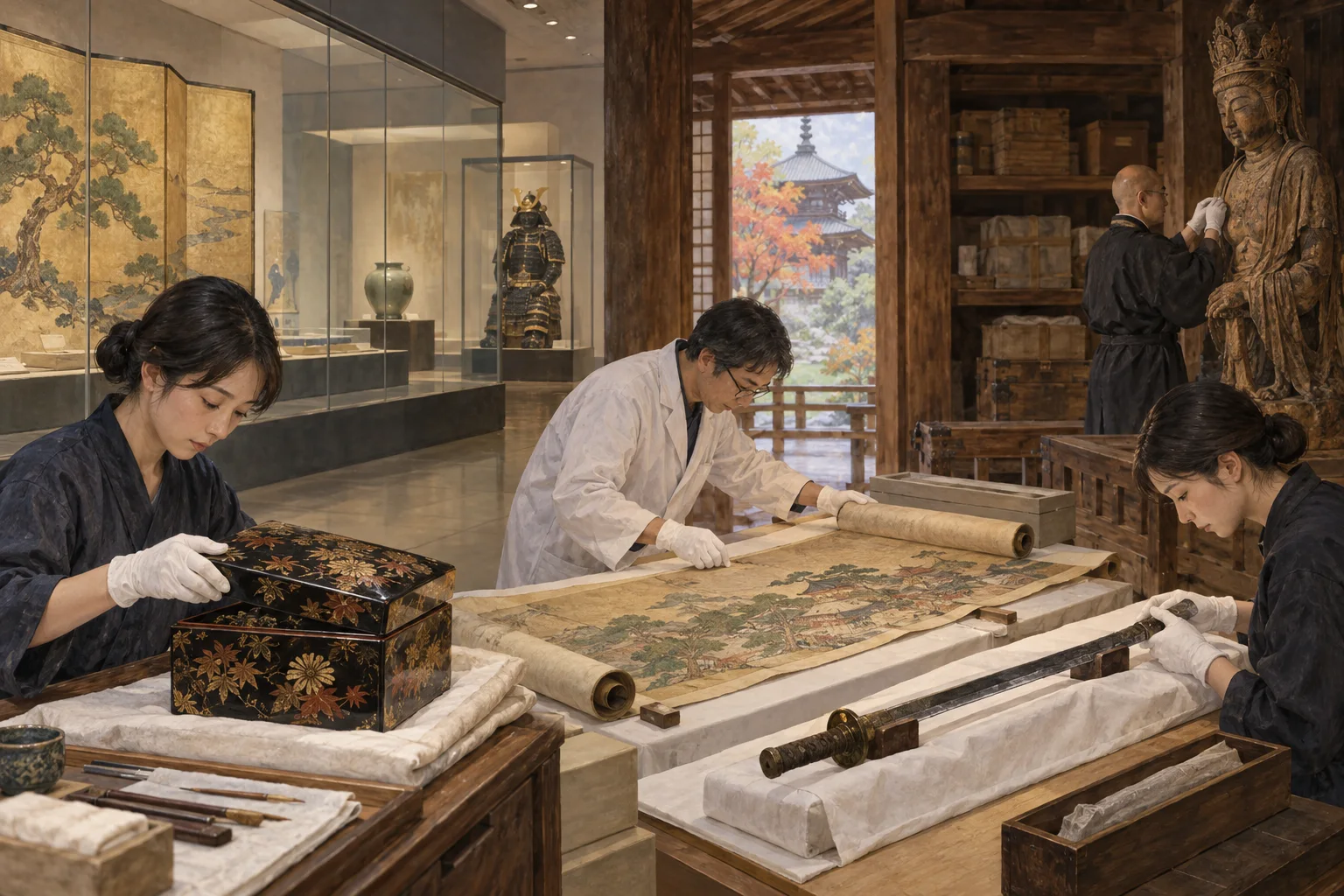
壱In one line一言で言うと
Kokuho to juyo bunkazai, or national treasures and important cultural properties, are one system, with national treasures at the top.
弐In 30 seconds30秒で説明する
Japan designates objects and buildings as important cultural properties, and from among those selects a small number as national treasures. The system covers paintings, swords, temples, documents and much else, and it also protects things that are not objects at all: crafts, performing arts and the people who carry them, which is where the term living national treasure comes from.
参As a short speechスピーチ・英作文
Visitors often assume that national treasure and important cultural property are two separate labels, with the second one meaning less. They are not parallel. The government designates important cultural properties, and then from within that group it selects a much smaller number as national treasures, so every national treasure is also an important cultural property.
There are over ten thousand of the former and around a thousand of the latter. What makes the Japanese system distinctive is its reach beyond objects. It also designates intangible cultural properties, meaning techniques and performing arts, and then recognizes individual holders of those techniques, which is what the press calls a living national treasure.
The law behind it dates from 1950 and was written in response to a fire that destroyed the wall paintings of Horyuji the previous year. The anniversary of that fire, January 26th, is still observed as a fire prevention day for cultural properties, with drills at temples.
国宝と重要文化財こくほうとじゅうようぶんかざいkokuho to juyo bunkazaihow Japan designates what it protects
国宝は重要文化財の中から選ばれる。別々の等級ではない。
壱一言で言うとIn one line
国宝と重要文化財は、別々の枠ではなく一つの仕組みで、国宝はその最上段です。
弐30秒で説明するIn 30 seconds
日本は、建造物や美術品を重要文化財に指定し、その中からとくに価値の高いものを国宝に選びます。対象は絵画、刀剣、寺社、古文書など幅広く、物ではないものも守ります。工芸や芸能、そしてそれを担う人です。人間国宝という呼び方は、ここから来ています。
参スピーチ・英作文As a short speech
国宝と重要文化財は別々の呼び名で、後者は格が下だと思われがちですが、並んでいるものではありません。国が重要文化財を指定し、その中からさらに少数を国宝に選びます。ですから国宝はすべて重要文化財でもあります。
数は前者が一万件を超え、後者は千件あまりです。日本の制度に特徴的なのは、物を越えて広がっている点です。技術や芸能を無形文化財として指定し、さらにその技を体得している個人を認定します。
報道が人間国宝と呼ぶのがこれです。もとになる法律は1950年のもので、前年に法隆寺の壁画が焼けたことを受けて作られました。その火災の日にあたる一月二十六日は、今も文化財防火デーとされ、寺社で消火訓練が行われます。
こう聞かれたらQuestions people actually ask
QDoes designation mean I can see it?
ANot necessarily. Many designated objects belong to temples, shrines or private owners and are shown rarely, sometimes once a year or less. Designation protects an object; it does not oblige anyone to display it.
指定されているものは見られるのですか。とは限りません。多くは寺社や個人の所有で、公開は年に一度かそれ以下ということもあります。指定は保護のためのもので、公開の義務を生むものではありません。
QCan a designated object be sold or exported?
ASale within Japan is possible with notification, and the state has a right of first refusal. Export is prohibited in principle; the Agency for Cultural Affairs can permit temporary loans to exhibitions abroad, but not a permanent move out of the country.
指定されたものを売ったり国外に出したりできますか。国内での売買は届け出をすれば可能で、国に買い取りの優先権があります。国外への持ち出しは原則として禁じられ、文化庁長官の許可を得て海外の展覧会に一時的に貸し出す場合などに限られます。
QWhat is a living national treasure?
AThe informal name for a person certified as holding an important intangible cultural property, such as a technique in dyeing, swordmaking or noh. They receive an annual grant intended to fund training successors, not as a prize.
人間国宝とはどういうものですか。重要無形文化財の保持者として認定された人を指す通称です。染織、刀剣、能などの技を対象とします。年ごとに交付金が出ますが、褒賞ではなく、後継者を育てるための費用という位置づけです。
誤解されやすいA common misunderstanding
MYTHNational treasure and important cultural property are two separate grades.国宝と重要文化財は、別々の等級だ、と思われがちです。
FACTNational treasures are selected from within the important cultural properties, so every national treasure is also one of them.国宝は重要文化財の中から選ばれます。したがって、国宝はすべて重要文化財でもあります。
そのまま使えるフレーズPhrases you can use
- This building is a national treasure.この建物は国宝です。
- It is only shown once a year.公開は年に一度だけです。
- Photography is not allowed here.ここは撮影できません。
- The craftsman is a certified holder.この職人は保持者に認定されています。
- The law dates from 1950.この法律は1950年のものです。
豆知識Background
日本の文化財保護法は1950年に制定されました。前年の1949年に法隆寺金堂の壁画が焼損したことが直接の契機とされ、火災の起きた一月二十六日は文化財防火デーとされています。重要文化財として指定されたものの中から、とくに価値の高いものが国宝に指定されるため、国宝はすべて重要文化財でもあります。対象は建造物や美術工芸品だけでなく、無形文化財として技術や芸能にも及び、その保持者の認定を人間国宝と通称します。
出典日本文化ナビ(原田英語.com)「国宝と重要文化財を英語で説明する(kokuho to juyo bunkazai)」https://www.haradaeigo.com/japanese-culture/en/national-treasures-and-important-cultural-properties
- 文
- 日本文化ナビ編集部(原田英語.com)— 英文・和訳・解説はすべて独自に作成
- イラスト
- 日本文化ナビ オリジナル
- 発行
- 原田英語.com https://www.haradaeigo.com/
- 印刷日
- 2026.10.17
© 2026 Harada Eigo (原田英語.com). Text and illustration: Japan Culture Navi.
ページはこちら