迷惑をかけない
壱In one line一言で言うと
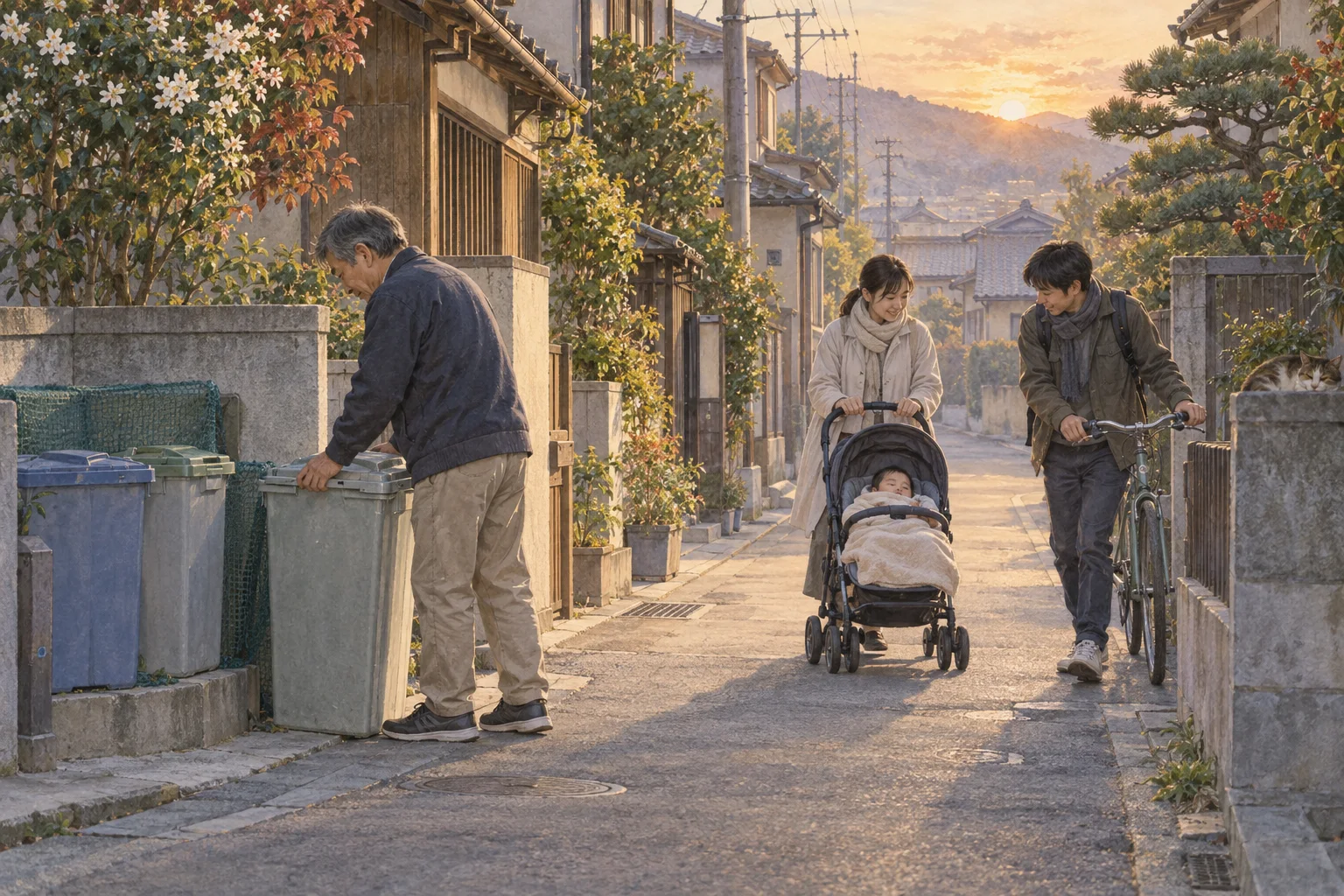
Many Japanese children grow up hearing one rule above all: don't cause trouble for other people.
弐In 30 seconds30秒で説明する
Meiwaku means trouble or nuisance caused to someone else, and not causing it is one of the most repeated rules in Japanese upbringing. It helps explain quiet trains, clean streets and orderly lines. It also helps explain why people hesitate to ask for help, since needing help means becoming someone's meiwaku.
参As a short speechスピーチ・英作文
If there is one sentence Japanese children hear more than any other, it is do not cause trouble for other people. The word is meiwaku, which covers everything from talking loudly on a train to leaving your work for a colleague to finish.
Foreign visitors usually notice the pleasant side first. Public space is quiet and clean because millions of people are each subtracting their own noise and mess from it. The cost shows up elsewhere.
Asking for help means admitting you are about to become someone's burden, so people put it off, and that includes asking for help at work, at school and with mental health. Raising a child on that one sentence produces a very considerate adult and a very hesitant one, and more Japanese parents today are aware of the second half.
迷惑をかけないめいわくをかけないmeiwaku wo kakenainot causing trouble for others
日本の子育てで特によく繰り返される一言。長所も短所もここから出る。
壱一言で言うとIn one line
多くの日本の子どもは、何よりもまず「人に迷惑をかけない」という決まりを聞かされて育ちます。
弐30秒で説明するIn 30 seconds
迷惑とは他人にかける面倒のことで、それをかけないことは日本の育て方で最もよく繰り返される決まりの一つです。静かな電車、きれいな道、整然とした行列は、これでかなり説明がつきます。同時に、人がなかなか助けを求めない理由の一つでもあります。助けが要るということは、誰かの迷惑になるということだからです。
参スピーチ・英作文As a short speech
日本の子どもが何よりも多く聞く言葉が一つあるとすれば、それは人に迷惑をかけるな、です。迷惑という語は、電車で大声で話すことから、自分の仕事を同僚に片づけさせることまでを含みます。外国から来た人はまず心地よい面に気づきます。
公共の場が静かで清潔なのは、何百万の人がそれぞれ自分の音と散らかりをそこから差し引いているからです。代償は別のところに出ます。助けを求めることは、これから誰かの重荷になると認めることなので、人はそれを先延ばしにします。
職場でも学校でも、心の健康についても同じです。この一文で子を育てれば、とても思いやりのある大人と、とてもためらいがちな大人ができあがります。今は、その後半のほうを意識する親も増えてきました。
こう聞かれたらQuestions people actually ask
QIs this why people apologize for tiny things?
APartly, yes. Sumimasen often means I have taken up a little of your time or space. It is a small payment for a small imposition, not an admission of fault.
だから日本人は小さなことでも謝るのですか。それもあります。すみませんは多くの場合、あなたの時間や場所を少しもらいました、という意味です。小さな負担に対する小さな支払いであって、非を認めているわけではありません。
QDoes it make people unwilling to help strangers?
AIt can look that way. Stepping in unasked risks being an imposition itself, so people hesitate. If you ask directly, the same person will usually go far out of their way for you.
そのせいで、知らない人を助けにくくなっていませんか。そう見えることがあります。頼まれずに踏み込むこと自体が押しつけになりかねないので、人はためらいます。こちらからはっきり頼めば、同じ人がたいてい、かなりの手間をかけて助けてくれます。
QHow do I avoid causing meiwaku as a guest?
AKeep your voice down in shared spaces, take your trash with you, be on time, and tell your host your plans in advance. Sudden changes are harder on people here than the change itself would suggest.
客として、迷惑をかけないためには何に気をつければよいですか。共有の場では声を落とし、ごみは持ち帰り、時間を守り、予定は前もって伝えることです。急な変更は、その変更そのもの以上に、ここでは人の負担になります。
誤解されやすいA common misunderstanding
MYTHJapanese people are cold because they don't help strangers.日本人は知らない人を助けないから冷たい、と思われがちです。
FACTThe hesitation is about not imposing, not about indifference. A direct request usually gets a surprisingly generous response.ためらいは押しつけまいとすることであって、無関心ではありません。はっきり頼めば、たいてい驚くほど親身な対応が返ってきます。
そのまま使えるフレーズPhrases you can use
- Sorry to trouble you.ご迷惑をおかけします。
- I don't want to be a burden.ご負担になりたくありません。
- Please take your trash with you.ごみはお持ち帰りください。
- Could I ask you a favor?お願いしてもいいですか。
- It's no trouble at all.まったく迷惑ではありません。
豆知識Background
迷惑の迷も惑も、まようという意味の字です。もとは仏教語で、心が迷い乱れることを指したとされ、他人にかける面倒という現在の使い方は後のものです。公共の場の掲示は「ご迷惑をおかけします」であふれており、工事中の看板から電車の遅延の放送まで同じ言い方をします。学校では、忘れ物やおしゃべりを叱るときに「悪い」ではなく「迷惑」と言うことが多く、この語がどれだけ早くから身につくかが分かります。
出典日本文化ナビ(原田英語.com)「迷惑をかけないを英語で説明する(meiwaku wo kakenai)」https://www.haradaeigo.com/japanese-culture/en/meiwaku-wo-kakenai
- 文
- 日本文化ナビ編集部(原田英語.com)— 英文・和訳・解説はすべて独自に作成
- イラスト
- 日本文化ナビ オリジナル
- 発行
- 原田英語.com https://www.haradaeigo.com/
- 印刷日
- 2026.10.17
© 2026 Harada Eigo (原田英語.com). Text and illustration: Japan Culture Navi.
ページはこちら