招き猫
壱In one line一言で言うと
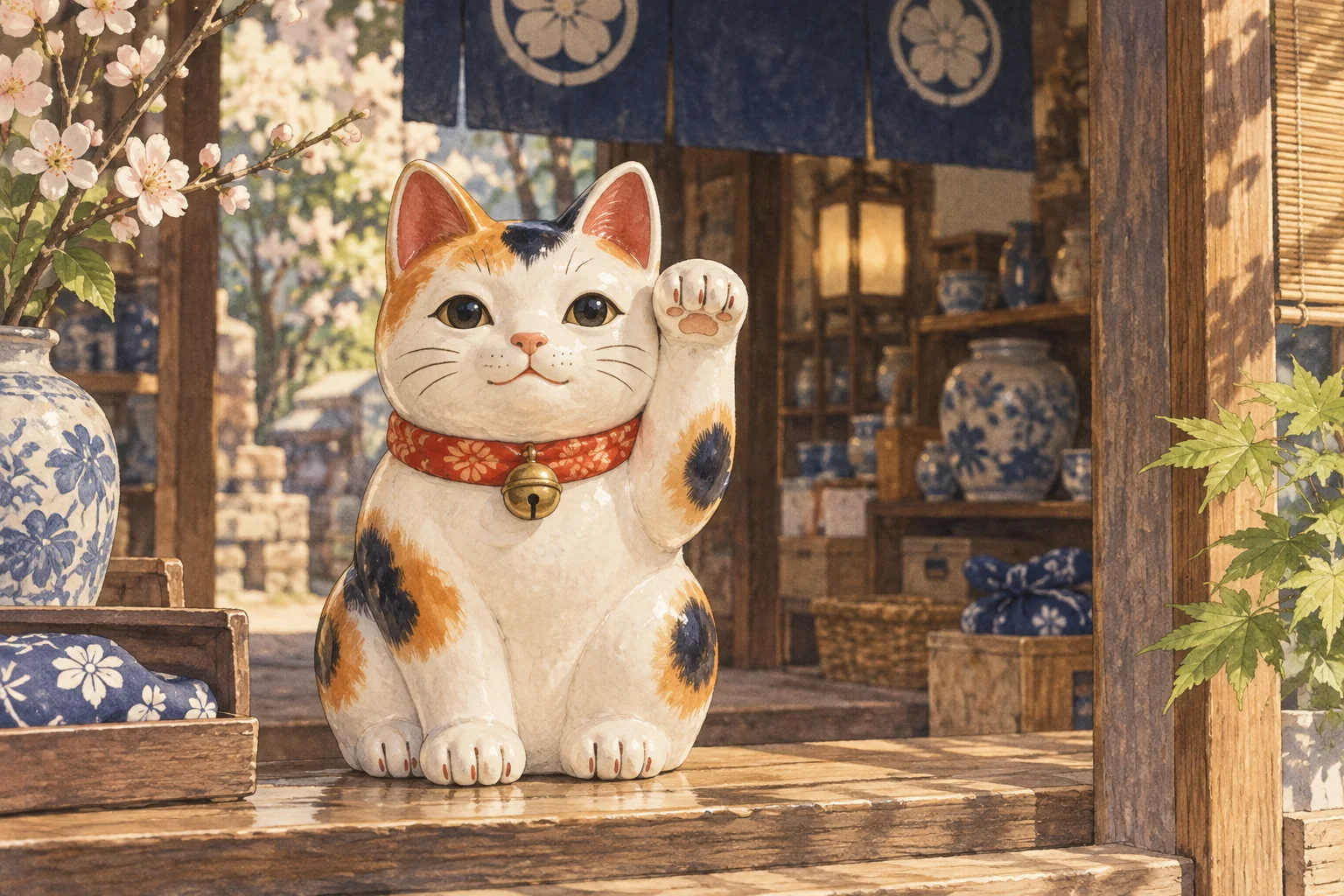
A maneki neko is the cat figure with a raised paw that shop owners put by the door to invite customers in.
弐In 30 seconds30秒で説明する
You see these cats in shop windows across Japan: a seated cat with one paw raised. The gesture is the Japanese way of beckoning someone closer, palm down, which looks like waving goodbye to Westerners. A raised left paw is said to invite customers and a raised right paw to invite money. The classic design is a short-tailed calico cat, white with orange and black patches.
参As a short speechスピーチ・英作文
The beckoning cat sits in the window of shops and restaurants all over Japan, one paw raised beside its head. The first thing to explain is the gesture. In Japan you call someone over with your palm facing down and your fingers moving toward you, which to a Western visitor looks exactly like waving goodbye.
So the cat is not saying farewell; it is saying come in. Which paw is raised matters. The left paw is said to invite customers and the right paw to invite money, and some shops keep one of each.
The story most often told is of a lord in Edo who sheltered from a storm under a tree, saw a cat at a temple gate beckoning him over, walked toward it, and avoided a lightning strike. He then became the temple's patron. Like most origin stories, it may not be true, but the temple is real and has rows upon rows of these cats.
招き猫まねきねこmaneki nekothe beckoning cat
手を挙げているのは「バイバイ」ではない。左右で意味が違うのも説明できる。
壱一言で言うとIn one line
招き猫とは、客を招くために店先に置く、片手を挙げた猫の置物です。
弐30秒で説明するIn 30 seconds
日本の店先でよく見かける、片手を挙げて座った猫の置物です。この仕草は日本式の「おいでおいで」で、手のひらを下に向けるため、欧米の人には「さようなら」に見えます。左手を挙げていると客を招き、右手だと金運を招くと言われます。定番は、白地に茶と黒のぶちがある、尾の短い三毛猫の姿です。
参スピーチ・英作文As a short speech
招き猫は、日本じゅうの店や飲食店の窓辺に座り、片手を顔の横に挙げています。まず説明すべきはこの仕草です。日本では、手のひらを下に向けて指を自分のほうへ動かして人を呼びます。欧米の方にはそれが「さようなら」の手振りに見えます。
だからこの猫は別れを告げているのではなく、入っておいでと言っているのです。どちらの手を挙げているかにも意味があります。左手は客を招き、右手は金を招くとされ、両方を並べる店もあります。
よく語られるのは、江戸のある殿様が嵐を避けて木の下にいたとき、寺の門で猫が手招きするのを見て歩み寄り、落雷を免れたという話です。その後、殿様は寺の庇護者になりました。多くの由来話と同じく真偽は定かではありませんが、その寺は実在し、おびただしい数の招き猫が並んでいます。
こう聞かれたらQuestions people actually ask
QWhy does it look like it's waving goodbye?
ABecause the Japanese beckoning gesture is palm down. The Western come-here gesture, palm up with a curling finger, can come across as rude in Japan.
どうして「さようなら」と手を振っているように見えるのですか。日本の「おいでおいで」は手のひらを下に向けるからです。欧米式の手のひらを上にして指を曲げる仕草は、日本では失礼に感じられることがあります。
QDoes the color mean anything?
ABy convention, yes: white for general good luck, black to ward off evil, gold for money, pink for love. These associations are mostly modern marketing rather than old folklore.
色に意味はあるのですか。慣習としては意味があります。白は開運、黒は魔除け、金は金運、ピンクは恋愛。ただしこれらの多くは古い伝承ではなく、現代の商品化のなかで整理されたものです。
QWhere does the tradition come from?
ASeveral temples and shrines claim to be the origin, most famously Gotokuji in Tokyo. Figures like these appear from the Edo period onward. No single origin is confirmed.
この習慣はどこから来たのですか。複数の寺社が発祥を名乗っており、最も有名なのは東京の豪徳寺です。この種の置物は江戸時代以降に現れます。決定的な発祥は確認されていません。
誤解されやすいA common misunderstanding
MYTHThe cat is waving goodbye to customers.猫は客に手を振って見送っていると思われがちです。
FACTIt is beckoning. The Japanese gesture for come here uses a downward palm, which reads as goodbye to many Westerners.招いています。日本の「おいで」の仕草は手のひらを下に向けるため、欧米の人には別れの手振りに見えるのです。
そのまま使えるフレーズPhrases you can use
- It's beckoning you in, not waving goodbye.さよならではなく、招いているんです。
- Left paw invites customers, right paw invites money.左手は客を、右手はお金を招きます。
- You'll see them in lots of shops.たくさんの店で見かけます。
- In Japan we beckon with the palm facing down.日本では手のひらを下に向けて人を呼びます。
- There's a temple in Tokyo covered in them.東京に、招き猫だらけの寺があります。
豆知識Background
発祥を名乗る寺社は複数あり、東京・世田谷の豪徳寺、浅草の今戸神社、新宿の自性院などが知られる。豪徳寺の伝承では、彦根藩主・井伊直孝が猫に招かれて雷雨を避けたことから、井伊家の菩提寺となったとされる。同寺には奉納された招き猫がおびただしい数並んでいる。招き猫の産地としては愛知県常滑市が有名で、瀬戸焼や九谷焼の招き猫もある。手を高く挙げるほど遠くの福を招くとされ、近年は両手を挙げた招き猫も売られているが、「万歳=お手上げ」に通じるとして嫌う人もいる。日本猫の尾が短いのは、尾の長い猫が化けるという俗信の影響という説もある。
出典日本文化ナビ(原田英語.com)「招き猫を英語で説明する(maneki neko)」https://www.haradaeigo.com/japanese-culture/en/maneki-neko
- 文
- 日本文化ナビ編集部(原田英語.com)— 英文・和訳・解説はすべて独自に作成
- イラスト
- 日本文化ナビ オリジナル
- 発行
- 原田英語.com https://www.haradaeigo.com/
- 印刷日
- 2026.10.17
© 2026 Harada Eigo (原田英語.com). Text and illustration: Japan Culture Navi.
ページはこちら