講談
壱In one line一言で言うと
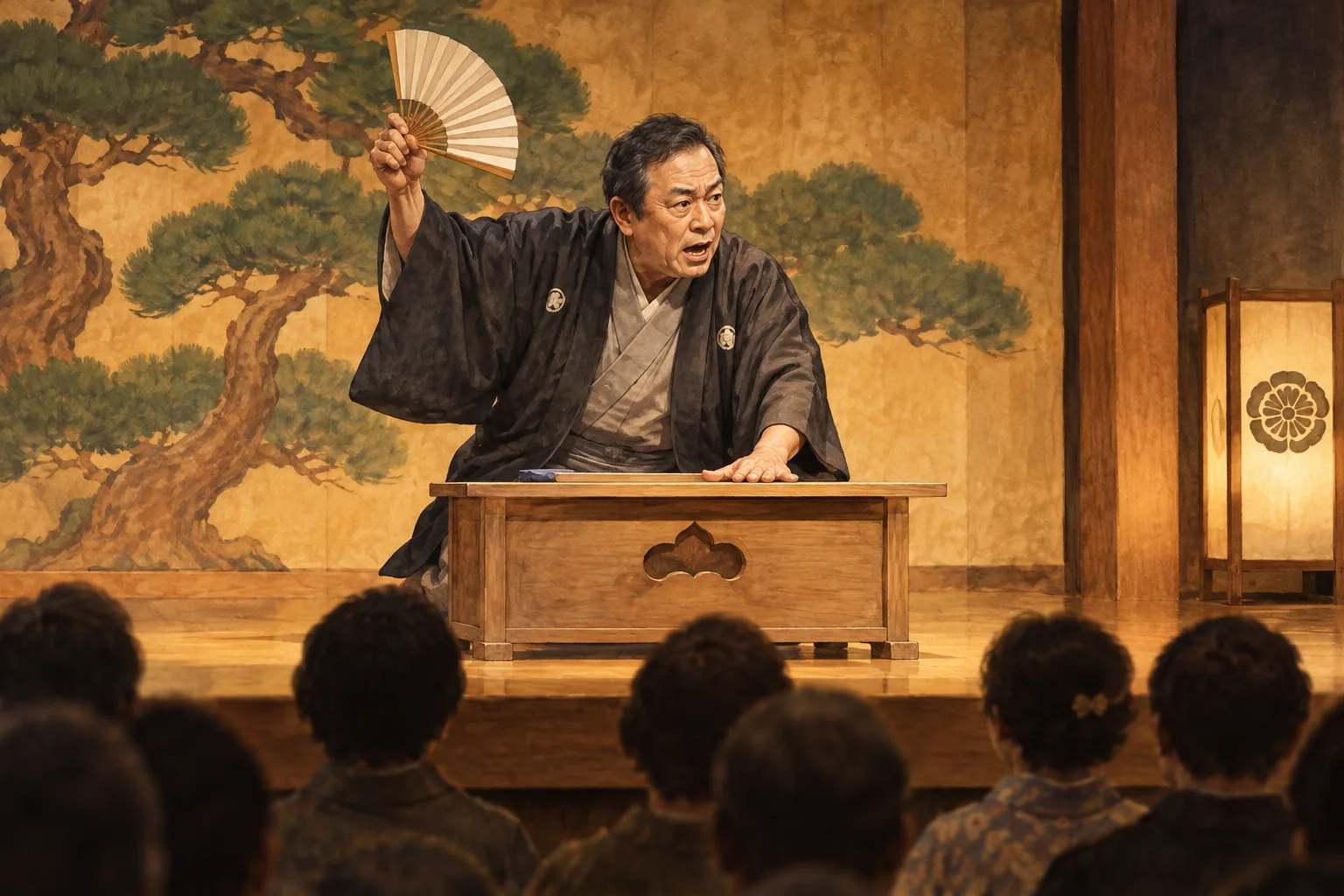
Kodan is narrative storytelling in which one performer recounts battles and heroes, beating a desk for rhythm.
弐In 30 seconds30秒で説明する
A kodan performer sits behind a low desk with a folded paper fan and strikes the desk to mark the rhythm of the narration. The material is war tales, the deeds of famous swordsmen and judges, and the revenge of the forty-seven retainers. Where rakugo is dialogue aimed at a laugh, kodan is narration aimed at carrying you through an episode.
参As a short speechスピーチ・英作文
Japan has two great solo storytelling arts, and foreign visitors usually hear about only one. Rakugo is comic, built from dialogue between characters, and ends on a punchline. Kodan is its older, more serious sibling.
The performer sits behind a small desk, holds a tightly folded paper fan, and hits the desk with it to drive the rhythm, and the voice does not play characters so much as narrate: battles, the lives of famous swordsmen, upright magistrates, the forty-seven retainers taking their revenge.
Long works are serialized over many evenings and the performer stops at the moment of greatest tension, a technique often said to have influenced later serial fiction. The art nearly died out; by the late twentieth century only a small number of professional performers remained. Then it came back into public attention, particularly after a popular performer took the historic name Kanda Hakuzan in 2020, and tickets for his shows became hard to get.
講談こうだんkodanstorytelling of battles and heroes, told from behind a small desk
机を扇で叩きながら語る。落語が笑わせ、講談は語り聞かせる。
壱一言で言うとIn one line
講談は、一人の演者が戦や英傑の話を語る芸で、机を叩いて調子を取ります。
弐30秒で説明するIn 30 seconds
講談師は低い釈台の後ろに座り、紙を折った張扇で釈台を叩いて語りの調子を作ります。演目は軍記、名高い剣客や名奉行の話、四十七士の討ち入りなどです。落語が会話で笑わせるのに対し、講談は語りで一つの場面を運びます。
参スピーチ・英作文As a short speech
日本には一人で語る芸が二つあり、外国からの人が耳にするのはたいてい片方だけです。落語は滑稽で、登場人物の会話で組み立て、落ちで終わります。講談はその兄にあたる、より硬い芸です。演者は小さな釈台の後ろに座り、固く折った張扇を持ち、それで釈台を打って調子を運びます。
声は人物を演じ分けるというより、語ります。戦、名高い剣客の生涯、名奉行、四十七士の討ち入り。長い演目は何日にも分けて続き、いちばん気になるところで切り上げます。この手法は、のちの連載小説にも影響を与えたと言われます。
この芸は一度は絶えかけました。二十世紀の後半には、職業として語る人はごくわずかになっていました。そこから注目が戻り、とくに2020年に人気のある演者が神田伯山という由緒ある名を継いでからは、その会の切符が取りにくくなりました。
こう聞かれたらQuestions people actually ask
QHow do I tell it apart from rakugo?
ALook for the desk. A rakugo performer sits on a cushion with nothing in front of them and uses a fan as a prop; a kodan performer has a low desk and hits it. The sound of the fan on wood is the giveaway.
落語とはどう見分けるのですか。釈台があるかどうかです。落語家は座布団に座り、前には何も置かず、扇子を小道具に使います。講談師は低い机を前に置き、それを叩きます。木を打つ音が目印です。
QCan I follow it without Japanese?
ALess easily than rakugo, because the pleasure is in the language and the rhythm rather than in situations you can read from gesture. A few halls run performances with English subtitles or a summary handout.
日本語がわからなくても楽しめますか。落語よりは難しいでしょう。面白さは言葉と調子にあり、身ぶりから筋を読み取れる場面の芸ではないからです。英語の字幕や、あらすじの紙を用意する会もあります。
QWhere is it performed?
AAt the variety halls in Tokyo and Osaka that also run rakugo, and at independent evenings. Tokyo's halls list kodan performers in the same program, so you can see both arts in one sitting.
どこで演じられていますか。落語と同じ寄席のほか、独立した会でも演じられます。東京の寄席では同じ番組に講談師が並ぶので、一度に両方を聴けます。
そのまま使えるフレーズPhrases you can use
- He is hitting the desk with a fan.扇で机を叩いています。
- This is narration, not dialogue.会話ではなく語りです。
- The story runs over several nights.続きものになっています。
- It stops at the exciting part.いいところで終わります。
- Rakugo makes you laugh; this does not have to.落語は笑わせますが、講談はその必要がありません。
豆知識Background
講談は、釈台の前に座った演者が、張扇で台を打ちながら語る話芸です。軍記物、武勇伝、名奉行の裁き、赤穂義士伝などが主な演目で、長い演目を何日にも分けて語る続き読みの形をとります。会話で笑いを作る落語に対し、語りで物語を運ぶ点が異なります。演者は二十世紀の後半に大きく減りました。2020年に六代目神田伯山の襲名があってから講談への注目が高まり、人気の会の切符が取りにくくなる状況が生まれています。
出典日本文化ナビ(原田英語.com)「講談を英語で説明する(kodan)」https://www.haradaeigo.com/japanese-culture/en/kodan
- 文
- 日本文化ナビ編集部(原田英語.com)— 英文・和訳・解説はすべて独自に作成
- イラスト
- 日本文化ナビ オリジナル
- 発行
- 原田英語.com https://www.haradaeigo.com/
- 印刷日
- 2026.10.17
© 2026 Harada Eigo (原田英語.com). Text and illustration: Japan Culture Navi.
ページはこちら