歌舞伎
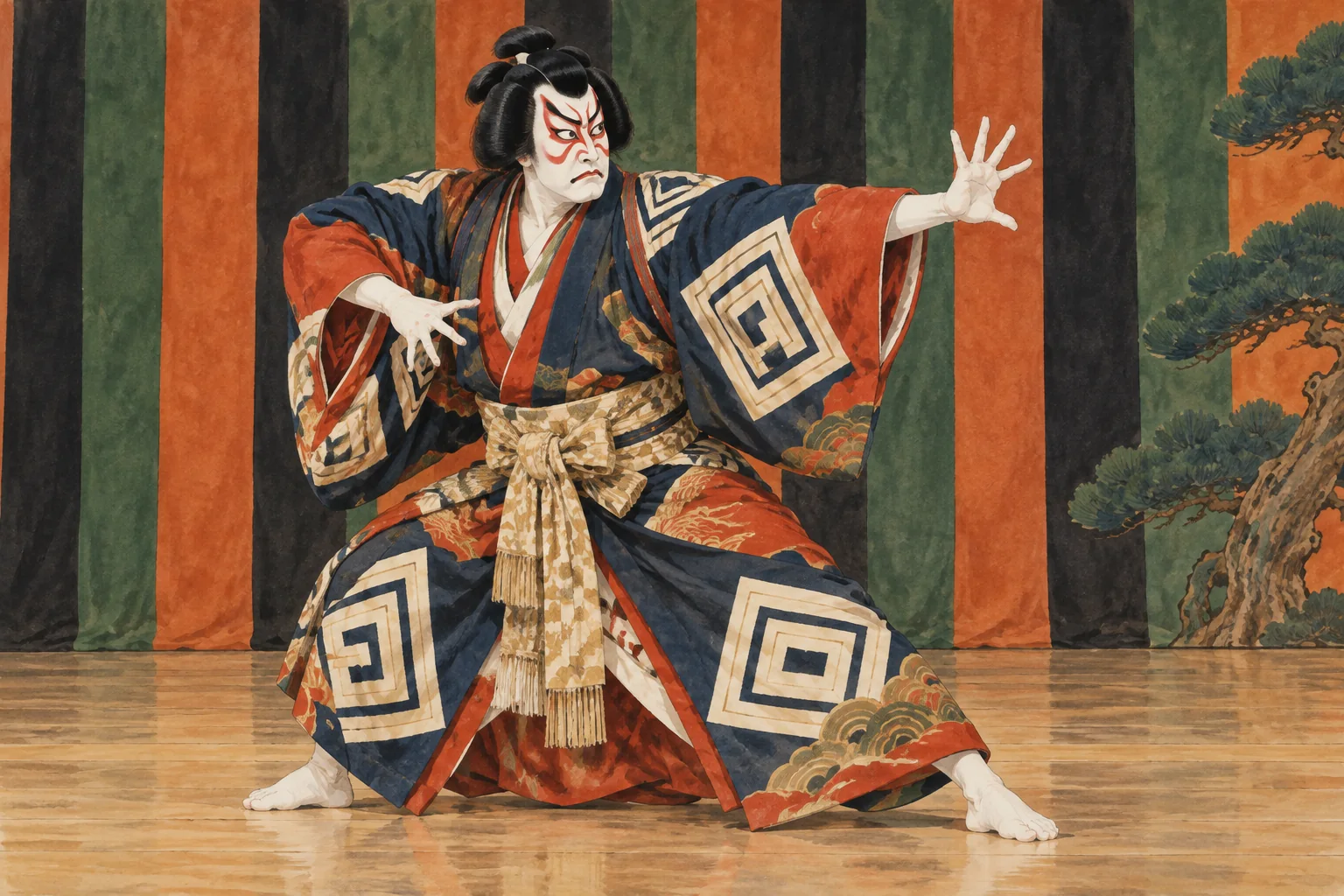
壱In one line一言で言うと
Kabuki is a classical Japanese theater known for bold makeup, stylized acting and all-male casts.
弐In 30 seconds30秒で説明する
Kabuki began around 1600 and became the popular theater of the merchant class. It is loud, visual and melodramatic, with revolving stages, trapdoors and a walkway running through the audience. All roles are played by men, including the female ones, by specialists called onnagata. Performances are long, but some theaters sell tickets for a single act, which suits first-time viewers.
参As a short speechスピーチ・英作文
Kabuki is Japan's classical popular theater, and it is more approachable than people expect. It began around 1600 with a woman named Izumo no Okuni, who led a troupe of female performers in Kyoto. Women were banned from the stage a few decades later, and then boys were banned too, which is how kabuki became an all-male form.
Female roles are played by specialists called onnagata, who train in them for their whole career. What makes kabuki fun to watch is that it was built for a mass audience. The stage revolves, actors rise through trapdoors, and there is a walkway running right through the seating so the actor passes among the audience.
At key moments, fans in the audience shout the actor's house name. If you want to try it, the Kabukiza theater in Tokyo sells single-act tickets for much less than a full show, and English audio guides are available.
歌舞伎かぶきkabukiclassical Japanese theater
始めたのは女性。今は全役を男性が演じる。この逆転の理由が面白い。
壱一言で言うとIn one line
歌舞伎は、大胆な化粧と様式化された演技、そして全役を男性が演じることで知られる古典演劇です。
弐30秒で説明するIn 30 seconds
歌舞伎は1600年ごろに始まり、町人の大衆演劇として発展しました。派手で、視覚的で、情に訴える芝居です。回り舞台、せり、そして客席を貫く花道があります。女性の役も含め全役を男性が演じ、女形という専門の役者がいます。上演は長いですが、一幕だけの席を売る劇場もあり、初めての人に向いています。
参スピーチ・英作文As a short speech
歌舞伎は日本の古典的な大衆演劇で、思われているより親しみやすいものです。始まりは1600年ごろ、出雲阿国という女性が京都で女性の一座を率いたことにあります。数十年後に女性が舞台から締め出され、次いで少年も禁じられました。
歌舞伎が男性だけの形になったのはそのためです。女性の役は女形という専門の役者が演じ、生涯をかけてその芸を磨きます。歌舞伎が見ていて楽しいのは、大衆のために作られているからです。
舞台は回り、役者はせりからせり上がり、客席を貫く花道を役者が通っていきます。見せ場では、客席のファンが役者の屋号を叫びます。試してみたいなら、東京の歌舞伎座では通しの切符よりずっと安い一幕見席を売っており、英語の音声ガイドもあります。
こう聞かれたらQuestions people actually ask
QWhy are all the actors men?
AIt started with women. In 1629 the shogunate banned women from the kabuki stage, officially for public morals, then banned adolescent boys too. Adult men took over all roles, and the convention stayed after the bans were gone.
どうして役者が全員男性なのですか。始めたのは女性でした。1629年に幕府が風紀を理由に女性の出演を禁じ、続いて少年も禁じました。成人男性が全役を引き受け、禁令がなくなった後もその形が残りました。
QWhat are people shouting?
AThe actor's house name, called a yago. It is done by trained enthusiasts at exact moments, and shouting at the wrong moment is frowned on, so leave it to them.
客席から何を叫んでいるのですか。屋号です。決まった瞬間に、慣れた常連が掛けます。間の悪い掛け声は嫌われるので、任せておくのが無難です。
QDo I need to understand Japanese?
AIt helps, but the language is archaic and even Japanese audiences use the guide. English audio guides explain the plot as it happens, and a great deal is carried visually.
日本語が分からないとだめですか。分かれば助かりますが、台詞は古い言葉で、日本人の観客もガイドを使います。英語の音声ガイドが筋を解説してくれますし、視覚で伝わる部分がとても多いです。
誤解されやすいA common misunderstanding
MYTHKabuki is solemn high art for the elite.歌舞伎は上流階級のための厳かな芸術だと思われがちです。
FACTIt was the popular entertainment of Edo townspeople, full of fights, ghosts, doomed lovers and spectacular stage tricks. Noh is the aristocratic form; kabuki was the crowd-pleaser.江戸の町人の娯楽でした。立ち回り、幽霊、心中、派手な舞台の仕掛けにあふれています。貴族の芸能は能で、歌舞伎は大衆を沸かせるものでした。
そのまま使えるフレーズPhrases you can use
- All the roles, including women, are played by men.女性の役も含めて、全役を男性が演じます。
- You can buy a ticket for just one act.一幕だけの席も買えます。
- That walkway through the audience is called the hanamichi.客席を通るあの通路を花道といいます。
- There's an English audio guide.英語の音声ガイドがあります。
- The shouting is the actor's house name.あの掛け声は役者の屋号です。
豆知識Background
歌舞伎の始まりは1603年ごろ、出雲阿国が京都で演じた「かぶき踊り」とされる。「かぶく」は常軌を逸した振る舞いを意味する語で、当時の風変わりな装いの若者を「かぶき者」と呼んだ。1629年に女歌舞伎、1652年に若衆歌舞伎が禁じられ、成人男性による野郎歌舞伎に移行した。回り舞台は1758年に並木正三が考案したとされ、西洋より100年以上早い。歌舞伎は2005年にユネスコの「人類の口承及び無形遺産の傑作」に宣言され、2008年に無形文化遺産の代表一覧表へ記載された。東京・東銀座の歌舞伎座では一幕見席が販売され、通しの席より安い料金で一幕だけ観ることができる。
出典日本文化ナビ(原田英語.com)「歌舞伎を英語で説明する(kabuki)」https://www.haradaeigo.com/japanese-culture/en/kabuki
- 文
- 日本文化ナビ編集部(原田英語.com)— 英文・和訳・解説はすべて独自に作成
- イラスト
- 日本文化ナビ オリジナル
- 発行
- 原田英語.com https://www.haradaeigo.com/
- 印刷日
- 2026.10.17
© 2026 Harada Eigo (原田英語.com). Text and illustration: Japan Culture Navi.
ページはこちら