日本の昔話
壱In one line一言で言うと
Nihon no mukashibanashi, or Japanese folk tales, are a few stories nearly every Japanese child knows and adults still quote.
弐In 30 seconds30秒で説明する
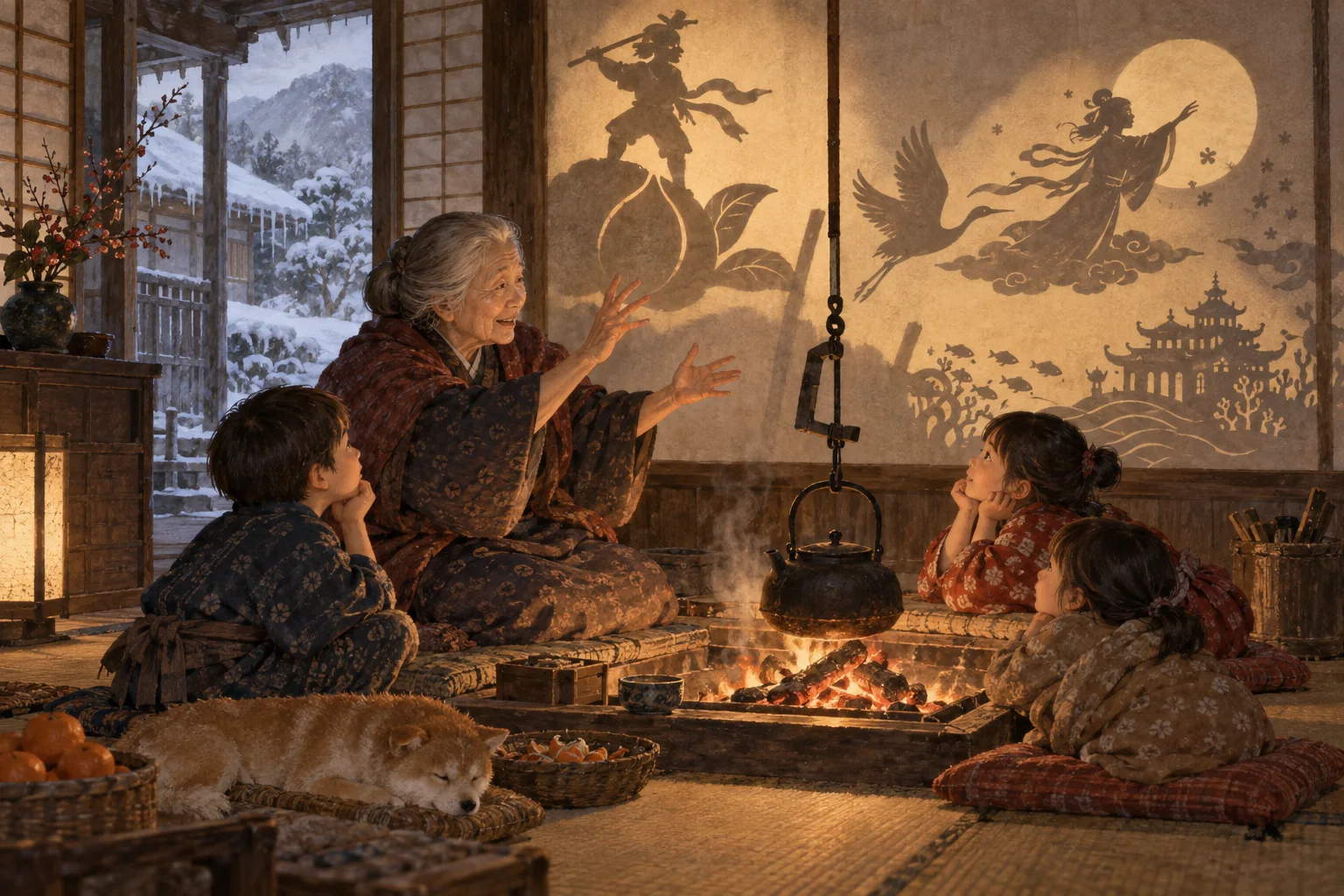
Five or six tales are known by almost everyone: Momotaro, born from a peach and fighting demons; Urashima Taro, who visits a palace under the sea; Kaguya-hime, found in a bamboo stalk; Kintaro, the strong boy of the mountains; and the crane who repays a kindness. They open with mukashi mukashi, once upon a time, and not all of them end happily.
参As a short speechスピーチ・英作文
If you want a shortcut into how Japanese people think, learn the folk tales, because adults quote them constantly. There are five that everyone knows. Momotaro is found inside a peach, grows up strong, and goes to fight demons on an island, recruiting a dog, a monkey and a pheasant with millet dumplings; his name can be used for a leader who gathers a team.
Urashima Taro saves a turtle, is taken to a palace under the sea, and returns to find three hundred years have passed; he is what we say when someone comes back to a changed world. Kaguya-hime is discovered in a bamboo stalk, rejects five noble suitors and the emperor, and returns to the moon.
Kintaro is the boy who wrestles bears. And the crane, saved from a trap, becomes a woman who weaves cloth from her own feathers until her husband breaks his promise and looks. That last one is the key to the whole set: several of the best-known stories end in loss.
日本の昔話にほんのむかしばなしnihon no mukashibanashithe handful of stories every Japanese child grows up knowing
どれも「むかしむかし」で始まり、「めでたしめでたし」で終わるとは限らない。
壱一言で言うとIn one line
日本の昔話とは、ほとんどの日本の子どもが知り、大人になっても引き合いに出す、少数の物語です。
弐30秒で説明するIn 30 seconds
誰もが知っている話が五つ六つあります。桃から生まれて鬼を退治する桃太郎。海の底の宮殿を訪ねる浦島太郎。竹の中から見つかるかぐや姫。山の力持ちの金太郎。そして助けられた恩を返す鶴。どれも「むかしむかし」で始まり、幸せに終わるとは限りません。
参スピーチ・英作文As a short speech
日本人の考え方への近道が欲しいなら、昔話を覚えるといいです。大人がしょっちゅう引き合いに出すからです。誰もが知っているのが五つ。桃太郎は桃の中から見つかり、強く育ち、きび団子で犬と猿と雉を仲間にして、島へ鬼を退治しに行きます。
人を集めて何かを始める人が、いまも桃太郎にたとえられることがあります。浦島太郎は亀を助け、海の底の宮殿に招かれ、帰ってみると三百年が過ぎている。変わってしまった世界に戻ってきた人を、私たちは浦島太郎と言います。かぐや姫は竹の中から見つかり、五人の貴公子と帝の求婚を退け、月へ帰ります。
金太郎は熊と相撲をとる子。そして鶴は、罠から助けられて女の姿になり、自分の羽を織り込んで布を作り、夫が約束を破って覗いたところで去ります。この最後の話が、全体の鍵です。よく知られた話のいくつかは、失って終わります。
こう聞かれたらQuestions people actually ask
QDo they all end happily?
ANo, and that surprises people. Urashima Taro loses three centuries of his life, the crane leaves forever, and Kaguya-hime returns to the moon leaving everyone behind. Only Momotaro and Kintaro end in straightforward triumph.
どれも幸せに終わるのですか。終わりません。そこが驚かれます。浦島太郎は三百年を失い、鶴は去り、かぐや姫は皆を残して月へ帰ります。はっきり勝って終わるのは桃太郎と金太郎くらいです。
QHow old are these stories?
AThey vary. Kaguya-hime survives as a written tale from around the tenth century, the oldest in Japanese literature. Urashima appears in eighth-century records. Momotaro took its current shape much later, in the Edo period.
どれくらい古い話なのですか。まちまちです。かぐや姫は10世紀ごろの物語として残り、日本の物語文学で最も古いとされます。浦島は8世紀の記録に見えます。桃太郎がいまの形になったのは、ずっとあと、江戸時代です。
QAre they used in daily conversation?
AOften, as shorthand. Calling someone Urashima Taro means they have been out of touch, and Momotaro can stand for a leader who gathers loyal followers. The crane's story comes up when someone breaks a promise not to look.
日常の会話で使うのですか。よく、たとえとして使います。浦島太郎と言えば、しばらく離れていて世の中に疎いこと。桃太郎は、仲間を集めて率いる人のたとえになります。鶴の恩返しは、「見ないで」という約束を破る話として引き合いに出されます。
そのまま使えるフレーズPhrases you can use
- They all begin with mukashi mukashi — once upon a time.どれも「むかしむかし」で始まります。
- Momotaro was born from a peach.桃太郎は桃から生まれました。
- Urashima Taro came back three hundred years later.浦島太郎は三百年後に帰ってきました。
- Kaguya-hime returned to the moon.かぐや姫は月へ帰りました。
- Several of them end in loss, not victory.勝って終わらない話がいくつもあります。
豆知識Background
五大昔話として桃太郎・浦島太郎・かちかち山・舌切り雀・猿蟹合戦を挙げる数え方もあり、地域や時代で顔ぶれは動く。かぐや姫の『竹取物語』は9世紀末から10世紀初めの成立とされ、現存する日本最古の物語文学である。『源氏物語』には「物語の出で来はじめの祖」と記されている。浦島の話は『日本書紀』『万葉集』『丹後国風土記』に原型が見え、開けてはならない箱もすでに登場するが、子どもにいじめられる亀を助ける場面は後の形である。明治以降、教科書と絵本を通じて話の筋がそろえられ、それ以前の地域ごとの異なる結末は目立たなくなった。
出典日本文化ナビ(原田英語.com)「日本の昔話を英語で説明する(nihon no mukashibanashi)」https://www.haradaeigo.com/japanese-culture/en/japanese-folk-tales
- 文
- 日本文化ナビ編集部(原田英語.com)— 英文・和訳・解説はすべて独自に作成
- イラスト
- 日本文化ナビ オリジナル
- 発行
- 原田英語.com https://www.haradaeigo.com/
- 印刷日
- 2026.10.17
© 2026 Harada Eigo (原田英語.com). Text and illustration: Japan Culture Navi.
ページはこちら