下駄
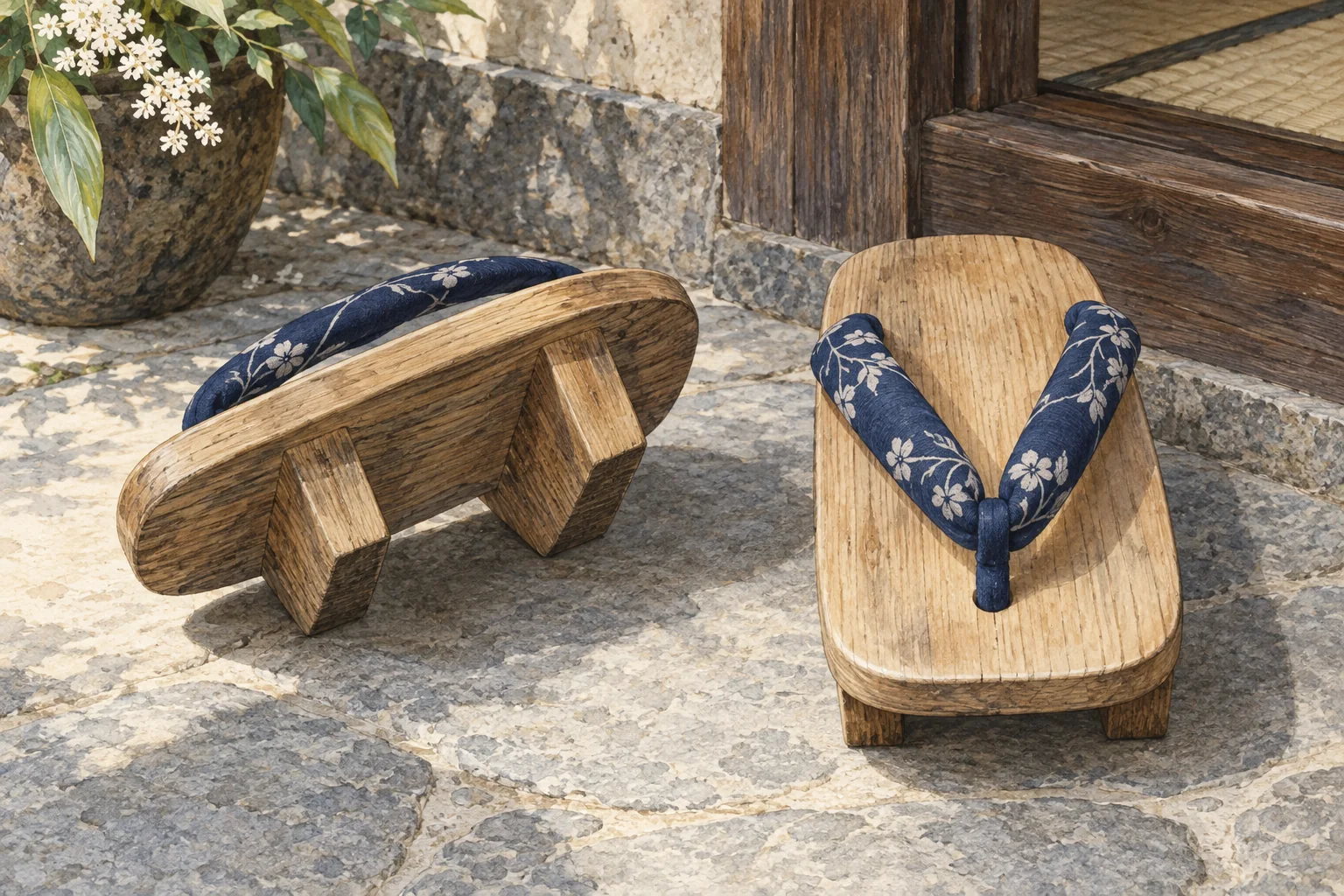
壱In one line一言で言うと
Geta are raised wooden sandals worn with a yukata, and they make a distinctive clacking sound.
弐In 30 seconds30秒で説明する
Geta are wooden sandals with one or two supporting blocks underneath, held on by a cloth thong between the toes. The raised height keeps the wearer out of mud and above hot ground. They are worn with yukata at summer festivals, and the clacking sound they make on pavement is a recognized sound of summer.
参As a short speechスピーチ・英作文
Geta are wooden sandals with blocks underneath that lift the foot several centimeters off the ground, held on by a fabric thong that passes between the big toe and the second toe. The height had practical purposes: it kept the wearer's feet and the hem of their clothes out of mud and puddles, and off ground baked hot by the sun.
Today they are worn mainly with yukata at summer festivals and fireworks displays, and there is one detail everyone knows, which is the sound. Wood on stone makes a distinctive clacking, and in Japanese it is written as a specific onomatopoeia, karan koron.
It is used in literature and film to signal summer without any other description. A warning from experience: if you are not used to them, walking any distance in geta can give you a blister between your toes within an hour. Bring a bandage.
下駄げたgetawooden sandals
カランコロンという音まで含めて文化。日本語には下駄由来の言葉がいくつもある。
壱一言で言うとIn one line
下駄は浴衣に合わせて履く、高さのある木の履物で、独特の音がします。
弐30秒で説明するIn 30 seconds
下駄は木の台に一本か二本の歯をつけた履物で、鼻緒を指のあいだに挟んで履きます。高さがあるので、ぬかるみや熱い地面を避けられます。夏祭りには浴衣に合わせて履き、石畳を歩くときのカランコロンという音は、夏の音として知られています。
参スピーチ・英作文As a short speech
下駄は、足を数センチ持ち上げる歯のついた木の履物で、鼻緒を親指と人差し指のあいだに挟んで履きます。高さには実用的な理由がありました。足と着物の裾をぬかるみや水たまりから守り、日に焼けて熱くなった地面から離すためです。
今は主に夏祭りや花火大会で浴衣と合わせて履かれます。そして誰もが知っている一点があります。音です。木が石を打つカランコロンという音には専用の擬音語があり、文学や映画では、他の描写なしにそれだけで夏を示すことができます。
経験からの忠告を一つ。慣れていない人が下駄で少し歩くと、一時間ほどで指のあいだに靴ずれができることがあります。絆創膏を持っていってください。
こう聞かれたらQuestions people actually ask
QWhat's the difference from zori?
AGeta are wood with raised teeth and are informal; zori are flat, made of straw, leather or vinyl, and are what you wear with a formal kimono. Wearing geta with a formal kimono would be wrong.
草履とはどう違うのですか。下駄は木で歯があり、くだけた履物です。草履は平らで、藁・革・ビニールなどで作られ、礼装の着物に合わせます。礼装に下駄は不適切です。
QDo they hurt?
AFor beginners, yes, between the toes. Loosening the thong slightly and wearing them a little before the event helps. Many Japanese people carry a bandage to festivals for exactly this.
痛くないのですか。慣れないうちは、指のあいだが痛みます。鼻緒を少しゆるめ、当日の前に少し履いておくと違います。日本人でも、そのために祭りに絆創膏を持っていく人は多いです。
QIs it true that your heel hangs off the back?
AYes, and that is correct. Traditionally you wear them slightly small so the heel sits just off the end. Buying a size that fits fully, as with shoes, is not the traditional way.
かかとがはみ出すというのは本当ですか。本当で、それが正しい履き方です。伝統的には少し小さめを履き、かかとが少し出る状態にします。靴のようにぴったりの大きさを選ぶのは、伝統的な履き方ではありません。
そのまま使えるフレーズPhrases you can use
- Your heel is supposed to hang off the back.かかとは少し出るのが正しい履き方です。
- They make a clacking sound on stone.石の上ではカランコロンと鳴ります。
- Geta go with yukata, zori with kimono.下駄は浴衣に、草履は着物に合わせます。
- Bring a bandage — they rub between the toes.絆創膏を持っていって。指のあいだが擦れます。
- The height keeps your hem out of the mud.高さがあるので、裾がぬかるみにつきません。
豆知識Background
下駄の歴史は古く、弥生時代の遺跡から田んぼで使う「田下駄」が出土している。台の下の突起を「歯」と呼び、二枚歯が一般的だが、一本歯の下駄は修験者や天狗の姿と結びつけられる。日本語には下駄に由来する言い回しが多い。「下駄を預ける」は判断を相手に一任すること、「下駄を履かせる」は数値を水増しすること。印刷業界では、活字が裏返しで入って「〓」と印字されるものを、下駄の歯に似ていることから「ゲタ」と呼ぶ。鼻緒は少しゆるめに、かかとが台から少し出る大きさを選ぶのが伝統的な履き方である。
出典日本文化ナビ(原田英語.com)「下駄を英語で説明する(geta)」https://www.haradaeigo.com/japanese-culture/en/geta
- 文
- 日本文化ナビ編集部(原田英語.com)— 英文・和訳・解説はすべて独自に作成
- イラスト
- 日本文化ナビ オリジナル
- 発行
- 原田英語.com https://www.haradaeigo.com/
- 印刷日
- 2026.10.17
© 2026 Harada Eigo (原田英語.com). Text and illustration: Japan Culture Navi.
ページはこちら