合掌
壱In one line一言で言うと
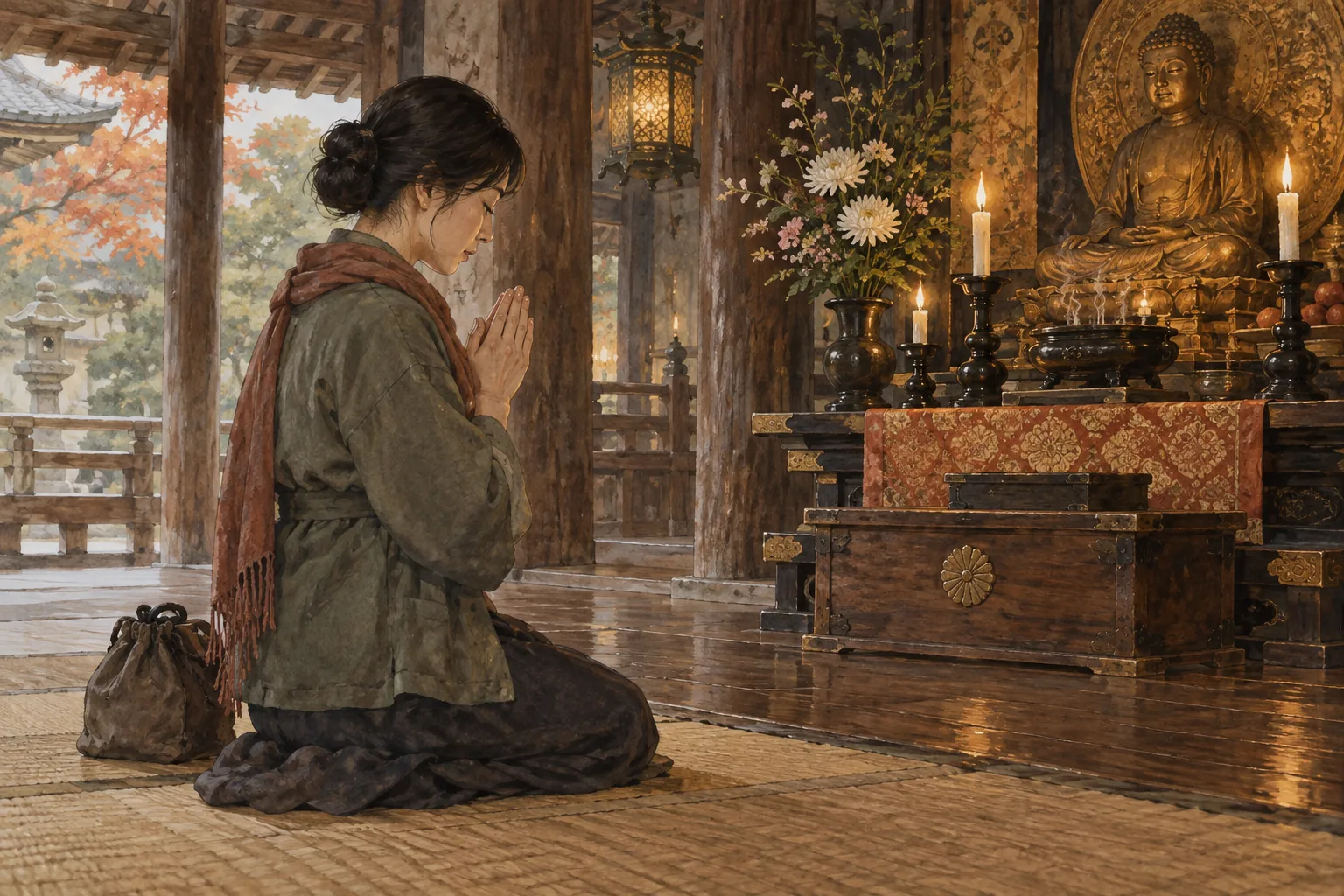
Gassho means putting the palms together, used in prayer, thanks, apology and before meals.
弐In 30 seconds30秒で説明する
Gassho is the gesture of pressing the palms together in front of the chest. It came into Japan with Buddhism and spread far beyond it: people do it before meals, at graves and altars, when apologizing, when asking a favor, and when thanking someone. The meaning is read from the situation, not from the gesture.
参As a short speechスピーチ・英作文
Gassho is the gesture of putting the palms together in front of the chest, and it arrived in Japan with Buddhism from India, where it was already a greeting. In Japan it spread well past religion. You will see it before and after a meal with the words for receiving and for finishing.
You will see it at a grave, at a household altar and at a temple. You will also see a quick, casual version used to apologize for being late, to ask a favor, or to thank someone for covering a bill, sometimes with one hand raised in a chopping motion instead.
Because the situations are so different, the gesture carries no fixed message; it marks that the person is addressing something outside themselves. One practical note for visitors: at a Shinto shrine you clap twice before putting your hands together, while at a Buddhist temple you do not clap at all.
合掌がっしょうgasshoputting the hands together
食事の前のあれも、墓の前のあれも、同じ形。意味だけが違う。
壱一言で言うとIn one line
合掌とは手のひらを合わせることで、祈り、感謝、謝罪、食事の前などに使われます。
弐30秒で説明するIn 30 seconds
合掌とは、胸の前で手のひらを合わせる所作です。仏教とともに日本に入り、そこを大きく越えて広まりました。食事の前、墓や仏壇の前、謝るとき、頼みごとをするとき、礼を言うときに行います。意味は所作ではなく場面から読み取られます。
参スピーチ・英作文As a short speech
合掌は胸の前で手のひらを合わせる所作で、仏教とともにインドから日本に入りました。インドでは元来あいさつでもありました。日本では宗教の枠をはるかに越えて広まります。食事の前と後に、いただきますとごちそうさまの言葉とともに行います。
墓の前、仏壇の前、寺の本堂の前でも行います。さらに、遅れたことを詫びるとき、頼みごとをするとき、勘定を持ってもらった礼を言うときに、素早く軽い形で使われ、片手を立てて切るような仕草で代えることもあります。
場面がこれほど違うため、この所作に固定した意味はありません。示しているのは、その人が自分の外にある何かに向き合っているということです。訪れる人に実用の注意をひとつ。神社では二度手を打ってから手を合わせますが、寺では手を打ちません。
こう聞かれたらQuestions people actually ask
QShould I clap at a temple?
ANo. Clapping belongs at Shinto shrines. At a Buddhist temple you put your hands together quietly, bow your head, and that is all. Clapping at a temple is one of the most common mistakes visitors make.
お寺では手をたたくのですか。打ちません。拍手は神社のものです。寺では静かに手を合わせ、頭を下げるだけです。寺で手を打つのは、訪れた人によくある間違いのひとつです。
QIs it religious when done before a meal?
AFor most people, no. It has become a habit taught in childhood and at school, and the words said with it thank everyone and everything involved in the food rather than addressing a deity. Some families do mean it religiously.
食事の前に言うときも宗教的な意味があるのですか。多くの人にとっては違います。子どものころと学校で教えられた習慣になっていて、添える言葉は神仏にではなく、その食べ物に関わったすべてに感謝するものです。信仰として行う家庭もあります。
そのまま使えるフレーズPhrases you can use
- Just put your palms together.手のひらを合わせるだけです。
- Don't clap at a temple.寺では手を打ちません。
- We do it before eating.食事の前にします。
- It can also mean sorry or please.ごめんやお願いの意味にもなります。
豆知識Background
合掌はインドで敬意を示すあいさつとして用いられていた所作で、仏教とともに東アジアへ伝わりました。日本では食事の前後、参拝、葬儀のほか、日常の軽い詫びや依頼にも使われます。白川郷の合掌造りは、屋根の形が手を合わせた姿に似ていることからその名がつきました。神社では二礼二拍手一礼が一般的で、拍手を打つのは神道の作法です。寺では拍手を打たず、静かに合掌します。
出典日本文化ナビ(原田英語.com)「合掌を英語で説明する(gassho)」https://www.haradaeigo.com/japanese-culture/en/gassho
- 文
- 日本文化ナビ編集部(原田英語.com)— 英文・和訳・解説はすべて独自に作成
- イラスト
- 日本文化ナビ オリジナル
- 発行
- 原田英語.com https://www.haradaeigo.com/
- 印刷日
- 2026.10.17
© 2026 Harada Eigo (原田英語.com). Text and illustration: Japan Culture Navi.
ページはこちら