座敷童子
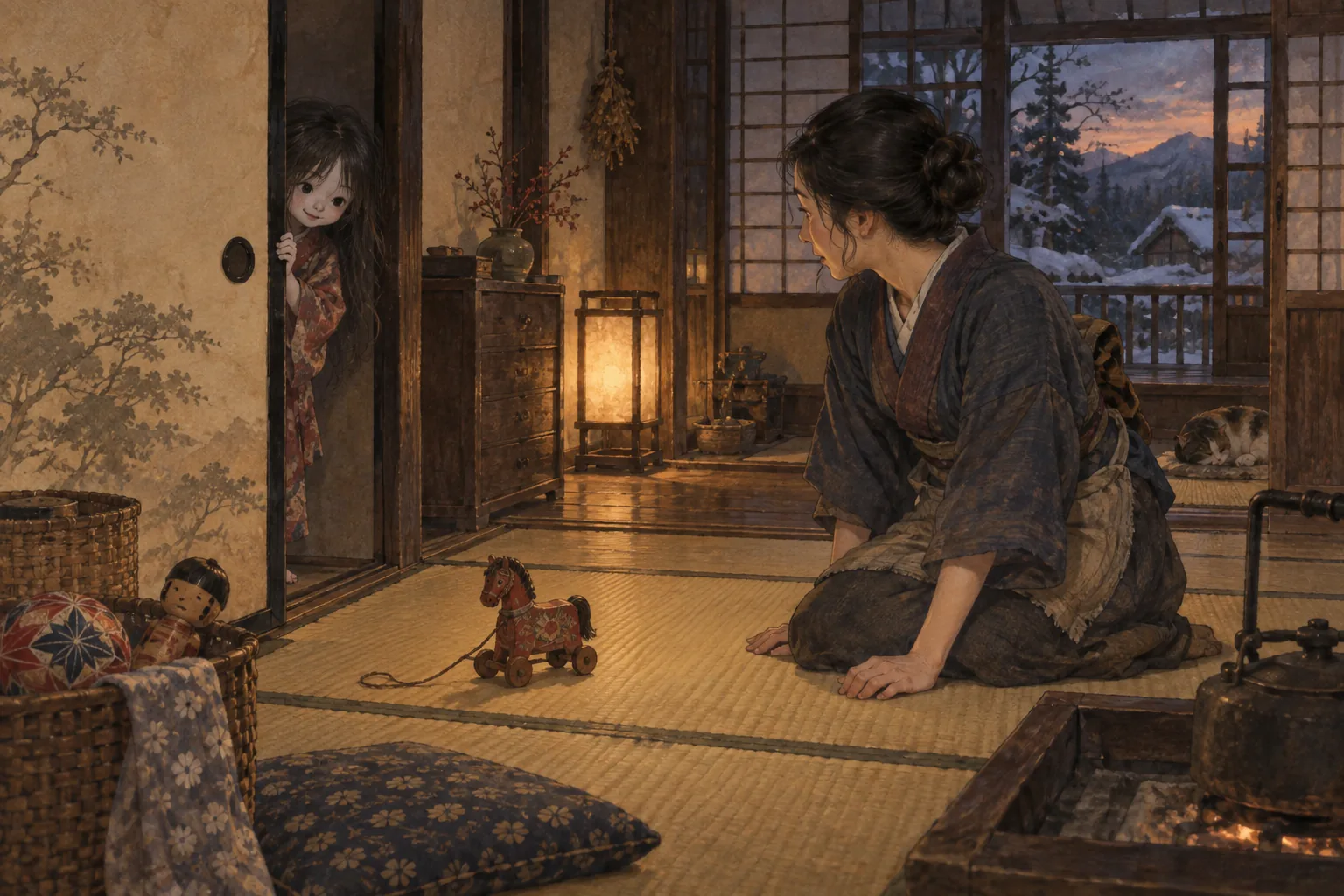
壱In one line一言で言うと
A zashiki warashi is a child spirit said to live in a house and bring it prosperity.
弐In 30 seconds30秒で説明する
A zashiki warashi is a spirit in the form of a young child, said to live in the guest room of an old house. A household it favors prospers, and a household it leaves goes into decline. The stories come mainly from the Tohoku region, especially Iwate, and some inns there still advertise the room where it is said to appear.
参As a short speechスピーチ・英作文
A zashiki warashi is a house spirit that takes the form of a small child, and the belief is concentrated in the Tohoku region, particularly Iwate. It is said to live in the guest room of a large old house, to be heard running down a corridor at night or leaving small footprints, and occasionally to be seen by children when adults cannot see it.
What matters in every story is the same: while it stays, the household prospers, and when it leaves, the family declines and sometimes collapses entirely. That makes it unusual among Japanese spirits, because you are not trying to drive it away but to keep it.
Some inns in Iwate keep a room said to be its own, with toys left in it, and it can be booked up far in advance. Folklorists have read the stories as a way of explaining sudden changes of fortune, and darker readings connect them to children who did not survive in poor farming villages.
座敷童子ざしきわらしzashiki warashithe child spirit of the house
いる家は栄える。出て行った家は傾く。だから引き止めようとする。
壱一言で言うとIn one line
座敷童子とは、家に住みついてその家を栄えさせるとされる子どもの姿の霊です。
弐30秒で説明するIn 30 seconds
座敷童子とは、古い家の座敷に住むとされる幼い子どもの姿の霊です。気に入られた家は栄え、去られた家は衰えるとされます。伝承の中心は東北、とくに岩手で、その部屋があるとして今も宣伝している宿があります。
参スピーチ・英作文As a short speech
座敷童子は幼い子どもの姿をとる家の霊で、この信仰は東北、とくに岩手に集中しています。大きな古い家の座敷に住み、夜に廊下を走る音が聞こえ、小さな足跡を残し、大人には見えないのに子どもには見えることがあると語られます。
どの話でも肝心なのは同じことです。いる間その家は栄え、去ればその家は傾き、ときに完全に絶えてしまう。これは日本の霊の中では珍しいことです。追い払おうとするのではなく、留まってもらおうとする相手だからです。
岩手には座敷童子の部屋とされる一室を残して玩具を置き、予約がかなり先まで埋まることもある宿があります。民俗学者はこの話を、家運が急に変わることの説明として読んできました。より重い読み方として、貧しい農村で育たなかった子どもと結びつける見方もあります。
こう聞かれたらQuestions people actually ask
QIs it a ghost?
ANot in the sense of a specific dead person haunting a place. It is treated as a spirit attached to the house itself, closer to a household deity than to a ghost, which is why families wanted it to stay rather than to leave.
それは幽霊なのですか。特定の死者がその場所に取りついているという意味の幽霊ではありません。家そのものに付いた霊として扱われ、幽霊よりは家の神に近いものです。だからこそ家の人は、去ってほしいのではなく留まってほしいと願いました。
QCan you stay in one of those rooms?
AA few inns in Iwate do offer them, and they can be booked up far ahead. Treat it as local tradition rather than a guaranteed experience, and be respectful in how you talk about it, since for some families this is not a joke.
その部屋に泊まることはできるのですか。岩手の一部の宿が実際に受けていて、予約はかなり先まで埋まっています。体験が保証されるものではなく地域の伝承として受け止め、話し方にも気をつけてください。家によっては冗談で済む話ではありません。
そのまま使えるフレーズPhrases you can use
- The house prospers while it stays.いる間その家は栄えます。
- It's said to look like a small child.幼い子どもの姿だと言われます。
- The stories come mostly from Iwate.伝承の多くは岩手のものです。
- Families wanted it to stay, not leave.家の人は去られることを恐れました。
豆知識Background
座敷童子は、柳田国男が岩手県遠野の伝承をまとめた『遠野物語』に記されたことで広く知られました。姿は五、六歳ほどの子どもで、赤い顔、おかっぱ頭などと語られます。去るときは家の外へ出て行く姿が目撃されたとする話が多く、その直後に家が没落したという筋立てになります。座敷は客をもてなす部屋であり、そこに霊が住むという設定は、家の格と結びついた話であることを示しています。
出典日本文化ナビ(原田英語.com)「座敷童子を英語で説明する(zashiki warashi)」https://www.haradaeigo.com/japanese-culture/w/zashiki-warashi
- 文
- 日本文化ナビ編集部(原田英語.com)— 英文・和訳・解説はすべて独自に作成
- イラスト
- 日本文化ナビ オリジナル
- 発行
- 原田英語.com https://www.haradaeigo.com/
- 印刷日
- 2026.10.17
© 2026 Harada Eigo (原田英語.com). Text and illustration: Japan Culture Navi.
ページはこちら