残業
壱In one line一言で言うと
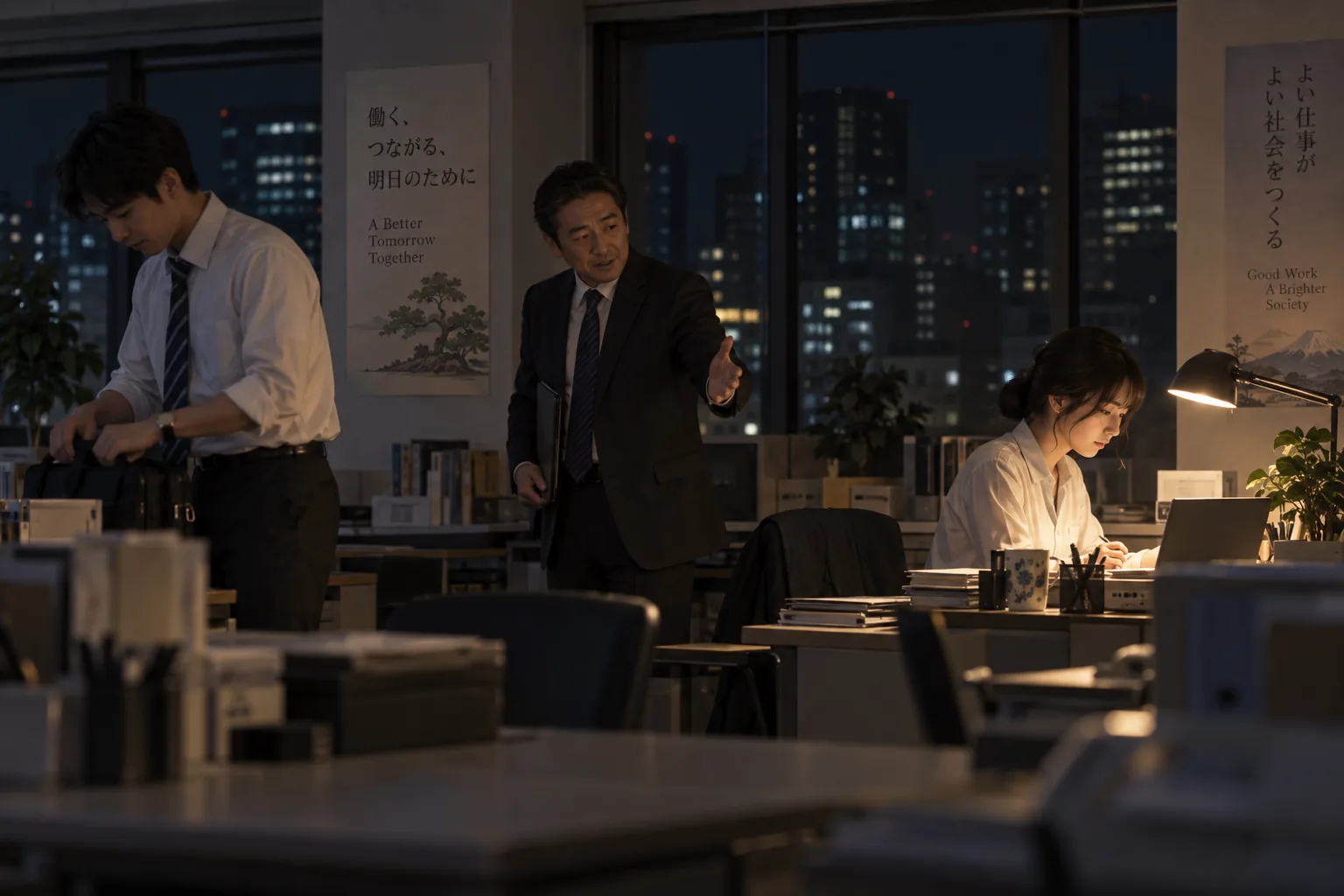
Zangyo is overtime, and in Japan people often stay late for reasons that have nothing to do with the workload.
弐In 30 seconds30秒で説明する
Long overtime has been a defining feature of Japanese working life. Part of it is workload, but part of it is atmosphere: it can feel difficult to leave before your boss does, even with nothing left to do. A 2019 law finally set legal caps on overtime hours, and working patterns are changing, though the older culture has not disappeared.
参As a short speechスピーチ・英作文
Zangyo means overtime, and for a long time it was simply assumed in Japanese companies. Some of it is genuine workload. But a large part of it has been social. If your boss is still at their desk, leaving at six can feel like a statement, so people stay, and the office empties slowly from the top down.
There is even a word, tsukiai zangyo, for overtime you do purely to keep company. This has had serious consequences. Japan has a word, karoshi, for death from overwork, and it is used in court cases and government statistics, not as a figure of speech.
In 2019 a law came into force capping overtime, in principle at forty-five hours a month, with penalties for companies that break it. Things are moving. Younger employees leave on time far more readily than their parents did, and being the last one out is no longer read as dedication.
残業ざんぎょうzangyoworking overtime
「帰れない」理由は仕事量だけではない。上司より先に帰りにくい、という空気の話。
壱一言で言うとIn one line
残業とは時間外労働のことで、日本では仕事量とは関係のない理由で残ることがよくあります。
弐30秒で説明するIn 30 seconds
長時間の残業は、日本の働き方を特徴づけてきました。理由の一部は仕事量ですが、もう一部は空気です。やることがなくても、上司より先に帰りにくい。2019年の法改正でようやく残業時間の上限が法律で定められ、働き方は変わりつつありますが、古い文化が消えたわけではありません。
参スピーチ・英作文As a short speech
残業は時間外労働のことで、長いあいだ日本の会社では当然のものとされてきました。実際の仕事量による部分もあります。ただ、その多くは社会的なものでした。上司がまだ席にいるのに6時に帰ると、それが何かの意思表示のように感じられる。
だから残り、オフィスは上から順にゆっくり空いていきます。付き合いのためだけの残業を指す「付き合い残業」という言葉すらあります。これは深刻な結果を招いてきました。日本語には過労死という語があり、比喩ではなく裁判や政府統計で使われます。
2019年には残業の上限を定める法律が施行され、原則として月45時間、違反した企業には罰則があります。状況は動いています。若い世代は親の世代よりずっと定時で帰りますし、最後まで残ることが熱意の証とは、もう読まれません。
こう聞かれたらQuestions people actually ask
QIs overtime paid?
AIt should be, and the premium rates are set by law. The problem has been unpaid overtime, called service zangyo, where hours are worked without being recorded. Enforcement has tightened but the practice has not vanished.
残業代は出るのですか。支払われるべきもので、割増率も法律で決まっています。問題は「サービス残業」、つまり記録されない労働です。取り締まりは厳しくなりましたが、なくなってはいません。
QCan I just leave on time?
ALegally, once your hours are done, yes. In practice it depends on the workplace. Saying "osaki ni shitsurei shimasu," meaning excuse me for leaving first, is the phrase that makes it smooth.
定時で帰ってもいいのですか。定時になれば法的には帰れます。実際は職場によります。「お先に失礼します」と言って出るのが、角が立たないやり方です。
QIs karoshi a real legal category?
AYes. Deaths from overwork can be recognized for workers' compensation, and the government publishes annual figures. Guidelines link long monthly overtime to recognized health risk.
過労死は法律上の区分として本当にあるのですか。実在します。過労死は労災として認定されることがあり、政府は毎年統計を公表しています。月あたりの残業時間と健康障害のリスクを結びつけた認定基準もあります。
誤解されやすいA common misunderstanding
MYTHJapanese people work long hours because they love their jobs.日本人が長時間働くのは仕事が好きだからだと思われがちです。
FACTSurveys consistently show low work engagement in Japan compared with other countries. The long hours are usually traced to structure and social pressure rather than enthusiasm.各種調査では日本の仕事への熱意は国際的に見て低い水準です。長時間労働の多くは、熱意よりも、仕組みや周りに合わせる圧力によるものだと考えられています。
そのまま使えるフレーズPhrases you can use
- Excuse me, I'm heading off first.お先に失礼します。
- There's a legal cap on overtime now.今は残業に法律上の上限があります。
- A lot of it is about not leaving before your boss.上司より先に帰りにくい、という部分が大きいです。
- Unpaid overtime is called service zangyo.記録されない残業をサービス残業といいます。
- Younger employees leave on time much more now.若い世代は、今はずっと定時で帰ります。
豆知識Background
2019年4月に施行された働き方改革関連法により、時間外労働の上限は原則として月45時間・年360時間とされ、違反には罰則が設けられた(中小企業は2020年4月から適用)。過労死は英語でも karoshi として辞書に載っており、1970年代後半から使われはじめた語とされる。厚生労働省は毎年「過労死等防止対策白書」を公表している。有給休暇の取得率は長く50%前後で低迷していたが、2019年から年5日の取得が企業の義務となり、その後は上昇している。なお「ノー残業デー」を設ける企業は多いが、その日だけ早く帰って他の日に回るだけ、という指摘もある。
出典日本文化ナビ(原田英語.com)「残業を英語で説明する(zangyo)」https://www.haradaeigo.com/japanese-culture/w/zangyo
- 文
- 日本文化ナビ編集部(原田英語.com)— 英文・和訳・解説はすべて独自に作成
- イラスト
- 日本文化ナビ オリジナル
- 発行
- 原田英語.com https://www.haradaeigo.com/
- 印刷日
- 2026.10.17
© 2026 Harada Eigo (原田英語.com). Text and illustration: Japan Culture Navi.
ページはこちら