靖国神社
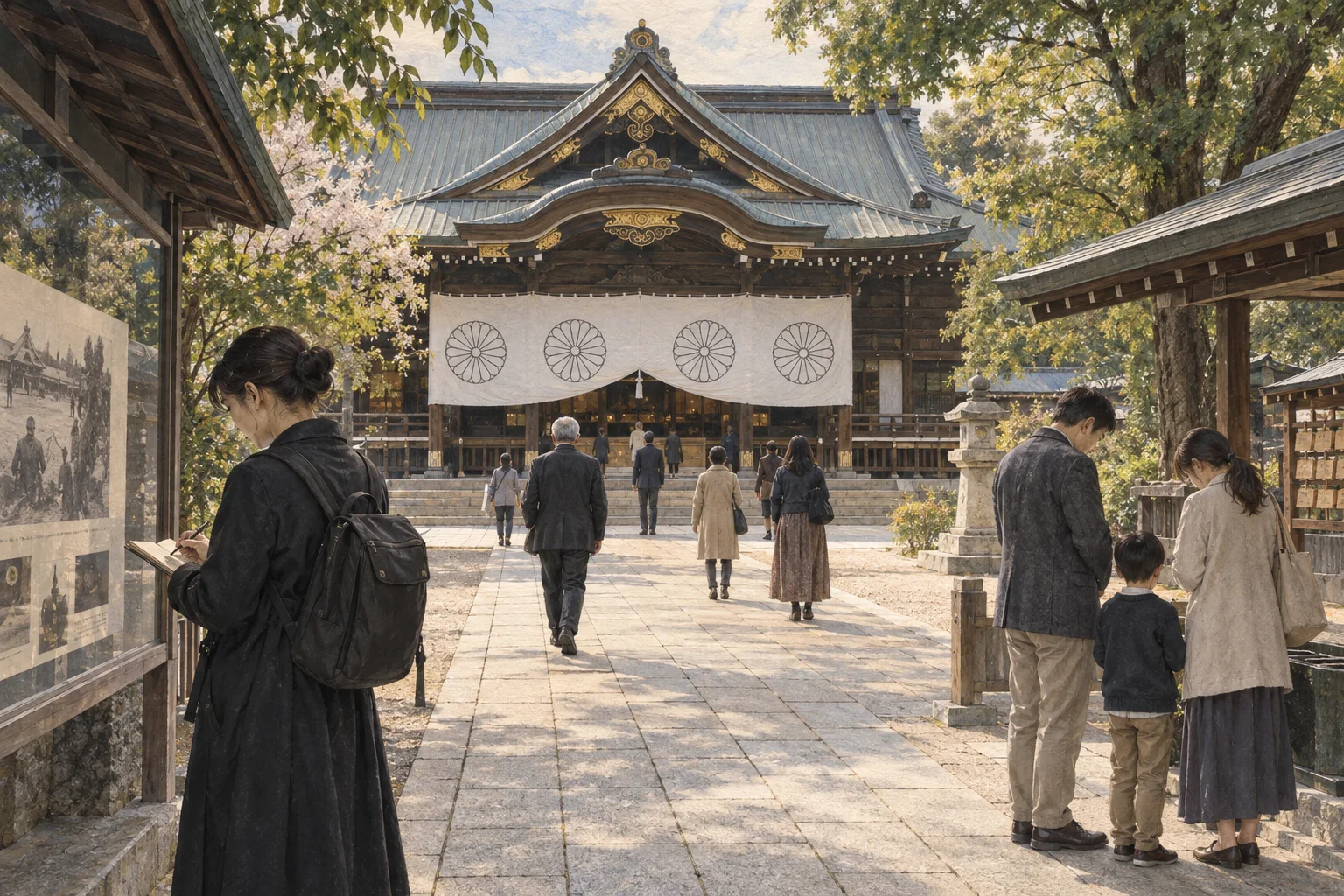
壱In one line一言で言うと
Yasukuni is a Tokyo shrine for Japan's war dead, and prime ministers' visits there are debated.
弐In 30 seconds30秒で説明する
Yasukuni was founded in 1869 for those who died in the civil war that brought the Meiji government to power, and now enshrines about 2.47 million war dead up to 1945. In 1978 fourteen men tried as Class A war criminals were added. Prime ministers' visits draw protest from China and South Korea. At home, some see visiting as a way to mourn the war dead, while others raise constitutional and diplomatic concerns.
参As a short speechスピーチ・英作文
Yasukuni is hard to explain briefly, so I will give the facts in order. It was founded in 1869 to honor those who died fighting for the imperial side in the civil war of the Meiji Restoration, and it came to enshrine the dead of Japan's later wars, about 2.47 million people in total, the great majority of them ordinary soldiers.
Until 1945 it was run by the army and navy; after the war it became a private religious corporation, separate from the state. In 1978 the shrine enshrined fourteen men who had been tried as Class A war criminals, including wartime prime minister Tojo. Most of the dispute centers on this. The Emperor Showa stopped visiting after 1975, and no emperor has visited since.
People who visit, including some politicians, say they go to mourn the war dead and pray for peace. Visits by serving prime ministers draw formal protest from China and South Korea, and some lawsuits at home have argued they breach the separation of religion and state. Japanese opinion is divided, including among bereaved families.
靖国神社やすくにじんじゃYasukuni Jinjathe Tokyo shrine for Japan's war dead, and why prime ministers' visits are disputed
祀られているのは約246万柱。議論の中心は、1978年に合祀された14人。
壱一言で言うとIn one line
靖国神社は東京にある戦没者を祀る神社で、首相の参拝については意見が分かれています。
弐30秒で説明するIn 30 seconds
靖国神社は1869年、明治政府が生まれる内戦の戦没者を祀るために創建され、いまは1945年までの戦没者およそ246万6千柱を祀っています。1978年、A級戦犯として裁かれた14人が合祀されました。首相の参拝は中国と韓国からの抗議を招きます。国内では、参拝は戦没者を悼むことだと考える人がいる一方、政教分離や外交の面から問題視する人もいます。
参スピーチ・英作文As a short speech
靖国神社は短く説明しにくいので、事実を順に並べます。創建は1869年、明治維新の内戦で天皇の側について亡くなった人を祀るためでした。やがて以後の戦争の戦没者を祀るようになり、いまはおよそ246万6千柱、その大半は一般の兵士です。
1945年までは陸軍と海軍が管理し、戦後は国から切り離された民間の宗教法人になりました。1978年、A級戦犯として裁かれた14人が合祀されます。戦時の首相・東條英機を含みます。議論の多くはこの点をめぐるものです。昭和天皇は1975年を最後に参拝しておらず、以後どの天皇も参拝していません。
参拝する側は、政治家も含め、戦没者を悼み平和を祈るためだと言います。現職の首相の参拝は中国と韓国から正式な抗議を招き、国内では政教分離に反するとして起こされた訴訟もあります。日本国内の意見は割れていて、遺族の間でも分かれます。
こう聞かれたらQuestions people actually ask
QWhy is it controversial if it's just a memorial?
AMainly because of the 1978 enshrinement of fourteen men tried as Class A war criminals. Critics in Japan and abroad say honoring them there looks like approving of the war. Those who visit say they go to mourn the war dead and pray for peace, and the shrine says souls cannot be separated once enshrined.
追悼の場なら、どうして問題になるのですか。主な理由は、1978年にA級戦犯として裁かれた14人が合祀されたことです。国内外の批判する側は、そこで彼らを祀ることは戦争を肯定しているように見えると言います。参拝する側は戦没者を悼み平和を祈るためだと言い、神社の側は、いったん祀った霊は分けられないとしています。
QCan a foreign visitor go?
AYes, it is open to anyone and there is no entry charge for the grounds. Many visitors also go into the Yushukan museum on the site, and people view its account of the war very differently.
外国から来た人も行けますか。行けます。誰でも入れますし、境内に入るのに料金はかかりません。併設の遊就館に入る人も多く、その戦争の描き方については、人によって受け止め方が大きく異なります。
QIs there another place to mourn the war dead?
AYes. Chidorigafuchi National Cemetery, opened in 1959, holds the remains of unidentified war dead and is non-religious. Some politicians visit there instead, and proposals for a new secular national memorial have been discussed for decades.
戦没者を悼む場所はほかにありますか。あります。1959年にできた千鳥ヶ淵戦没者墓苑で、身元の分からない戦没者の遺骨を納め、特定の宗教によりません。そちらに参る政治家もいますし、宗教によらない国立の追悼施設を作る構想は何十年も議論されています。
誤解されやすいA common misunderstanding
MYTHYasukuni is a shrine dedicated to war criminals.靖国神社は戦犯を祀るための神社だ、と思われがちです。
FACTIt enshrines about 2.47 million war dead, the vast majority ordinary soldiers, from 1869 onward. Fourteen men tried as Class A war criminals were added in 1978, and that addition is what the dispute is about.1869年以降の戦没者およそ246万6千柱を祀っており、その大半は一般の兵士です。A級戦犯14人が加えられたのは1978年で、争点になっているのはその合祀です。
そのまま使えるフレーズPhrases you can use
- It enshrines about 2.47 million war dead.およそ246万柱の戦没者を祀っています。
- Most of them are ordinary soldiers.その大半は一般の兵士です。
- Fourteen Class A war criminals were added in 1978.1978年にA級戦犯14人が合祀されました。
- No emperor has visited since 1975.1975年以降、天皇は参拝していません。
- Opinion inside Japan is divided too.日本国内でも意見は割れています。
- Some go to mourn the dead; others object to the visits.戦没者を悼むために参拝する人もいれば、参拝に反対する人もいます。
豆知識Background
明治2年(1869年)、戊辰戦争の戦没者3588柱を祀る東京招魂社として創建され、明治12年(1879年)に靖国神社と改称された。祭神はおよそ246万6千柱で、戊辰戦争から先の大戦までの戦没者を含む。1945年までは陸軍省と海軍省が所管したが、戦後は民間の宗教法人となった。昭和53年(1978年)10月、A級戦犯として刑死・獄死、または判決前に病死した14人が合祀された。昭和天皇の親拝は昭和50年(1975年)が最後で、合祀に不快感を示したとする記録(いわゆる富田メモ)が2006年に報じられたが、解釈には議論がある。
出典日本文化ナビ(原田英語.com)「靖国神社を英語で説明する(Yasukuni Jinja)」https://www.haradaeigo.com/japanese-culture/w/yasukuni-shrine
- 文
- 日本文化ナビ編集部(原田英語.com)— 英文・和訳・解説はすべて独自に作成
- イラスト
- 日本文化ナビ オリジナル
- 発行
- 原田英語.com https://www.haradaeigo.com/
- 印刷日
- 2026.10.17
© 2026 Harada Eigo (原田英語.com). Text and illustration: Japan Culture Navi.
ページはこちら