梅雨
壱In one line一言で言うと
Tsuyu is the rainy season that covers most of Japan from around early June to mid-July.
弐In 30 seconds30秒で説明する
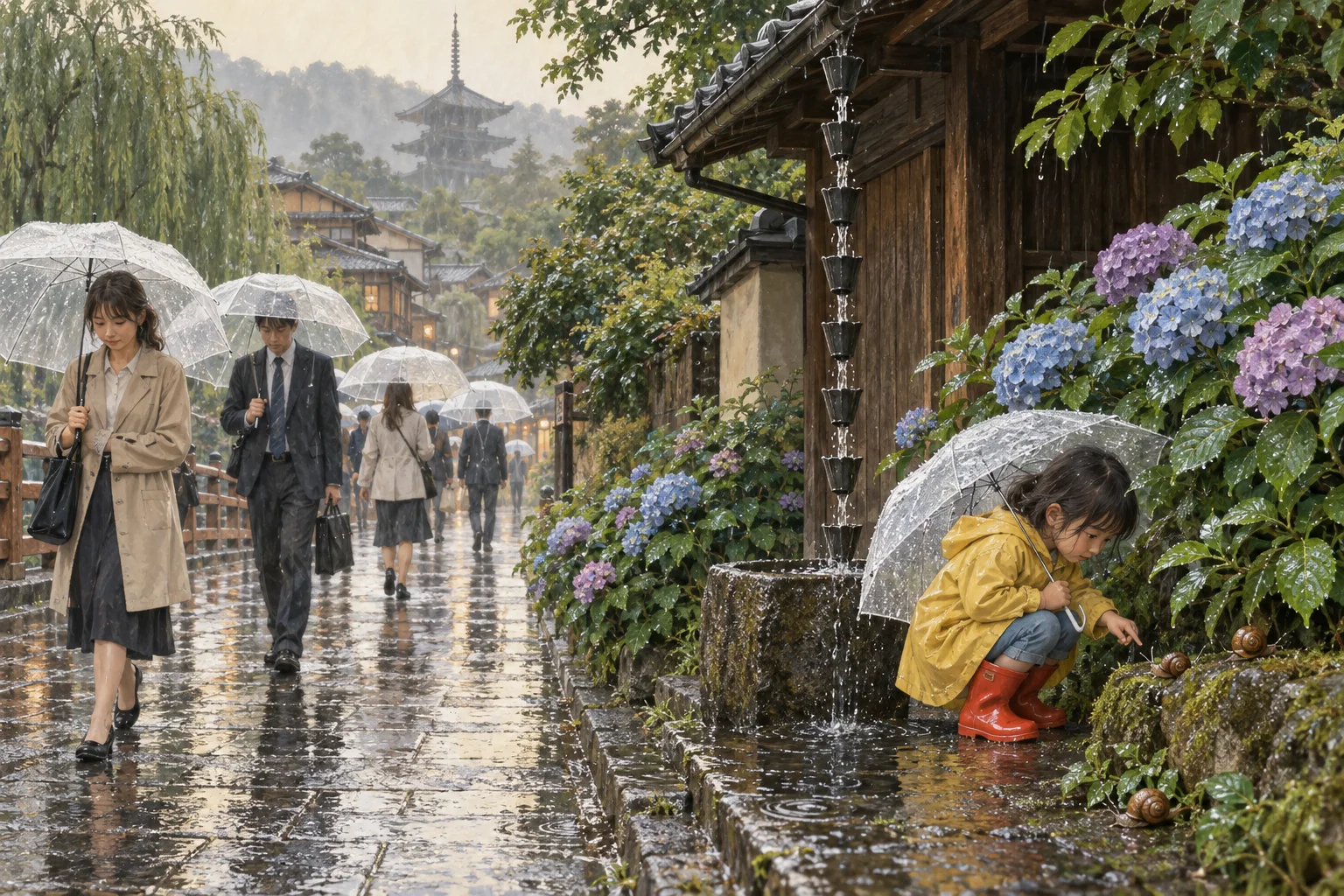
For about six weeks in early summer, a stationary rain front sits over Japan and it rains persistently, with high humidity. It is written with the characters for plum and rain, because plums ripen at this time. Okinawa gets it earlier and Hokkaido essentially escapes it. Laundry does not dry, mold appears, and hydrangeas are at their best.
参As a short speechスピーチ・英作文
If somebody asks you when to visit Japan, you have to warn them about tsuyu. From around early June to mid-July, a stationary rain front sits across the country and it rains steadily, with humidity that makes the air feel thick. The name is written with the characters for plum and rain, because plums ripen in this period.
Okinawa enters it around early May, and Hokkaido is generally considered not to have it at all. Living through it has its own routines: you carry an umbrella every day, laundry hangs indoors and never quite dries, and mold appears in places you did not know existed.
It is also genuinely beautiful. Hydrangeas are at their peak, temples look better in rain than in sunshine, and there is a whole vocabulary for types of rain. But for a first-time visitor, June is the month I would tell them to avoid.
梅雨つゆtsuyuthe rainy season
6月の日本は「雨の季節」。旅行の相談を受けたら、必ず伝えるべきこと。
壱一言で言うとIn one line
梅雨とは、6月初めごろから7月半ばまで、日本の大部分を覆う雨の季節です。
弐30秒で説明するIn 30 seconds
初夏のおよそ6週間、停滞した前線が日本の上にとどまり、雨が降り続き、湿度が高くなります。「梅」と「雨」の字を書くのは、この時期に梅の実が熟すからです。沖縄はもっと早く、北海道にはほとんど梅雨がありません。洗濯物は乾かず、カビが生え、あじさいが見ごろになります。
参スピーチ・英作文As a short speech
日本にいつ来るべきかと聞かれたら、梅雨のことは伝えなければなりません。6月初めごろから7月半ばまで、停滞前線が国を横切ってとどまり、雨が降り続き、空気が重く感じるほど湿度が上がります。名前に「梅」と「雨」の字を使うのは、この時期に梅の実が熟すからです。
沖縄は5月初めごろに入り、北海道には一般に梅雨がないとされます。梅雨を過ごすには過ごし方があります。毎日傘を持ち、洗濯物は室内に干してもすっきり乾かず、あると思わなかった場所にカビが出ます。
同時に本当に美しい季節でもあります。あじさいが盛りで、寺は晴れの日より雨のほうが良く見え、雨の種類を表す言葉がいくつもあります。それでも初めて日本に来る人には、6月は避けたほうがいい月だと言います。
こう聞かれたらQuestions people actually ask
QDoes it rain all day, every day?
ANo. It is more that it might rain at any point, so you carry an umbrella. There are clear days, and the heaviest rain often comes in concentrated bursts near the end of the season.
毎日一日中降るのですか。一日中降り続くわけではありません。いつ降るか分からないので傘を持つ、という感覚です。晴れる日もありますし、激しい雨は梅雨の終盤にまとまって降ることが多いです。
QWhy does Hokkaido not have it?
AThe rain front usually weakens before it reaches that far north. Hokkaido does get rain in June, but not the persistent front, so weather agencies do not declare a rainy season there.
どうして北海道にはないのですか。前線がそこまで北上する前に衰えるためです。北海道にも6月の雨はありますが停滞前線の形にならないため、気象機関は梅雨入りを発表しません。
QIs it dangerous?
AThe end of the season can be. Concentrated heavy rain in July has caused serious landslides and flooding in recent years, and warnings should be taken seriously.
危険なのですか。終盤は危険になりえます。近年、7月の集中豪雨で土砂災害や洪水が起きており、警報は真剣に受け止めるべきです。
そのまま使えるフレーズPhrases you can use
- The rainy season runs from June to mid-July.梅雨は6月から7月半ばまでです。
- It's the humidity more than the rain.雨より湿度がこたえます。
- Take an umbrella every day, just in case.念のため、毎日傘を持ってください。
- Hydrangeas are at their best right now.今、あじさいが見ごろです。
- Hokkaido doesn't really have a rainy season.北海道にはほとんど梅雨がありません。
豆知識Background
梅雨は東アジア特有の現象で、中国では「梅雨(メイユー)」、韓国では「チャンマ」と呼ばれる。日本語の「つゆ」という読みは、露に由来するという説と、梅の実が熟して潰れる「潰ゆ」に由来するという説などがあり、定説はない。気象庁は「梅雨入り」「梅雨明け」を速報値として発表し、のちに確定値として見直す。梅雨の終わりごろに降る激しい雨は「梅雨末期の大雨」と呼ばれ、近年は線状降水帯による災害が問題になっている。雨を表す日本語は「五月雨」「時雨」「にわか雨」「小糠雨」など非常に多く、季節ごとに使い分けられる。
出典日本文化ナビ(原田英語.com)「梅雨を英語で説明する(tsuyu)」https://www.haradaeigo.com/japanese-culture/w/tsuyu
- 文
- 日本文化ナビ編集部(原田英語.com)— 英文・和訳・解説はすべて独自に作成
- イラスト
- 日本文化ナビ オリジナル
- 発行
- 原田英語.com https://www.haradaeigo.com/
- 印刷日
- 2026.10.17
© 2026 Harada Eigo (原田英語.com). Text and illustration: Japan Culture Navi.
ページはこちら