灯籠流し
壱In one line一言で言うと
Toro nagashi, or lantern floating, is setting paper lanterns on water at the end of Obon to see ancestors off.
弐In 30 seconds30秒で説明する
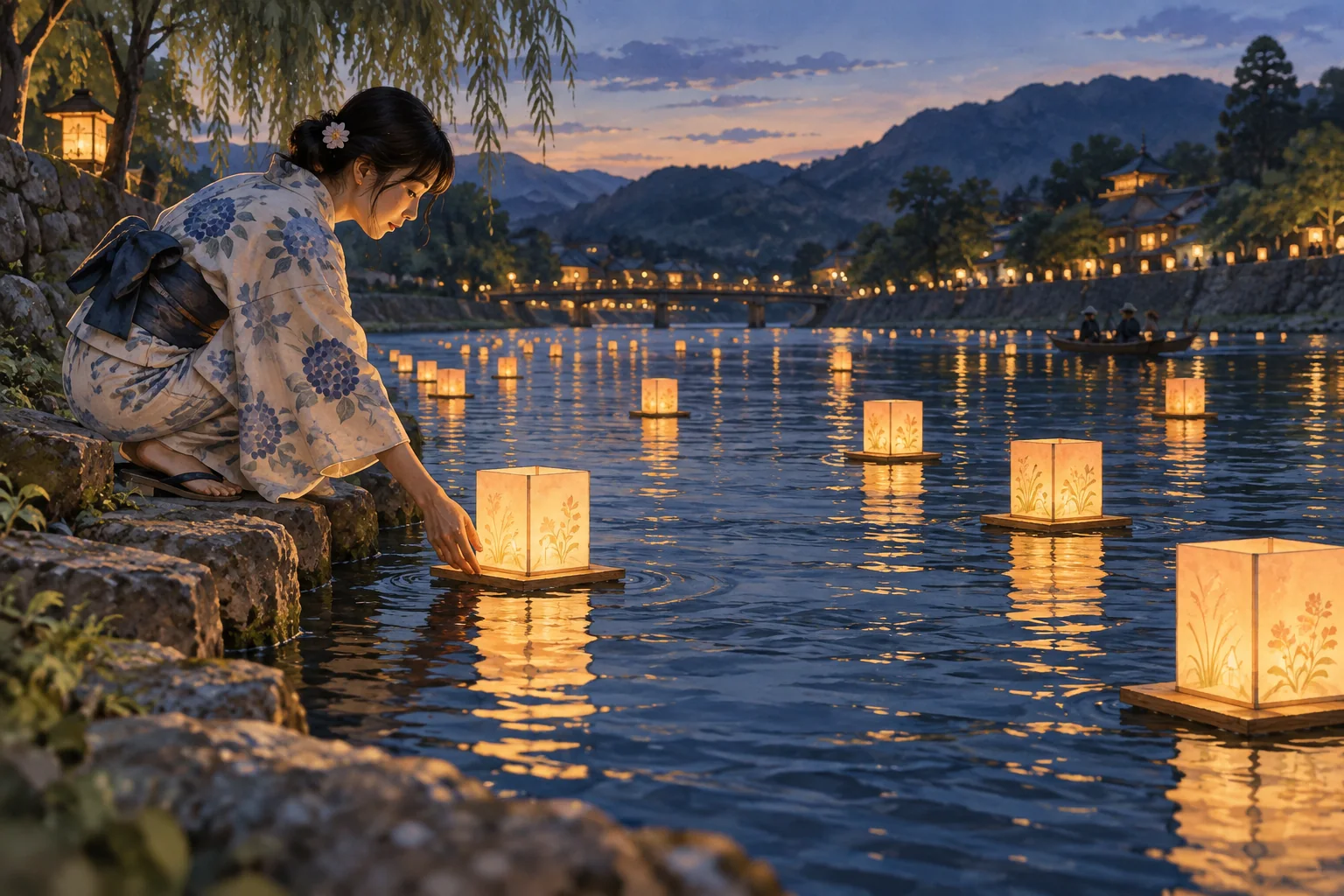
Toro nagashi is the custom of setting small paper lanterns on a river or the sea at the close of Obon, lighting the way for ancestral spirits returning from the world of the living. Many are held in memory of specific losses, including wartime and disaster victims.
参As a short speechスピーチ・英作文
At the end of Obon, the summer period when ancestors are believed to return to their families, many communities hold toro nagashi. Small wooden or paper lanterns, each with a candle and often a name or a message written on the paper, are set on a river or the sea and allowed to drift away, lighting the path for the spirits going back.
The scale ranges from a handful of families at a local bridge to events with thousands of lanterns. Some of the best known are held in memory of specific deaths: the ceremonies in Hiroshima on August 6th, and events for those lost in disasters.
It is a quiet occasion rather than a festival, though there may be stalls nearby, and visitors are usually welcome to buy a lantern and write on it. Environmental practice has changed: many organizers now collect the lanterns downstream rather than letting them go, which is worth knowing before assuming they float out to sea.
灯籠流しとうろうながしtoro nagashifloating lanterns for the dead
お盆の終わりに、灯籠を川に流して先祖を送る。
壱一言で言うとIn one line
灯籠流しとは、お盆の終わりに紙の灯籠を水に流し、先祖を送る行事です。
弐30秒で説明するIn 30 seconds
灯籠流しは、お盆の終わりに小さな紙の灯籠を川や海に流す習わしで、この世から帰る先祖の霊の道を照らすものです。戦争や災害で亡くなった人を悼んで営まれるものも各地にあります。
参スピーチ・英作文As a short speech
お盆の終わり、先祖が家に帰ってくるとされる夏の期間の締めくくりに、多くの地域で灯籠流しが行われます。木や紙でできた小さな灯籠に蝋燭を入れ、紙には名前や言葉を書くこともあり、それを川や海に浮かべて流していきます。
帰っていく霊の道を照らすためです。規模は、近所の橋に数家族が集まるものから、何千もの灯籠が浮かぶ催しまでさまざまです。特定の死を悼んで営まれるものもよく知られています。八月六日の広島の行事や、災害で亡くなった人のための催しがそれにあたります。
祭りというより静かな行事で、近くに屋台が出ることはあっても、雰囲気は落ち着いています。訪れた人も灯籠を買い、言葉を書いて流せることが多いものです。環境への配慮で運用は変わりました。今は下流で回収する主催者が多く、灯籠はそのまま海へ流れていくものだと思い込まないよう、知っておくとよいでしょう。
こう聞かれたらQuestions people actually ask
QCan a visitor take part?
AUsually yes. Lanterns are sold on the day for a small sum, you write a name or a message, and staff help you set it on the water. Follow the organizers' instructions about where to stand.
旅行者も参加できますか。たいていできます。当日、少額で灯籠が売られ、名前や言葉を書いて、係の人の手を借りて水に浮かべます。立つ場所については主催者の案内に従ってください。
QIs it the same as the fire on the mountainside in Kyoto?
ARelated in purpose but different in form. Both mark the send-off at the end of Obon; one uses fire on a hillside visible across the city, the other uses lanterns on water.
京都の山に浮かぶ火と同じものですか。目的は通じていますが、形は違います。どちらもお盆の終わりの送りを表しますが、一方は町じゅうから見える山の送り火、もう一方は水に浮かべる灯籠です。
QWhat happens to the lanterns afterwards?
AMany events now collect them downstream with nets or boats and dispose of them properly. Materials have also changed to reduce what is left in the water.
流した灯籠はそのあとどうなるのですか。今は多くの催しが、下流で網や舟を使って回収し、きちんと処分します。水に残るものを減らすため、素材も見直されています。
そのまま使えるフレーズPhrases you can use
- Write a name on the paper.紙に名前を書いてください。
- We float them at sunset.日暮れに流します。
- It's for seeing the spirits off.霊を送るためのものです。
- Please stay behind the line.線の内側でお待ちください。
- They're collected further down.下流で回収します。
豆知識Background
灯籠流しは、お盆の送りの行事として各地で行われ、精霊流しと呼ぶ地域もあります。長崎の精霊流しは、船を引いて爆竹を鳴らす独特の形で知られ、静かな灯籠流しとは印象が異なります。広島では八月六日に原爆の犠牲者を悼んで灯籠が流され、多くの人が訪れます。近年は環境への配慮から、下流で回収する運用や、水に残らない素材の使用が広がっています。
出典日本文化ナビ(原田英語.com)「灯籠流しを英語で説明する(toro nagashi)」https://www.haradaeigo.com/japanese-culture/w/toro-nagashi
- 文
- 日本文化ナビ編集部(原田英語.com)— 英文・和訳・解説はすべて独自に作成
- イラスト
- 日本文化ナビ オリジナル
- 発行
- 原田英語.com https://www.haradaeigo.com/
- 印刷日
- 2026.10.17
© 2026 Harada Eigo (原田英語.com). Text and illustration: Japan Culture Navi.
ページはこちら