鳥居
壱In one line一言で言うと
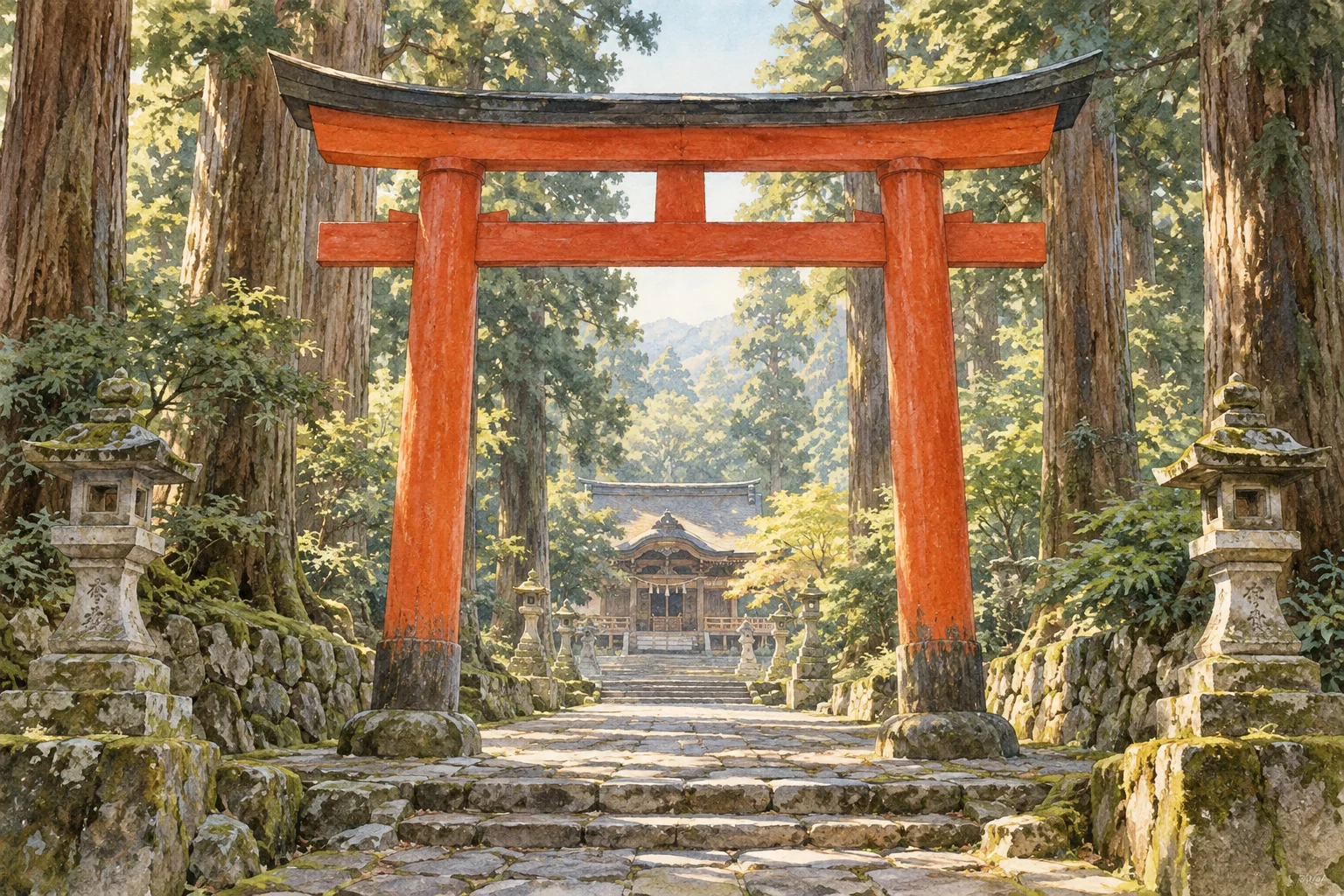
A torii is the gate that marks where ordinary ground ends and a shrine's sacred ground begins.
弐In 30 seconds30秒で説明する
A torii is two upright posts with two crossbeams, standing at the entrance to a Shinto shrine. It is not a gate in the sense of keeping anyone out; there is no door. It marks a boundary. Passing under it means you have left ordinary space and entered the grounds of a kami. That is why many people bow slightly before walking through.
参As a short speechスピーチ・英作文
A torii is the gate you see at the entrance to almost every Shinto shrine: two upright posts with two beams across the top. There is no door and nothing is locked, because it is not meant to keep anyone out. It marks a boundary.
On one side is ordinary ground, and on the other is the ground of the kami, the Shinto deity of that shrine. That is why people stop and bow slightly before walking under it, and why you are supposed to walk to one side rather than straight down the middle: the center of the path is left for the kami.
Torii are usually vermilion red or plain wood, and some famous shrines have hundreds or even thousands of them lined up in tunnels, each one donated by a person or a company. On a map, the torii symbol is how a shrine is marked.
鳥居とりいtoriithe gate at the entrance to a shrine
門ではなく「境界線」。ここから先は神域、と言えると一段深い。
壱一言で言うとIn one line
鳥居とは、ここから先が神域だと示す、神社の入口の門です。
弐30秒で説明するIn 30 seconds
鳥居は、2本の柱と2本の横木でできた、神社の入口に立つ門です。人を締め出す門ではなく、扉はありません。これは境界を示すものです。くぐるということは、日常の空間を離れ、神のいる場所に入ったということです。だから多くの人がくぐる前に軽く礼をします。
参スピーチ・英作文As a short speech
鳥居は、ほとんどの神社の入口にある門で、2本の柱の上に横木が2本渡してあります。扉はなく、施錠もされません。人を締め出すためのものではないからです。これは境界を示します。
片側は日常の土地、もう片側はその神社の神のいる土地です。だからくぐる前に立ち止まって軽く礼をしますし、参道の真ん中ではなく端を歩くことになっています。道の中央は神のために空けておくのです。
鳥居は朱色か白木が多く、有名な神社の中には、何百本、何千本も並んでトンネルになっているところがあります。一本ずつ、個人や会社が奉納したものです。地図の上では、この鳥居の記号が神社を表します。
こう聞かれたらQuestions people actually ask
QWhy are so many of them red?
AThe vermilion color comes from a mercury-based pigment that also preserved the wood, and red has long been thought to ward off misfortune. Not all are red, though; plain cypress and stone torii are common.
どうして赤いものが多いのですか。朱色は水銀系の顔料によるもので、木材の防腐にも役立ちました。赤には災いを退ける力があるとも考えられてきました。ただしすべてが赤いわけではなく、白木や石の鳥居も多くあります。
QIs there a right way to walk through?
ABow once before entering, and walk slightly to the left or right rather than down the middle of the path. On the way out, turn back toward the shrine and bow again.
くぐるときに正しい歩き方はありますか。くぐる前に一礼し、参道の中央ではなく左右どちらかに寄って歩きます。帰りは社殿のほうへ向き直り、もう一度礼をします。
QWhat does the word torii mean?
AThe characters mean "bird" and "to be," so it reads as a perch for birds. Several explanations exist for this and none is settled, so it is honest to say the origin is uncertain.
鳥居という言葉はどういう意味ですか。漢字は「鳥」と「居る」で、鳥のとまり木という字面です。由来には諸説あり定説はないので、「はっきりしていない」と言うのが正確です。
そのまま使えるフレーズPhrases you can use
- The torii marks where the shrine grounds begin.鳥居から先が神社の境内です。
- Bow once before you walk through.くぐる前に一礼します。
- Walk to the side — the middle is for the kami.端を歩きます。真ん中は神様の道です。
- Each of those was donated by a person or a company.あの一本一本が、個人や会社の奉納です。
- On a map, that symbol means a shrine.地図のその記号は神社を表します。
豆知識Background
鳥居の形式には明神鳥居・神明鳥居など多くの種類があり、上部の笠木が反っているのが明神系、まっすぐなのが神明系という大きな区別がある。京都の伏見稲荷大社の千本鳥居は、江戸時代以降、願いが「通った」御礼として奉納が続いたもので、実際の数は一万基を超えるとされる。朱色に使われた顔料は水銀を含む丹(に)で、防腐効果があった。なお鳥居は神社の記号だが、寺院の境内に鳥居が立っている例もある。神仏習合の名残で、明治の神仏分離のあとも残されたものが各地にある。
出典日本文化ナビ(原田英語.com)「鳥居を英語で説明する(torii)」https://www.haradaeigo.com/japanese-culture/w/torii
- 文
- 日本文化ナビ編集部(原田英語.com)— 英文・和訳・解説はすべて独自に作成
- イラスト
- 日本文化ナビ オリジナル
- 発行
- 原田英語.com https://www.haradaeigo.com/
- 印刷日
- 2026.10.17
© 2026 Harada Eigo (原田英語.com). Text and illustration: Japan Culture Navi.
ページはこちら