とんかつ
壱In one line一言で言うと
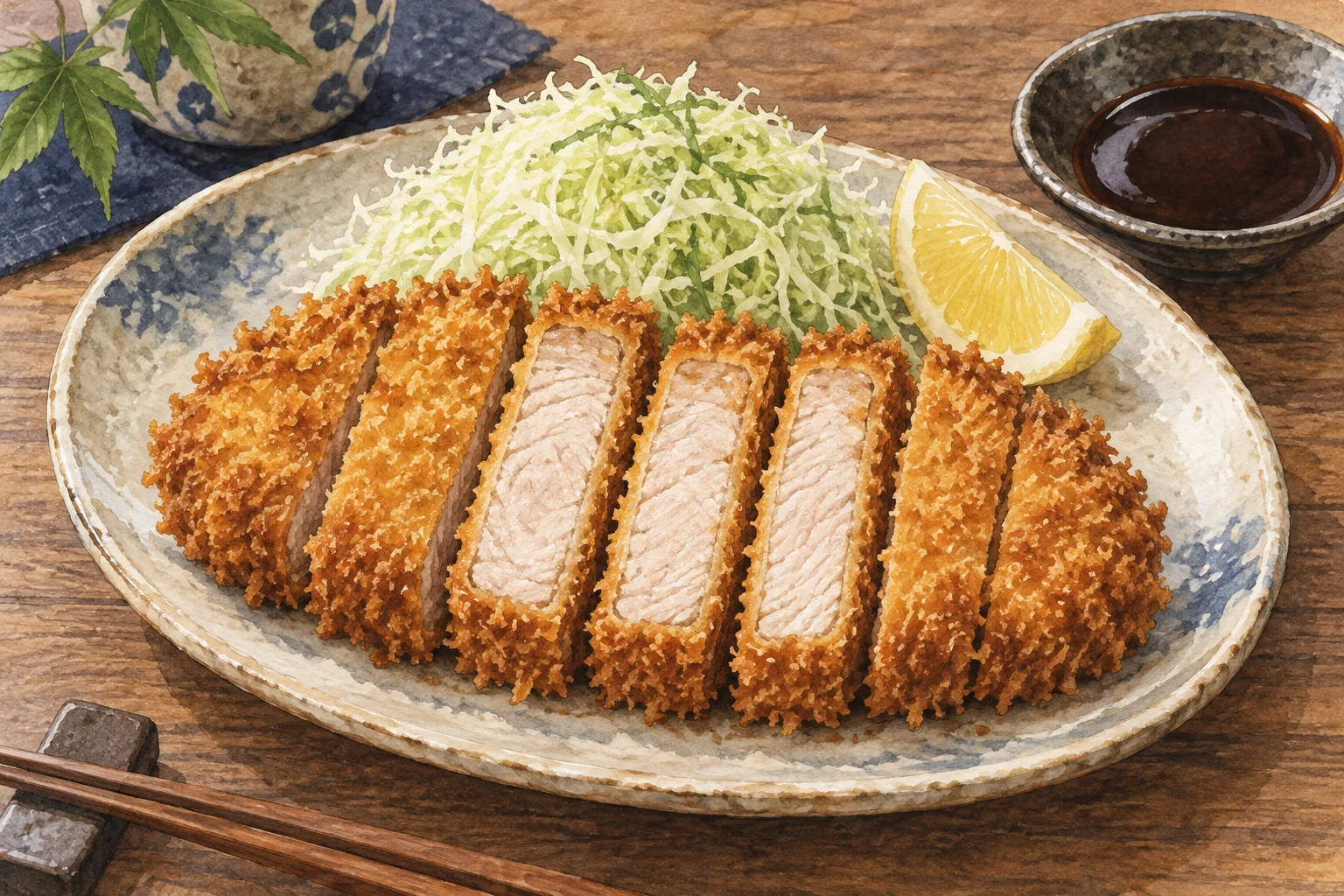
Tonkatsu is a thick pork cutlet coated in coarse breadcrumbs and deep-fried.
弐In 30 seconds30秒で説明する
Tonkatsu is a pork cutlet coated in panko breadcrumbs and deep-fried, served sliced with a mound of finely shredded raw cabbage, rice and miso soup. The breadcrumbs are coarse and dry, which is why the coating is so light. A thick brown sauce is poured over it, and many shops give you sesame seeds to grind yourself.
参As a short speechスピーチ・英作文
Tonkatsu is a breaded, deep-fried pork cutlet, and it is a good example of how Japan takes a foreign dish and makes it something else. It came from the European cutlet by way of the western-style restaurants of the Meiji period, and a Tokyo restaurant is generally credited with serving an early version in 1899.
What changed it was the technique: the meat is cut thick rather than pounded thin, coated in panko, which is a coarse dry breadcrumb quite unlike European crumbs, and deep-fried rather than pan-fried, then cut into strips so it can be eaten with chopsticks. It is served with a mountain of finely shredded raw cabbage, which is usually refillable, plus rice and miso soup. Because the word katsu sounds like the word meaning to win, many students eat it the night before an examination, and you will see convenience stores stocking cutlet sandwiches in January.
とんかつとんかつtonkatsubreaded deep-fried pork cutlet
受験生が験担ぎに食べる。「勝つ」と同じ音だから。
壱一言で言うとIn one line
とんかつとは、厚い豚肉に粗いパン粉をつけて揚げたものです。
弐30秒で説明するIn 30 seconds
とんかつは豚肉にパン粉をつけて揚げたもので、切り分けて、細く刻んだ生キャベツの山、ご飯、味噌汁と一緒に出されます。パン粉が粗く乾いているため、衣が軽く仕上がります。濃い茶色のソースをかけ、自分で擂る胡麻を出す店も多くあります。
参スピーチ・英作文As a short speech
とんかつは衣をつけて揚げた豚肉の切り身で、日本が外国の料理を取り込んで別のものにする典型です。明治の洋食屋を通じてヨーロッパのカツレツから入ってきたもので、1899年に東京のある洋食店が初期の形を出したとされます。
それを変えたのは作り方でした。肉は薄く叩かずに厚く切り、ヨーロッパのパン粉とはかなり違う粗く乾いたパン粉をまとわせ、フライパンではなく油で揚げ、箸で食べられるように切り分けます。
細く刻んだ生キャベツの山、ご飯、味噌汁が添えられ、キャベツはおかわりできる店が多いです。「かつ」が「勝つ」と同じ音であるため、試験の前夜にこれを食べる受験生も多くいます。1月にはコンビニがカツサンドを並べます。
こう聞かれたらQuestions people actually ask
QWhy is the coating so different from European breadcrumbs?
APanko is usually made from crustless bread broken into coarse, airy flakes rather than fine crumbs, so it absorbs less oil and stays crisp. That is a big reason tonkatsu tastes lighter than a schnitzel.
どうしてヨーロッパのパン粉と衣が違うのですか。パン粉はたいてい耳のないパンを、細かく挽くのではなく粗くふんわりした粒にして作るため、油を吸いにくく、さくさくが続きます。とんかつがシュニッツェルより軽く感じられる大きな理由がこれです。
QWhat do I do with the sesame seeds and the little mortar?
AGrind them with the small wooden stick until they smell nutty, then pour the sauce in and mix. It is not a game, it is there so the sesame is freshly crushed. Then dip the cutlet in, or spoon it over.
胡麻と小さなすり鉢は、どうすればいいのですか。小さな木の棒で、香りが立つまで擂ってください。そこにソースを入れて混ぜます。遊びではなく、胡麻を擂りたてにするためです。そのあと、とんかつをつけるか、かけていただきます。
そのまま使えるフレーズPhrases you can use
- The cabbage is usually free to refill.キャベツはおかわりできることが多いです。
- Grind the sesame before adding the sauce.ソースを入れる前に胡麻を擂ります。
- Students eat it before exams for luck.験担ぎで試験の前に食べます。
- Panko makes the coating lighter.パン粉のおかげで衣が軽くなります。
豆知識Background
とんかつは洋食の「ポークカツレツ」から発展したもので、1899年に東京の煉瓦亭が出したものが早い例とされます。厚く切って揚げ、切り分けて箸で食べる形になったのは大正から昭和にかけてです。部位はロースとヒレが基本で、脂の好みで選びます。付け合わせの千切りキャベツは、揚げ物の脂を受け止める役割があるとされ、おかわり自由の店が多くあります。「カツ」が「勝つ」に通じることから、勝負ごとの前に食べる習慣が広まりました。
出典日本文化ナビ(原田英語.com)「とんかつを英語で説明する(tonkatsu)」https://www.haradaeigo.com/japanese-culture/w/tonkatsu
- 文
- 日本文化ナビ編集部(原田英語.com)— 英文・和訳・解説はすべて独自に作成
- イラスト
- 日本文化ナビ オリジナル
- 発行
- 原田英語.com https://www.haradaeigo.com/
- 印刷日
- 2026.10.17
© 2026 Harada Eigo (原田英語.com). Text and illustration: Japan Culture Navi.
ページはこちら