漢字・ひらがな・カタカナ
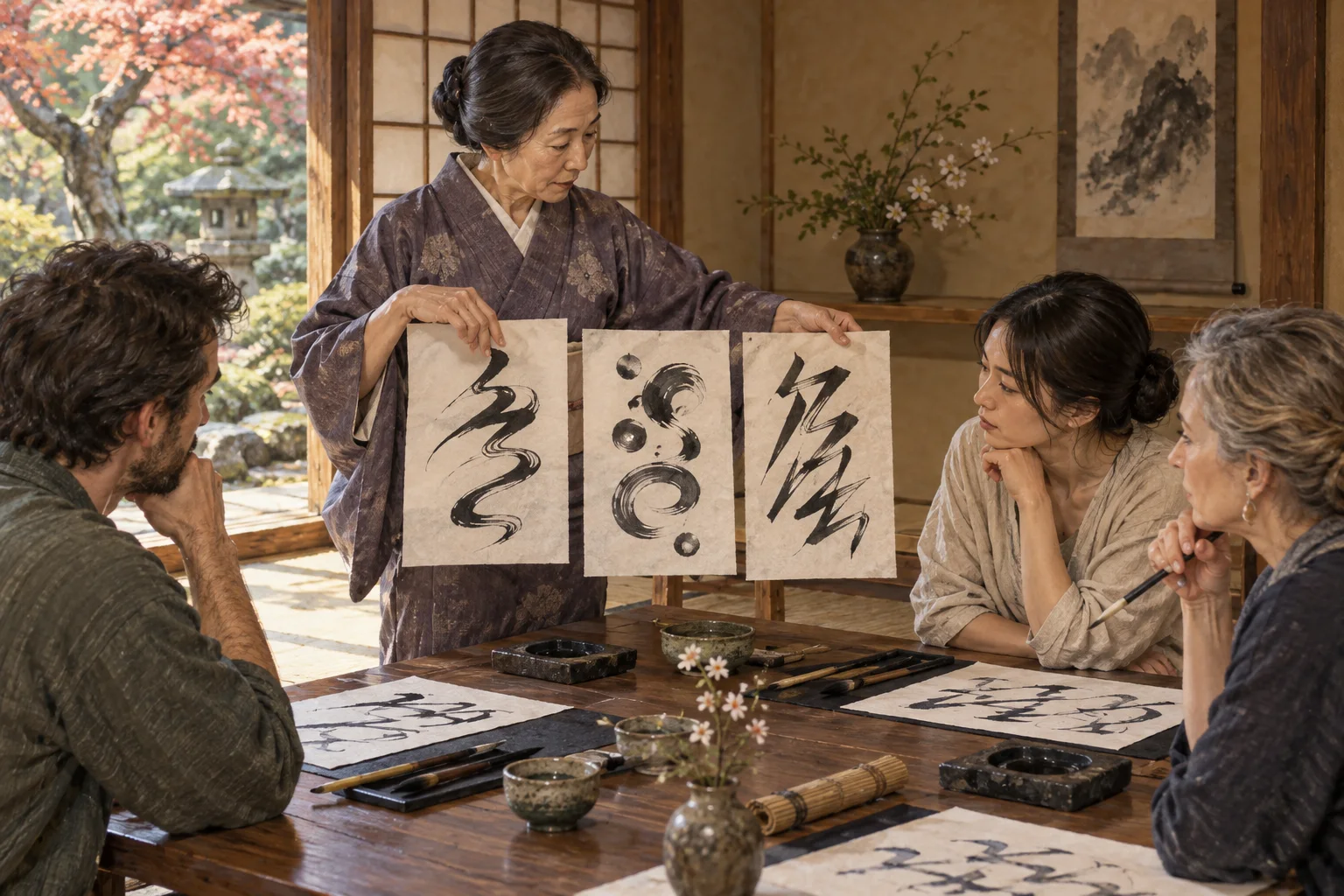
壱In one line一言で言うと
Kanji, hiragana, katakana: these three Japanese scripts are all used together in written Japanese.
弐In 30 seconds30秒で説明する
Kanji are characters borrowed from Chinese and carry meaning. Hiragana and katakana are two sets of about forty-six syllable signs each, both developed from simplified kanji. Hiragana writes grammar and native words, katakana writes foreign words and emphasis, and kanji carries the content. A normal sentence uses all three.
参As a short speechスピーチ・英作文
Japanese is written with three scripts used together in the same sentence, which is unusual enough that it deserves explaining. Kanji came from China and each one carries meaning, so a reader can often guess a word without knowing how to say it.
Hiragana is a set of about forty-six signs for sounds, used for grammatical endings and for native words; it was formed by writing kanji in a flowing cursive until they were simplified. Katakana is a second set for the same sounds, formed by taking a piece of a kanji, and it is used for words borrowed from other languages, for animal and plant names in science, and for emphasis, roughly where English uses italics.
Children learn hiragana first, then katakana, then over nine years of school about two thousand kanji. Adults read faster because kanji breaks up a sentence visually: Japanese has no spaces between words, and the change of script does that job.
漢字・ひらがな・カタカナかんじひらがなかたかなkanji hiragana katakanawhy Japanese is written with three writing systems at once
三つを混ぜて書く。ひらがなもカタカナも、もとは漢字である。
壱一言で言うとIn one line
漢字・ひらがな・カタカナとは、日本語を書くときに混ぜて使う三つの文字です。
弐30秒で説明するIn 30 seconds
漢字は中国から借りた文字で、意味を持ちます。ひらがなとカタカナは、それぞれ46ほどの音を表す文字で、どちらも漢字をくずして生まれました。ひらがなは文法と和語、カタカナは外来語と強調、漢字は中身を担います。ふつうの一文に三つとも出てきます。
参スピーチ・英作文As a short speech
日本語は同じ一文の中で三つの文字を使い分けます。これは珍しいことなので、説明する値打ちがあります。漢字は中国から来たもので、一字ずつが意味を持つので、読み方を知らなくても語の見当がつくことがあります。
ひらがなは音を表す46ほどの文字で、文法の語尾と和語に使います。漢字を続け書きにして崩していった形です。カタカナは同じ音のもう一組で、漢字の一部を取って作られました。外国から入った語、生物の学術名、そして強調に使います。
英語のイタリックに近い働きです。子どもはひらがな、カタカナの順に覚え、9年の学校で漢字をおよそ2000字学びます。大人が速く読めるのは、漢字が文を目で切ってくれるからです。日本語は語のあいだに空白を置きません。文字の切り替えが、その役を果たしています。
こう聞かれたらQuestions people actually ask
QWhy not use just one script?
AWithout kanji, a text in hiragana alone is slow to read, because there are no spaces and many words sound alike. The mixture is what lets a reader see where words begin and end.
どれか一つにすればいいのでは。漢字がないと、ひらがなだけの文は読むのが遅くなります。空白がなく、同じ音の語が多いからです。混ぜて書くことで、語の切れ目が見えます。
QHow many kanji do you need?
AThe list taught through school is 2,136 characters, and newspapers stay close to it. Knowing about a thousand covers a great deal of everyday text, and adults still meet characters they cannot read.
漢字はどれくらい必要ですか。学校で習う常用漢字は2136字で、新聞はおおむねその範囲で書かれます。千字ほどで日常の文章はかなり読めますし、大人でも読めない字に出会います。
QWhat about romaji?
AIt is taught in primary school and used for station signs, passports and typing, but Japanese is not written in it. Almost all text input is typed in romaji and converted to the three scripts on screen.
ローマ字はどうなのですか。小学校で習い、駅の表示、旅券、入力に使いますが、日本語をローマ字で書くことはありません。文字入力はほぼローマ字で打って、画面上で三つの文字に変換します。
誤解されやすいA common misunderstanding
MYTHJapanese is written in Chinese characters, so Chinese speakers can read it.日本語は漢字で書くのだから、中国語の話者には読める、と思われがちです。
FACTA Chinese reader can often guess the topic but not the sentence, because grammar, verb endings and many words are written in hiragana, and some kanji have different meanings in the two languages.中国語の読者は話題の見当はついても、文としては読めません。文法も語尾も多くの語もひらがなで書かれ、同じ漢字でも意味が違うものがあるからです。
そのまま使えるフレーズPhrases you can use
- Japanese uses three scripts in the same sentence.日本語は一文の中で三つの文字を使います。
- Kanji carry meaning; kana carry sound.漢字は意味を、かなは音を表します。
- Both kana sets came from simplified kanji.かなはどちらも漢字から生まれました。
- Katakana is used for foreign words.カタカナは外来語に使います。
- There are no spaces between words.語と語のあいだに空白はありません。
豆知識Background
ひらがなは漢字を草書に崩した「草仮名」から、カタカナは経典を読むための補助として漢字の一部を取ったものから生まれ、どちらも平安時代に広まった。いまの一音一字の形にそろえられたのは明治33年(1900年)である。「安」からあ、「阿」からア、というように、もとの漢字をたどれる。常用漢字表は昭和56年(1981年)に定められ、平成22年(2010年)の改定で2136字になった。ひらがなとカタカナはそれぞれ清音が46字で、濁点や拗音を含めると増える。明治以降、漢字を廃してローマ字やかなだけにする案が何度も唱えられたが、いずれも定着しなかった。
出典日本文化ナビ(原田英語.com)「漢字・ひらがな・カタカナを英語で説明する(kanji hiragana katakana)」https://www.haradaeigo.com/japanese-culture/w/the-three-japanese-scripts
- 文
- 日本文化ナビ編集部(原田英語.com)— 英文・和訳・解説はすべて独自に作成
- イラスト
- 日本文化ナビ オリジナル
- 発行
- 原田英語.com https://www.haradaeigo.com/
- 印刷日
- 2026.10.17
© 2026 Harada Eigo (原田英語.com). Text and illustration: Japan Culture Navi.
ページはこちら