戦国時代
壱In one line一言で言うと
Sengoku jidai, or the Warring States period, is more than a century of civil war among Japan's regional warlords.
弐In 30 seconds30秒で説明する
The Sengoku period is Japan's age of civil war, usually dated from the Onin War of 1467 to the end of the sixteenth century. Central authority collapsed, and regional warlords called daimyo fought each other for land. It is the period most foreign fans of samurai stories picture, and it ended when three successive leaders reunified the country.
参As a short speechスピーチ・英作文
Sengoku means warring states, a name borrowed from Chinese history, and it describes Japan from roughly 1467 to the end of the sixteenth century. The shogunate in Kyoto still existed on paper, but it could not enforce anything, so regional lords called daimyo governed, taxed and fought on their own account.
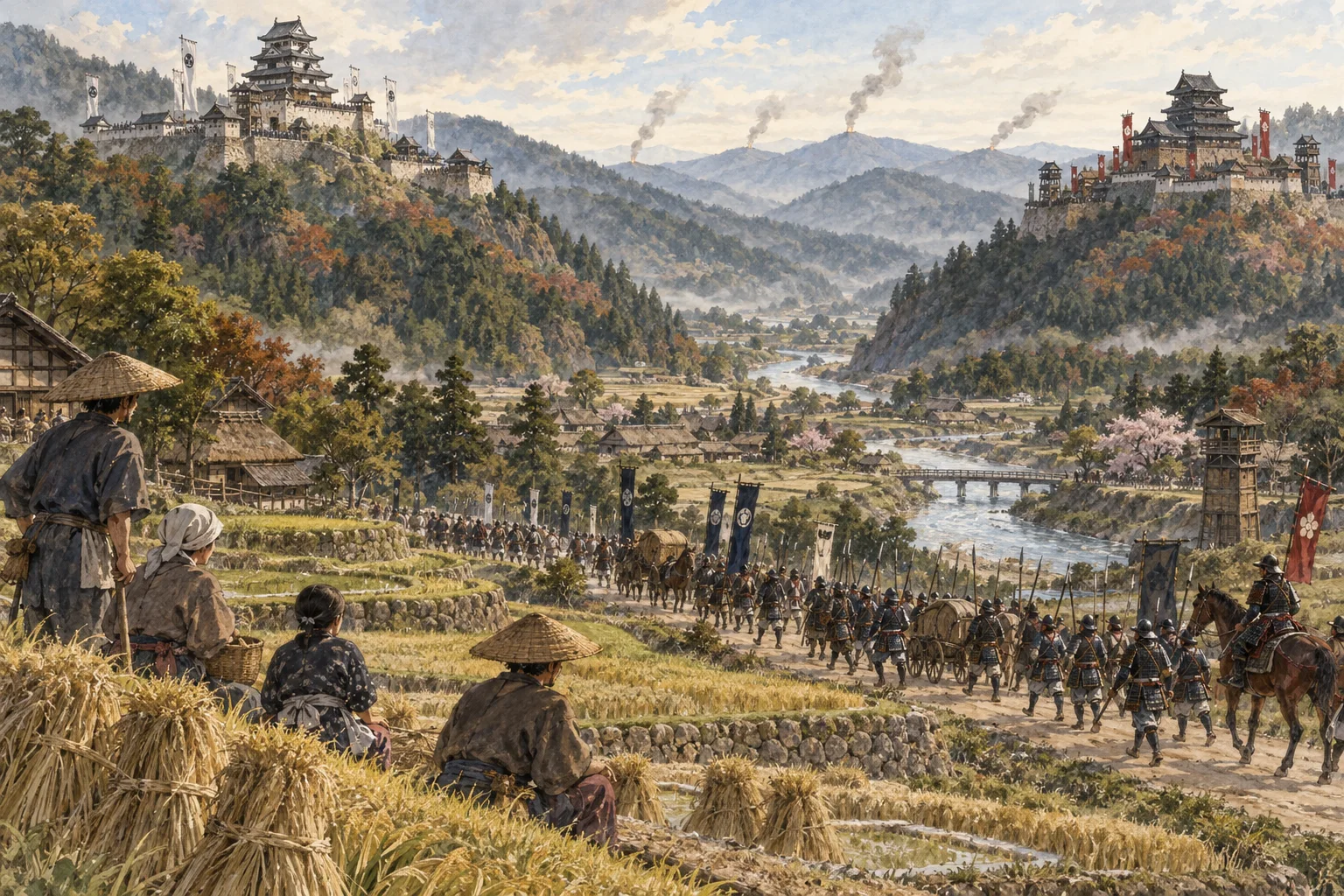
Castles moved from mountaintops down onto plains, guns arrived from Europe in the 1540s and changed how battles were fought, and men from ordinary backgrounds could rise by ability, which was much harder before or after. The period ends with three men in succession: Oda Nobunaga, who broke the old order, Toyotomi Hideyoshi, who completed the unification, and Tokugawa Ieyasu, who founded the government that then kept Japan at peace for over two centuries.
戦国時代せんごくじだいSengoku jidaiJapan's age of civil war
百年以上、日本に中央政府がなかった時代がある。
壱一言で言うとIn one line
戦国時代とは、各地の大名が百年以上にわたって争った内戦の時代です。
弐30秒で説明するIn 30 seconds
戦国時代は日本の内戦の時代で、ふつう1467年の応仁の乱から16世紀の終わりまでとされます。中央の権威が崩れ、大名と呼ばれる各地の領主が土地をめぐって争いました。海外で侍の物語に親しんだ人が思い浮かべるのは、たいていこの時代です。三人の指導者が相次いで国を統一したことで終わりました。
参スピーチ・英作文As a short speech
戦国は中国の歴史から借りた「戦う国々」という意味の言葉で、およそ1467年から16世紀の終わりまでの日本を指します。京都の幕府は形の上では残っていましたが、何も強制できず、大名と呼ばれる各地の領主が自らの判断で統治し、徴税し、戦いました。
城は山の上から平地に下り、1540年代にはヨーロッパから鉄砲が伝わって戦い方を変え、ふつうの出自の者が実力で身を起こすことができました。これはその前後の時代にはずっと難しいことでした。
時代は三人の人物で終わります。古い秩序を壊した織田信長、統一を完成させた豊臣秀吉、そして二世紀以上にわたって日本を平和に保つ政権を築いた徳川家康です。
こう聞かれたらQuestions people actually ask
QWas the emperor involved in these wars?
ANot as a commander. The emperor remained in Kyoto as the source of legitimacy and titles, and warlords sought court rank to strengthen their position, but the court had no armies and little money during this period.
これらの戦いに天皇は関わっていたのですか。指揮官としては関わっていません。天皇は正統性と官位の源として京都にとどまり、大名は立場を強めるために官位を求めましたが、この時代の朝廷には軍も、多くの財もありませんでした。
QDid guns really change everything?
AThey changed tactics quickly. Matchlock guns reached Japan in the 1540s, Japanese smiths copied and improved them, and within decades large formations of gunners had become a major factor in battle. Castles were redesigned with thick stone bases, partly in response.
鉄砲は本当にすべてを変えたのですか。戦術は急速に変わりました。火縄銃は1540年代に日本に伝わり、日本の鍛冶がそれを模倣して改良し、数十年のうちに鉄砲隊の大集団が戦の大きな要素になりました。城も、一つにはこれに応じて、分厚い石垣を持つ形に設計が変わりました。
そのまま使えるフレーズPhrases you can use
- There was no effective central government.実効的な中央政府がありませんでした。
- Regional lords fought each other for land.各地の大名が土地をめぐって争いました。
- Guns arrived from Europe in the 1540s.鉄砲は1540年代にヨーロッパから伝わりました。
- Three leaders reunified the country.三人の指導者が国を再統一しました。
豆知識Background
戦国時代の始まりを1467年の応仁の乱とするのは一つの区切り方で、明応の政変を境とする見方もあります。下の身分の者が上の者を倒す風潮は「下剋上」と呼ばれました。鉄砲は1543年に種子島に伝わったとされ、堺や国友が生産地になりました。この時代の物語は大河ドラマやゲームで繰り返し描かれるため、日本人にとって最もなじみ深い歴史の舞台のひとつになっています。
出典日本文化ナビ(原田英語.com)「戦国時代を英語で説明する(Sengoku jidai)」https://www.haradaeigo.com/japanese-culture/w/the-sengoku-period
- 文
- 日本文化ナビ編集部(原田英語.com)— 英文・和訳・解説はすべて独自に作成
- イラスト
- 日本文化ナビ オリジナル
- 発行
- 原田英語.com https://www.haradaeigo.com/
- 印刷日
- 2026.10.17
© 2026 Harada Eigo (原田英語.com). Text and illustration: Japan Culture Navi.
ページはこちら