民芸運動
壱In one line一言で言うと
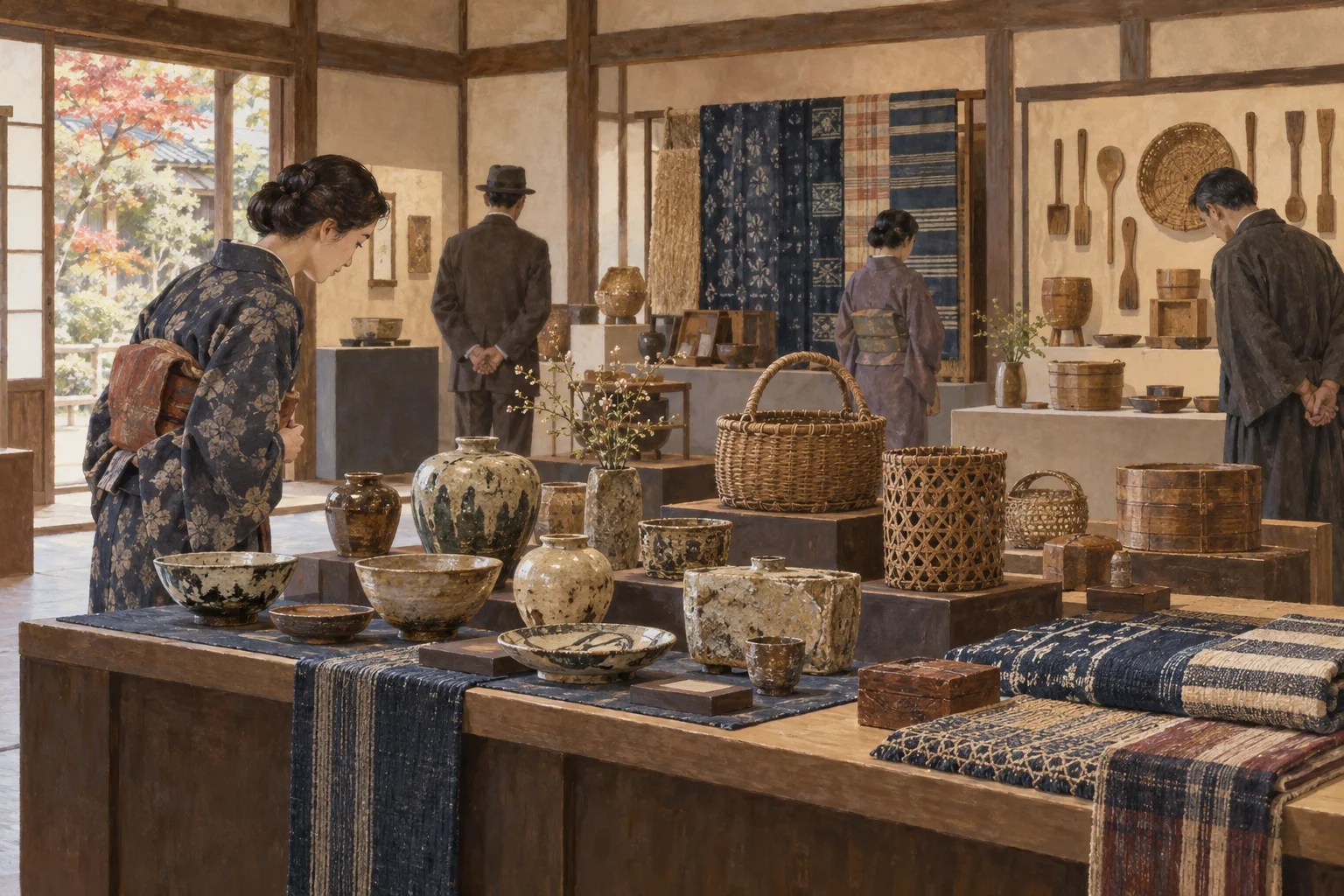
Mingei undo, or the folk craft movement, is the 1926 campaign that found beauty in everyday objects by unnamed craftspeople.
弐In 30 seconds30秒で説明する
The mingei, or folk craft, movement began in 1926 when the philosopher Yanagi Muneyoshi, together with potters Kawai Kanjiro and Hamada Shoji, argued that beauty lives in ordinary, anonymous, handmade objects, bowls, baskets and textiles made by unnamed local craftspeople for daily use, not in the signed works of famous artists. They traveled Japan collecting overlooked folk crafts and founded the Japan Folk Crafts Museum in Tokyo in 1936 to display them. The movement reshaped how Japan values regional pottery and handwork, and its ideas later influenced Western studio pottery through connections like the English potter Bernard Leach.
参As a short speechスピーチ・英作文
Before 1926, the objects that got called art in Japan were mostly things with a famous name attached: paintings signed by known masters, tea bowls made by celebrated potters. The mingei, or folk craft, movement turned that idea upside down. The philosopher Yanagi Muneyoshi, working with the potters Kawai Kanjiro and Hamada Shoji, argued that the plain bowls, baskets and textiles made by anonymous village craftspeople for ordinary daily use held a kind of beauty that self-conscious fine art couldn't reach, precisely because the makers weren't trying to express themselves; they were just making something useful, well, over and over.
The group traveled the country collecting overlooked regional crafts that were often on the verge of dying out, and in 1936 they opened the Japan Folk Crafts Museum in Tokyo to display them. The movement's influence went both ways: it helped preserve regional Japanese crafts that might otherwise have vanished, and through friendships with foreign potters like Bernard Leach, it fed directly into the rise of studio pottery in Britain and the United States.
民芸運動みんげいうんどうmingei undothe 1926 movement that found beauty in everyday objects made by unnamed craftspeople
名も無い職人の日用品にこそ美がある、と1926年に説いた運動。
壱一言で言うとIn one line
民芸運動とは、名もない職人が作った日用品にこそ美があると1926年に唱えた運動です。
弐30秒で説明するIn 30 seconds
民芸(民衆的工芸の略)運動は1926年、哲学者の柳宗悦が陶芸家の河井寛次郎、浜田庄司とともに、美は有名な作家の署名入りの作品にではなく、日用のために名もない地方の職人が作った器や籠、織物といったふつうの手仕事にこそ宿る、と説いたことから始まりました。彼らは日本各地を回って見過ごされてきた民芸品を集め、1936年に東京で日本民藝館を開き、それらを展示しました。この運動は日本が地方の陶芸や手仕事をどう評価するかを変え、その考え方は英国の陶芸家バーナード・リーチとのつながりなどを通じて、のちに欧米の作陶にも影響を与えました。
参スピーチ・英作文As a short speech
1926年以前、日本で美術と呼ばれていたのは、たいてい有名な名前がついたもの、つまり名高い作家が署名した絵や、名の知れた陶芸家が作った茶碗でした。民芸運動は、その考えを逆転させました。
哲学者の柳宗悦は、陶芸家の河井寛次郎、浜田庄司とともに、無名の村の職人が日々の暮らしのために作った、ただの器や籠、織物にこそ、気取った美術には届かない美が宿ると説きました。作り手が自己表現を狙っているのではなく、ただ役に立つものを、繰り返し丁寧に作っているからこそだというのです。
一行は各地を回り、消えかけていた地方の工芸を集め、1936年には東京に日本民藝館を開いて展示しました。この運動の影響は両方向に及びました。消えていたかもしれない日本各地の工芸を守る助けになる一方、バーナード・リーチなど外国の陶芸家との交友を通じて、英国や米国での作陶運動の高まりに直接つながっていったのです。
こう聞かれたらQuestions people actually ask
QIs mingei a style, or is it about who made the object?
AIt's really about purpose and maker: an everyday, functional object made anonymously by a local craftsperson for practical use, not a decorative piece signed by a known artist, though many mingei objects share a plain, unadorned look.
民芸とは様式のことですか、それとも誰が作ったかのことですか。実際には用途と作り手の話です。実用のために地元の無名の職人が作った日用品を指し、有名作家が署名した装飾品ではありません。ただ、多くの民芸品は飾り気のない素朴な見た目を共有してはいます。
QCan I still buy mingei-style crafts today?
AYes, mingei shops selling regional pottery, textiles and woodwork exist across Japan, and the Japan Folk Crafts Museum in Tokyo, founded by the movement itself, still holds its original collection.
今も民芸風の工芸品は買えますか。買えます。地方の陶器や織物、木工を扱う民芸店は日本各地にあり、この運動自体が創設した東京の日本民藝館は今も創立当時の収蔵品を公開しています。
QDid this movement only affect Japan?
ANo. Through personal ties to foreign potters, especially the Englishman Bernard Leach, mingei ideas fed into the studio pottery movement in Britain and the United States in the mid-twentieth century.
この運動が影響したのは日本だけですか。いいえ。外国の陶芸家、特に英国人のバーナード・リーチとの個人的な交流を通じて、民芸の考え方は20世紀半ばの英国や米国の作陶運動にも取り入れられました。
そのまま使えるフレーズPhrases you can use
- This bowl is a classic piece of mingei pottery.この器は典型的な民芸の陶器です。
- The maker of this piece is anonymous, by design.この作品の作り手はあえて無名のままです。
- Beauty here comes from use, not decoration.ここでの美しさは装飾ではなく実用から来ています。
- The Japan Folk Crafts Museum still holds the original collection.日本民藝館には今も創立当時の収蔵品があります。
- This movement influenced potters overseas too.この運動は海外の陶芸家にも影響を与えました。
豆知識Background
民芸運動は1926年、柳宗悦が河井寛次郎・浜田庄司・富本憲吉らと「日本民藝美術館設立趣意書」を発表したことに始まるとされる。「民芸」は「民衆的工芸」を略した柳の造語で、無名の職人が日用のために作った器や織物に美を見出した。1936年に東京・駒場に日本民藝館が開館し、今も初期の収蔵品を公開している。英国の陶芸家バーナード・リーチとの交流を通じ、その考え方は欧米の作陶運動にも影響を与えたとされる。
出典日本文化ナビ(原田英語.com)「民芸運動を英語で説明する(mingei undo)」https://www.haradaeigo.com/japanese-culture/w/the-mingei-movement
- 文
- 日本文化ナビ編集部(原田英語.com)— 英文・和訳・解説はすべて独自に作成
- イラスト
- 日本文化ナビ オリジナル
- 発行
- 原田英語.com https://www.haradaeigo.com/
- 印刷日
- 2026.10.17
© 2026 Harada Eigo (原田英語.com). Text and illustration: Japan Culture Navi.
ページはこちら