バブル経済
壱In one line一言で言うと
Baburu keizai, or the bubble economy, is the late-1980s land and stock price surge that collapsed in the early 1990s.
弐In 30 seconds30秒で説明する
In the second half of the 1980s, share and land prices in Japan rose far beyond what earnings could justify. The Nikkei stock average peaked at 38,915 on the last trading day of 1989 and then fell for years. Land prices followed, banks were left with bad loans, and the aftermath shaped the following decades.
参As a short speechスピーチ・英作文
The bubble economy refers to the second half of the 1980s, when Japanese share and land prices rose to levels that could not be supported by what those assets actually earned. The Nikkei stock average closed at 38,915 on the final trading day of 1989 and took more than thirty years to get back to that level. Land was the more damaging half.
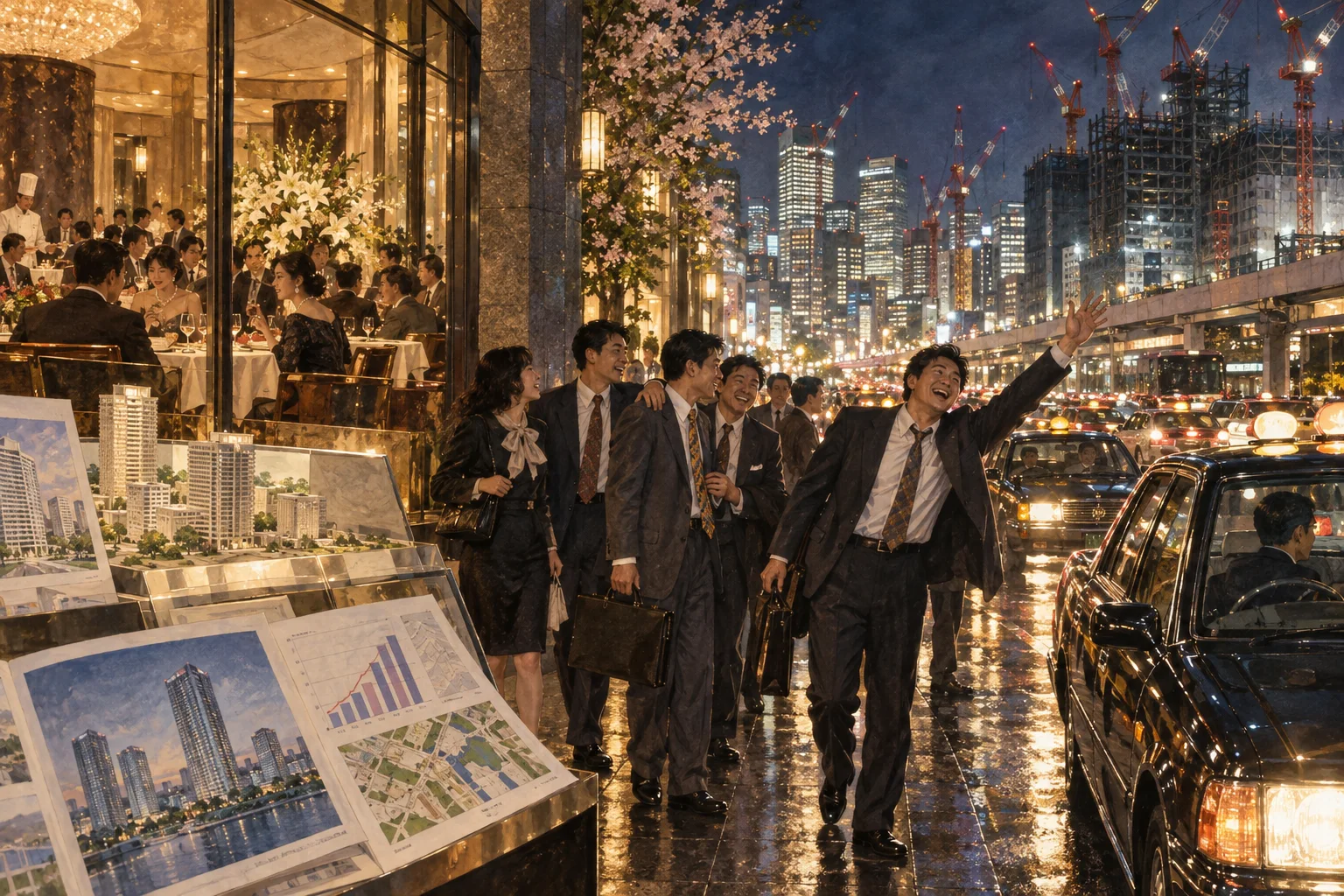
Because banks lent against land as collateral and land only ever went up, credit expanded on an assumption that was about to fail. The stories from the period are famous: companies buying art at record prices, people waving ten thousand yen notes to flag down taxis, calculations claiming the land in Tokyo was worth more than the whole United States.
When prices fell, banks were left holding loans against collateral worth a fraction of the debt, and the slow clean-up ran through the 1990s. Japanese people over fifty remember the period vividly, and often with some embarrassment.
バブル経済ばぶるけいざいbaburu keizaithe asset price bubble of the late 1980s
東京の土地でアメリカ全土が買えると言われた。そして弾けた。
壱一言で言うとIn one line
バブル経済とは、1980年代後半に土地と株の価格が急騰し、1990年代初めに崩壊した現象です。
弐30秒で説明するIn 30 seconds
1980年代の後半、日本の株価と地価は、収益では説明できない水準まで上がりました。日経平均株価は1989年の大納会に38,915円の高値をつけ、そこから何年も下げ続けました。地価も続き、銀行には不良債権が残り、その後の数十年はこの後始末に左右されました。
参スピーチ・英作文As a short speech
バブル経済とは1980年代の後半を指し、この時期、日本の株価と地価は、その資産が実際に生む収益では支えられない水準まで上がりました。日経平均株価は1989年の最後の取引日に38,915円で引け、その水準を取り戻すまでに三十年以上かかりました。より大きな傷を残したのは土地のほうです。
銀行は土地を担保に貸し、土地は上がり続けるものと前提されていたため、まさに崩れようとしていた仮定の上で信用が膨らみました。この時期の逸話はよく知られています。企業が記録的な値段で美術品を買い、一万円札を振ってタクシーを止め、東京の地価でアメリカ全土が買えるという計算が語られました。
価格が下がると、銀行の手元には、担保の価値が借金のごく一部しかない貸出が残り、その後始末は1990年代を通して続きました。五十を超える世代はこの時期をはっきり覚えていて、多くは少し気恥ずかしそうに語ります。
こう聞かれたらQuestions people actually ask
QWhat caused it?
AA combination: low interest rates after a 1985 currency agreement raised the yen, heavy bank lending secured on land, and a widespread belief that land prices could not fall. Economists disagree about the weight of each factor.
原因は何だったのですか。いくつかの要因が重なりました。1985年の通貨に関する合意で円高が進んだあとの低い金利、土地を担保にした銀行の多額の貸出、そして地価は下がらないという広い思い込みです。どの要因が大きかったかについては経済学者の間でも見方が分かれます。
QHow long did the aftermath last?
ALong enough to get its own name. The period after the collapse is often called the lost decade, and then the lost thirty years, covering slow growth, falling prices and cautious hiring that shaped a whole generation's working life.
その影響はどれくらい続いたのですか。名前が付くほど長く続きました。崩壊のあとの時期は「失われた十年」、さらに「失われた三十年」と呼ばれ、低い成長、物価の下落、慎重な採用が続き、ある世代の働き方をまるごと形づくりました。
そのまま使えるフレーズPhrases you can use
- Prices rose far beyond what earnings justified.収益で説明できる水準をはるかに超えて上がりました。
- The stock market peaked at the end of 1989.株価は1989年の末に頂点を打ちました。
- Banks lent against land as collateral.銀行は土地を担保に貸しました。
- The clean-up took the whole 1990s.後始末に1990年代をまるごと費やしました。
豆知識Background
バブル期の日経平均株価の最高値は1989年12月29日の終値38,915円87銭で、これを上回ったのは34年後の2024年2月でした。地価は株価よりやや遅れて下落を始めました。この時期に建てられたリゾート施設やゴルフ場の多くが、その後経営破綻しています。就職が極端に容易だったバブル世代と、直後に就職難に直面した世代の差は、今も働き方の議論に現れます。「バブル」という語は今も、実態を伴わない過熱を指す日常語として使われます。
出典日本文化ナビ(原田英語.com)「バブル経済を英語で説明する(baburu keizai)」https://www.haradaeigo.com/japanese-culture/w/the-bubble-economy
- 文
- 日本文化ナビ編集部(原田英語.com)— 英文・和訳・解説はすべて独自に作成
- イラスト
- 日本文化ナビ オリジナル
- 発行
- 原田英語.com https://www.haradaeigo.com/
- 印刷日
- 2026.10.17
© 2026 Harada Eigo (原田英語.com). Text and illustration: Japan Culture Navi.
ページはこちら