点字ブロック
壱In one line一言で言うと
Tenji burokku, or tactile paving, is the yellow system of bumps and bars that guides blind pedestrians, invented in Japan.
弐In 30 seconds30秒で説明する
Tactile paving uses two patterns: parallel bars meaning go this way, and round dots meaning stop and check. It was first laid in Okayama in 1967 and spread nationwide, then internationally. Standing or parking a suitcase on it blocks the only guide a blind pedestrian has.
参As a short speechスピーチ・英作文
The yellow strips of textured paving you see at almost every Japanese station and on many sidewalks are tactile blocks, and they were invented in Japan. The first were laid at a crossing in Okayama in 1967, developed by an inventor named Miyake Seiichi, reportedly with a friend who was losing his sight in mind, and they spread through the country over the following decades before being adopted internationally and standardized.
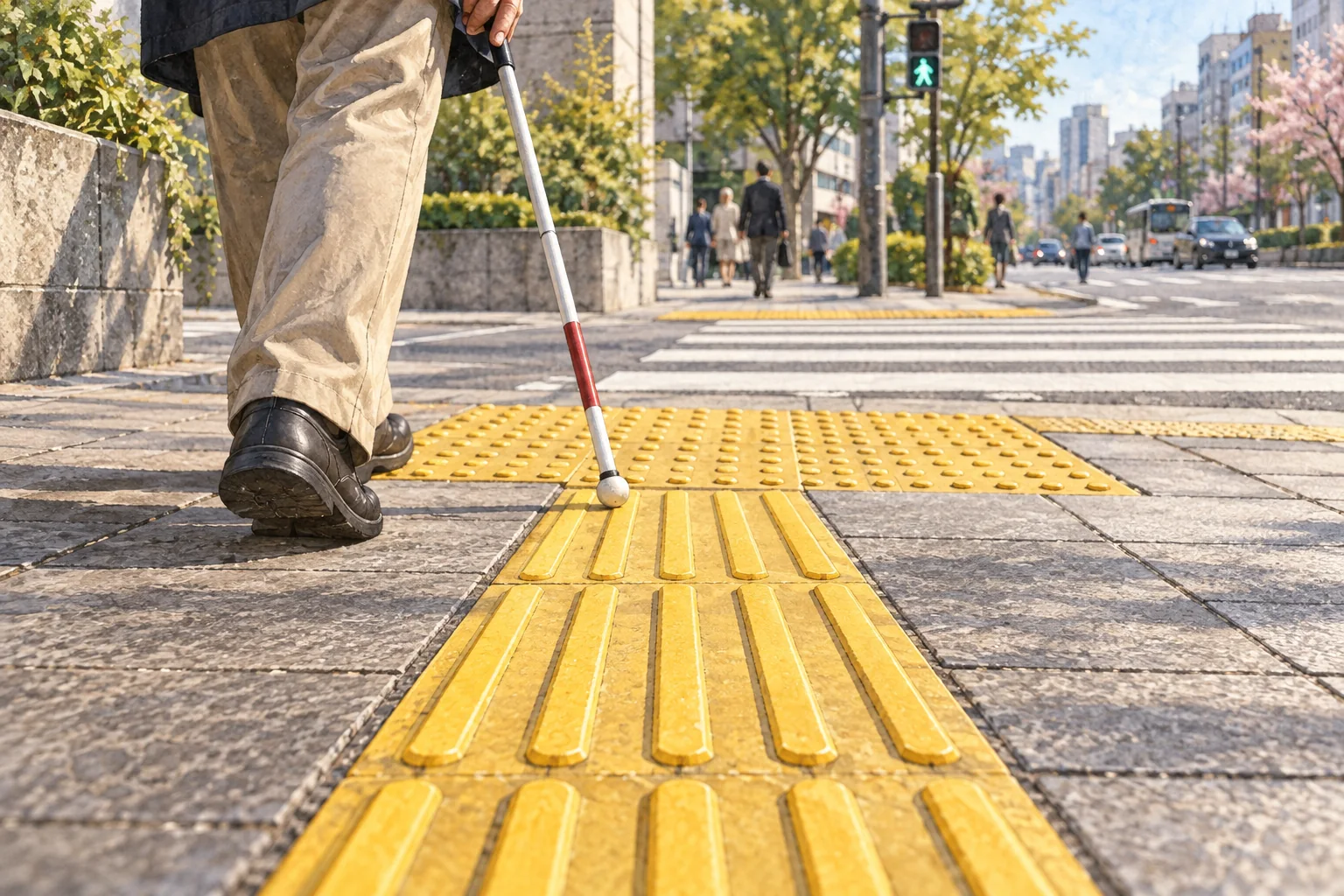
There are two patterns and the difference matters. Long parallel bars mean the path continues in that direction; round dots mean stop, because something is ahead: a staircase, a platform edge, a road crossing or a junction in the route.
Yellow was chosen for contrast, since many people with low vision can still detect it. The practical point for everyone else is simple. Do not stand on them, do not park a suitcase or a bicycle on them, and do not line up across them, because for some people that line is the only information available.
点字ブロックてんじブロックtenji burokkuthe yellow tactile paving on the ground
駅にも歩道にもある黄色い凹凸。日本で生まれた仕組み。
壱一言で言うとIn one line
点字ブロックとは、目の見えない人を導く黄色い突起と線の仕組みで、日本で生まれたものです。
弐30秒で説明するIn 30 seconds
点字ブロックには二つの形があります。進む方向を示す線状の突起と、止まって確認することを示す点状の突起です。1967年に岡山で初めて敷かれ、全国に、やがて世界に広がりました。この上に立ったりスーツケースを置いたりすると、目の見えない人にとって唯一の手がかりをふさぐことになります。
参スピーチ・英作文As a short speech
日本のほぼどの駅にも、多くの歩道にもある黄色い凹凸の帯は点字ブロックで、日本で生まれたものです。最初のものは1967年に岡山の交差点に敷かれました。視力を失いつつあった友人のために三宅精一という人が考案したとされ、その後の数十年で全国に広がり、やがて海外にも採り入れられ、規格が定められました。
形は二種類あり、その違いが大事です。長い線状の突起はその方向に進めるという意味、丸い点状の突起は止まれという意味で、前に階段、ホームの端、横断歩道、道の分かれ目があることを示します。
黄色が選ばれたのは対比のためで、視力の弱い人でも見分けられることが多いからです。ほかの人にとっての要点は単純です。その上に立たない、スーツケースや自転車を置かない、そこをふさいで並ばない。人によっては、その線だけが手がかりだからです。
こう聞かれたらQuestions people actually ask
QWhat do the two patterns mean?
ABars mean continue in this direction; dots mean stop and check, because there is a hazard or a decision point ahead, such as stairs, a platform edge or a crossing.
二種類の模様には、どういう意味があるのですか。線状はこの方向に進めるという意味、点状は止まって確かめるという意味で、前に階段やホームの端、横断歩道など、危険か判断の要る場所があることを示します。
QWhy are they yellow?
AFor visual contrast, since many people classed as visually impaired retain some sight. Some heritage districts use other colors to match the streetscape, which is debated for that reason.
どうして黄色いのですか。見え方の対比のためです。視覚に障害のある人の多くは、いくらか見える力を残しているからです。景観に合わせて別の色を使う地区もあり、その点が議論されています。
QIs it really a problem if I stand on one?
AYes. A person following the line with a cane or their feet will meet you without warning, and at a platform edge that matters a great deal. Station announcements ask passengers to keep them clear.
その上に立っていると、本当に困るのですか。問題になります。杖や足で線をたどっている人が、予告なくあなたにぶつかります。ホームの端ではそれが大きな意味を持ちます。駅の放送でも、点字ブロックの上を空けるよう案内しています。
そのまま使えるフレーズPhrases you can use
- Please don't stand on the tactile paving.点字ブロックの上に立たないでください。
- Move your suitcase off the yellow line.スーツケースを黄色い線からどけてください。
- The dots mean there are stairs ahead.点状の突起は、前に階段があるという意味です。
- It was invented in Japan.日本で考案されたものです。
- The line leads to the ticket gate.この線は改札へ続いています。
豆知識Background
点字ブロックは1967年に岡山県で初めて敷設されたとされ、考案者として三宅精一の名が伝えられています。線状の誘導ブロックと点状の警告ブロックの二種類があり、2001年に日本工業規格(現在の日本産業規格)として形状と寸法が定められました。その後、国際規格にも同様の考え方が取り入れられています。駅のホームでは、線路側を示す内方線つきのブロックへの置き換えが進められています。上に物を置くことは、利用する人にとって直接の危険につながります。
出典日本文化ナビ(原田英語.com)「点字ブロックを英語で説明する(tenji burokku)」https://www.haradaeigo.com/japanese-culture/w/tenji-block
- 文
- 日本文化ナビ編集部(原田英語.com)— 英文・和訳・解説はすべて独自に作成
- イラスト
- 日本文化ナビ オリジナル
- 発行
- 原田英語.com https://www.haradaeigo.com/
- 印刷日
- 2026.10.17
© 2026 Harada Eigo (原田英語.com). Text and illustration: Japan Culture Navi.
ページはこちら