建て替えと中古住宅
壱In one line一言で言うと
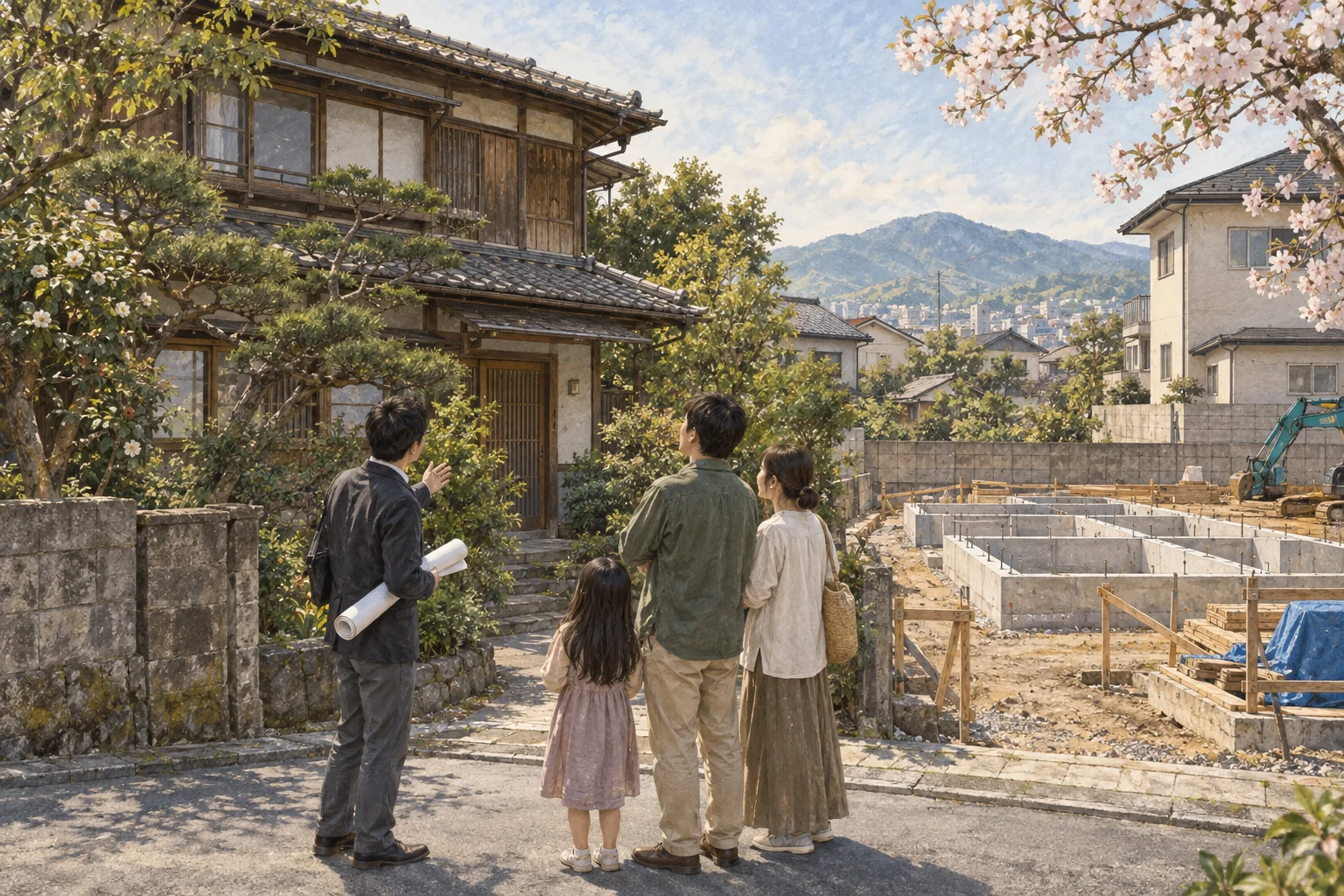
Tatekae to chuko jutaku, rebuilding versus resale, is a choice favoring rebuilding, since old Japanese houses are valued near zero.
弐In 30 seconds30秒で説明する
In most of the West, an old house can hold or gain value; in Japan, the building itself is often treated as a depreciating asset that reaches near-zero worth within a couple of decades, leaving only the land as the real value. As a result, used homes make up a far smaller share of housing transactions in Japan, around 14 to 15 percent, compared with roughly 80 to 90 percent in the United States and Britain. Tearing down an old house and building a new one on the same land is a completely ordinary life event, not a sign of anything unusual having happened to the previous house.
参As a short speechスピーチ・英作文
One thing that genuinely puzzles people from countries where old houses are prized is how casually Japan tears them down. In the United States or Britain, existing homes make up roughly 80 to 90 percent of housing transactions, and a well-kept century-old house can be worth more than a new one. In Japan, existing homes account for only about 14 to 15 percent of transactions, and wooden houses in particular are commonly assessed by banks and tax authorities as worth close to nothing after twenty to thirty years, regardless of how well they were maintained.
Several things drive this: earthquake-resistance standards were tightened in 1981 and again in 2000; there's no strong tradition of independent home inspection that lets a buyer trust a used building's condition; and the tax and lending systems are built around new construction. When a family inherits an old wooden house, tearing it down and rebuilding on the same land is often the financially sensible choice, since the land underneath is what actually holds its value.
建て替えと中古住宅たてかえとちゅうこじゅうたくtatekae to chuko jutakuwhy Japanese houses are so often rebuilt rather than resold
木造の家は築二十〜三十年で価値がほぼゼロとみなされがち。だから建て替える。
壱一言で言うとIn one line
建て替えと中古住宅とは、古い日本の家は資産価値がほぼゼロとみなされるため、売るより建て替えるほうが選ばれやすいという選択のことです。
弐30秒で説明するIn 30 seconds
欧米の多くでは、古い家でも価値が保たれたり上がったりします。日本では建物そのものを減価する資産とみなすことが多く、築二十年、三十年ほどでほぼゼロと評価され、価値として残るのは土地だけになりがちです。その結果、日本の住宅取引に占める中古住宅の割合はおよそ14〜15%にとどまり、アメリカやイギリスのおよそ80〜90%と比べてかなり低い水準です。古い家を取り壊し、同じ土地に新しい家を建てることは、何か特別な事情があったわけではない、ごく普通の暮らしの出来事です。
参スピーチ・英作文As a short speech
古い家に価値を置く国の人が、日本人が家を取り壊すことの気軽さに本当に戸惑うことがあります。アメリカやイギリスでは、住宅取引のおよそ80〜90%を既存の住宅が占め、手入れの行き届いた築百年の家が新築より高く評価されることもあります。日本では既存住宅が取引に占める割合はおよそ14〜15%にとどまり、とくに木造住宅は、どれほど手入れされていても、築二十年から三十年ほどで銀行や税務上はほとんど無価値とみなされるのが一般的です。
背景には、耐震基準が1981年と2000年に強化されたこと、買い手が中古住宅の状態を信頼できる独立した住宅検査の強い伝統がないこと、税制や融資の仕組みが新築を前提に組まれていることがあります。古い木造の家を相続した家族にとって、取り壊して同じ土地に建て替えるのは、むしろ経済的に理にかなった選択であることが多く、実際に価値を保っているのは建物ではなく、その下の土地だからです。
こう聞かれたらQuestions people actually ask
QWhy doesn't renovating an old house instead just become popular?
ARenovation does happen, but banks are often reluctant to lend heavily against an old building's value, and buyers worry about hidden structural or earthquake-resistance problems that a full rebuild avoids entirely.
古い家をリフォームして住むという選択が広まらないのはなぜですか。リフォームがまったく行われないわけではありませんが、銀行は古い建物の価値に対して融資をしたがらないことが多く、買い手も見えない構造上の問題や耐震性への不安から、建て替えのほうが確実だと考えがちです。
QIs this changing at all?
AThe government has been actively promoting the used-home market for years, encouraging inspection systems and better information for buyers, but the share of existing-home transactions has changed little and remains far below the levels seen in the US or UK.
この状況は変わりつつあるのですか。政府は何年も前から中古住宅市場の活性化を後押ししており、検査制度や買い手への情報提供を進めています。それでも既存住宅の取引割合は大きくは変わっておらず、アメリカやイギリスの水準にはまだ遠く及びません。
QSo the house has zero value but the land doesn't?
ARight — land in Japan generally holds or appreciates depending on location, much like anywhere else; it is specifically the building on top of it, especially wooden construction, that is assumed to depreciate to near nothing.
つまり建物は無価値でも、土地は無価値ではないのですか。そのとおりです。日本の土地は、場所によって価値が保たれたり上がったりする点はほかの国と変わりません。ほとんど無価値とみなされるのは、その上に建つ建物、とくに木造の建物のほうです。
そのまま使えるフレーズPhrases you can use
- We're tearing down the old house and rebuilding.古い家を壊して建て替えます。
- The building itself is assessed at almost zero value.建物自体はほぼ無価値と評価されています。
- Only the land really holds its value here.ここでは実質、土地しか価値を保ちません。
- Used homes are a much smaller share of the market.中古住宅は市場に占める割合がずっと小さいです。
- It was cheaper to rebuild than renovate.リフォームより建て替えのほうが安くつきました。
豆知識Background
国土交通省の資料によれば、日本の住宅取引に占める既存住宅(中古住宅)の割合はおよそ14〜15%にとどまり、アメリカのおよそ81%、イギリスのおよそ86%と比べて際立って低い。木造の建物は、耐震基準がたびたび強化されてきたことや、中古物件の状態を客観的に確かめる仕組みが弱いこと、税制や融資が新築を前提にしていることなどから、築二十年から三十年ほどで資産価値をほぼゼロと評価されるのが一般的とされる。そのため、古い家を相続すると、リフォームより建て替えのほうが合理的な選択になりやすい。政府は近年、中古住宅市場の活性化に向けた取り組みを進めている。
出典日本文化ナビ(原田英語.com)「建て替えと中古住宅を英語で説明する(tatekae to chuko jutaku)」https://www.haradaeigo.com/japanese-culture/w/tatekae-to-chuko-jutaku
- 文
- 日本文化ナビ編集部(原田英語.com)— 英文・和訳・解説はすべて独自に作成
- イラスト
- 日本文化ナビ オリジナル
- 発行
- 原田英語.com https://www.haradaeigo.com/
- 印刷日
- 2026.10.17
© 2026 Harada Eigo (原田英語.com). Text and illustration: Japan Culture Navi.
ページはこちら