短歌
壱In one line一言で言うと
A tanka is a thirty-one-sound Japanese poem in a five-seven-five-seven-seven pattern.
弐In 30 seconds30秒で説明する
A tanka has thirty-one sound units in a pattern of five, seven, five, seven, seven. It is far older than haiku, going back to the eighth-century collection Manyoshu, and unlike haiku it does not require a season word and often states feeling directly. Love, grief, and the passing of time are its central subjects.
参As a short speechスピーチ・英作文
Tanka is the older of Japan's two famous short forms. It has thirty-one sound units arranged five, seven, five, seven, seven, and it goes back at least to the eighth century, when the Manyoshu collected over four thousand of them, written by emperors, officials, soldiers and ordinary people.
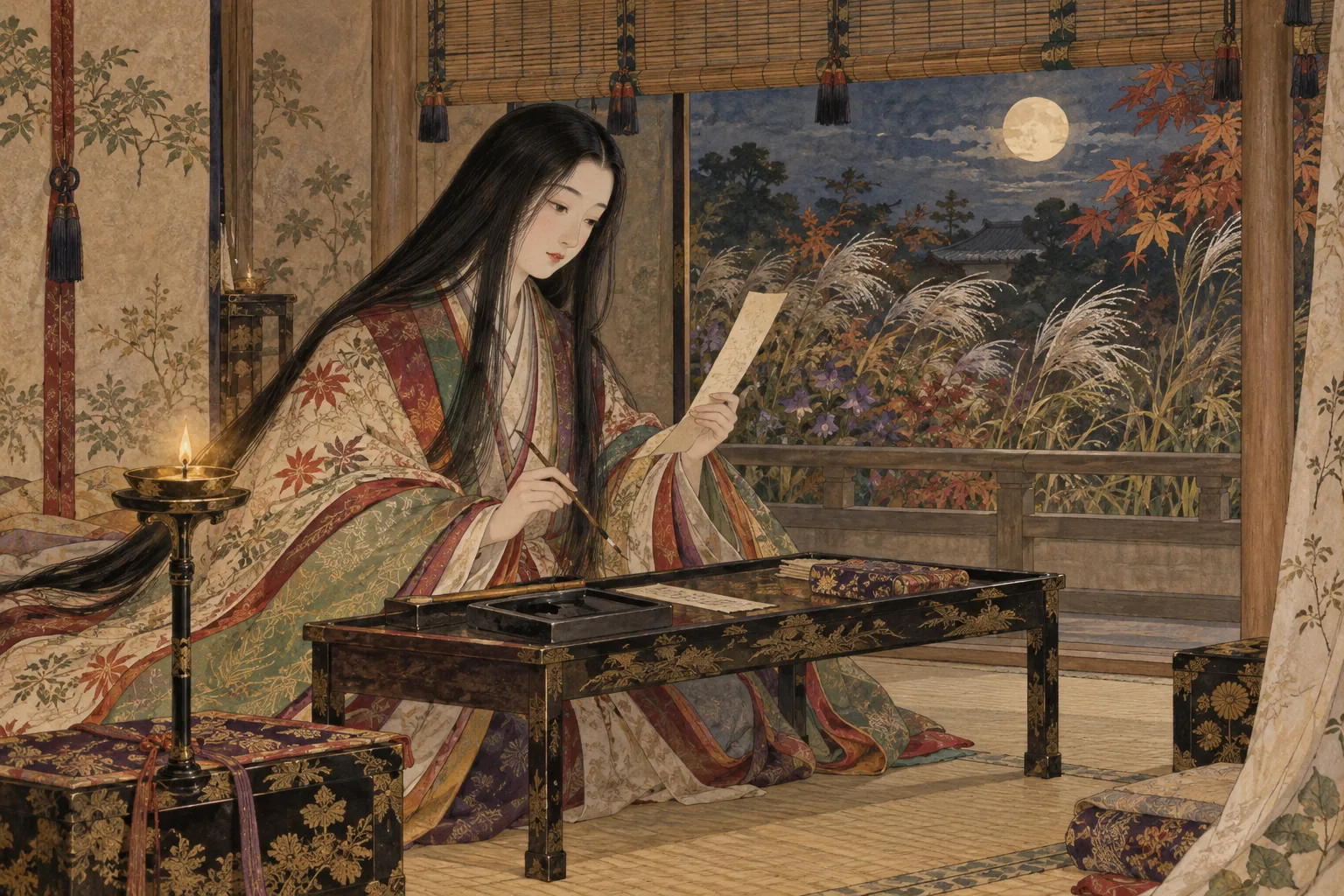
For centuries it was simply called waka, Japanese poetry, because it was the poetry. In the Heian court it was a working social skill: you sent one to a lover, answered a gift with one, and were judged on how quickly and gracefully you could reply.
Unlike haiku, tanka does not require a season word and is willing to say what the poet feels. The two extra seven-sound lines at the end give room for a turn or a conclusion, which is exactly what haiku refuses to supply. It remains alive: every January the Imperial Court holds a New Year poetry reading, and anyone may submit a poem.
短歌たんかtankathe thirty-one-syllable poem
俳句より千年近く古い。そして俳句より、はっきり気持ちを書く。
壱一言で言うとIn one line
短歌とは、五七五七七の三十一音からなる日本の詩です。
弐30秒で説明するIn 30 seconds
短歌は五、七、五、七、七の三十一音からなります。俳句よりはるかに古く、八世紀の『万葉集』にさかのぼります。俳句と違って季語を必ずしも必要とせず、感情をはっきり述べることが多くあります。恋、悲しみ、時の移ろいが中心の主題です。
参スピーチ・英作文As a short speech
短歌は、日本の二つの有名な短詩形のうち古いほうです。五、七、五、七、七の三十一音からなり、少なくとも八世紀にはさかのぼります。『万葉集』が四千首を超える歌を集め、天皇も役人も兵士も庶民も詠んでいました。
何世紀もの間、これは単に和歌、つまり日本の歌と呼ばれていました。それが詩そのものだったからです。平安の宮廷では実用の技能でした。恋人に贈り、贈り物には歌で答え、どれだけ速く優雅に返せるかで人が測られました。
俳句と違って短歌は季語を必須とせず、詠み手の心をそのまま述べることをいといません。末尾の七七の二句が、転じたり結んだりする余地を与えます。それは俳句があえて与えないものです。今も生きていて、毎年1月には宮中で新年の歌会が開かれ、誰でも歌を応募できます。
こう聞かれたらQuestions people actually ask
QWhat's the difference from haiku in practice?
ALength and permission. Tanka has fourteen more sounds and no requirement for a season word, so it can name an emotion and then comment on it. Haiku sets images side by side and leaves the reader to do the rest.
実際のところ俳句とどう違うのですか。長さと、許されていることです。短歌は音が十四多く、季語の決まりもないので、感情を名指し、それについて述べることができます。俳句は像を並べ、あとは読み手にゆだねます。
QIs anyone still writing it?
AYes. Newspapers run tanka columns alongside haiku, there are magazines and societies, and modern poets have brought in colloquial language and contemporary subjects. A collection in everyday speech became a bestseller in the late 1980s.
いまも作っている人はいるのですか。詠まれています。新聞には俳句欄と並んで短歌欄があり、雑誌も結社もあります。現代の歌人は話し言葉や今日の題材を持ち込みました。1980年代の終わりには、口語の歌集が大きく売れました。
そのまま使えるフレーズPhrases you can use
- It's five, seven, five, seven, seven.五、七、五、七、七です。
- It's much older than haiku.俳句よりずっと古いです。
- No season word is required.季語は必須ではありません。
- Court nobles exchanged them like letters.貴族は手紙のように歌を交わしました。
豆知識Background
『万葉集』は八世紀に編まれた現存最古の歌集で、四千五百首を超える歌を収めます。天皇から農民、防人まで幅広い人の歌が並ぶ点が特徴です。元号「令和」も、この歌集の「梅花の歌」の序文から採られました。毎年正月に宮中で行われる歌会始には一般からの応募があり、選ばれた歌が披露されます。「和歌」は広く日本語の歌全体を指す語で、短歌はその中心的な形です。
出典日本文化ナビ(原田英語.com)「短歌を英語で説明する(tanka)」https://www.haradaeigo.com/japanese-culture/w/tanka
- 文
- 日本文化ナビ編集部(原田英語.com)— 英文・和訳・解説はすべて独自に作成
- イラスト
- 日本文化ナビ オリジナル
- 発行
- 原田英語.com https://www.haradaeigo.com/
- 印刷日
- 2026.10.17
© 2026 Harada Eigo (原田英語.com). Text and illustration: Japan Culture Navi.
ページはこちら