寿司
壱In one line一言で言うと
Sushi is vinegared rice served with a topping, which is often but not always raw fish.
弐In 30 seconds30秒で説明する
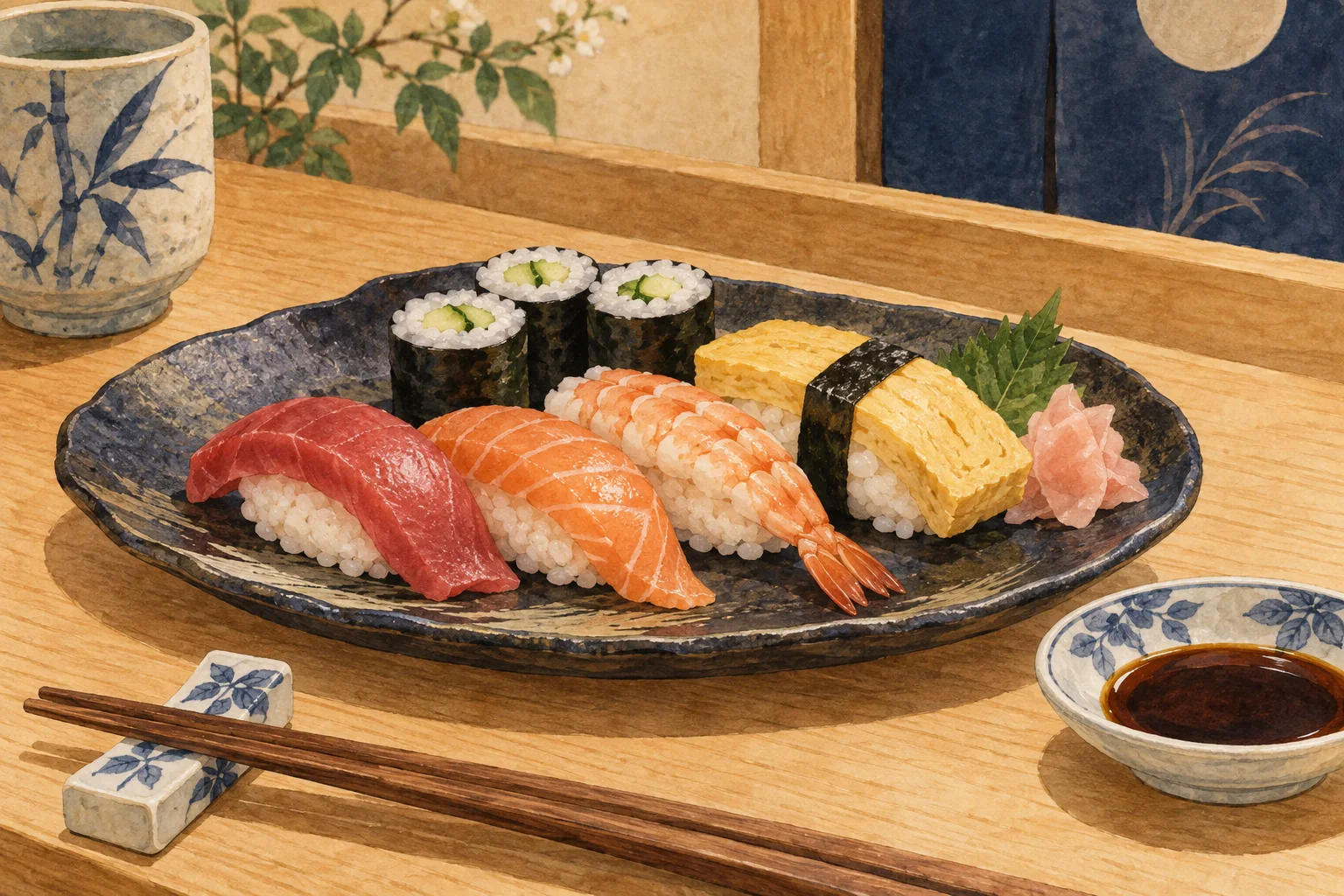
The word sushi refers to the rice, not the fish. It is rice seasoned with vinegar, salt and sugar, served with a topping. That topping is often raw fish, but it can equally be cooked eel, egg, or pickled vegetables. Raw fish on its own, without rice, is sashimi, which is a different dish entirely.
参As a short speechスピーチ・英作文
Most people outside Japan think sushi means raw fish. It does not. The word refers to the rice: rice seasoned with vinegar, salt and a little sugar.
The topping can be raw fish, but it can also be grilled eel, sweet egg, boiled shrimp or pickled vegetables, and all of those are still sushi. If you eat raw fish with no rice at all, that is sashimi, and it is not sushi. The reason for the vinegar goes back a long way.
Before refrigeration, fish was preserved by packing it in fermented rice, and the sourness of that method survived as a taste even after the preserving became unnecessary. So the flavor people now associate with luxury started out as a way of stopping fish from going off.
寿司すしsushivinegared rice with fish or other toppings
寿司の定義は「生魚」ではなく「酢めし」。これ一つで説明の質が変わる。
壱一言で言うとIn one line
寿司とは、酢で味つけした飯に具を合わせたもので、生魚のことも多いですが必ずではありません。
弐30秒で説明するIn 30 seconds
寿司という語が指すのは魚ではなく飯です。酢・塩・砂糖で味をつけた飯に、具を合わせたもの。具は生魚であることが多いものの、煮穴子でも、卵でも、漬物でもかまいません。飯のない生魚だけのものは刺身で、まったく別の料理です。
参スピーチ・英作文As a short speech
海外の多くの人は、寿司とは生魚のことだと思っています。違います。この語が指すのは飯です。酢と塩と少量の砂糖で味つけした飯のことです。
上にのるのは生魚のこともありますが、焼き穴子でも、甘い卵でも、ゆでたエビでも、漬物でもよく、それらもすべて寿司です。飯のない生魚だけなら刺身であって、寿司ではありません。酢を使う理由は古くにさかのぼります。
冷蔵のない時代、魚は発酵させた飯に漬けて保存されました。保存の必要がなくなったあとも、その酸味だけが味として残ったのです。今では高級品と結びつく味が、もとは魚を傷ませないための工夫だったわけです。
こう聞かれたらQuestions people actually ask
QShould I use soy sauce on the rice or the fish?
ATurn the piece over and touch the fish to the soy sauce, not the rice. Soaked rice falls apart and takes up too much salt. Eating nigiri with your fingers is completely normal.
醤油はご飯とネタ、どちらにつけるのですか。ひっくり返して、ネタのほうに醤油をつけます。飯につけると崩れますし、塩辛くなります。にぎりを手で食べるのはまったく普通です。
QWhat is the ginger for?
AIt is eaten between pieces to reset your mouth, not put on top of the sushi. Wasabi is usually already placed between the fish and the rice by the chef, so adding more can be seen as saying the chef got it wrong.
生姜は何のためにあるのですか。ネタとネタの間に食べて口をさっぱりさせるもので、寿司の上にのせるものではありません。わさびは職人がネタと飯の間に入れているのが普通なので、足すのは「加減が違う」という意味に取られることがあります。
QIs conveyor belt sushi looked down on?
ANot at all. It is where most Japanese people actually eat sushi, families go constantly, and the technology behind it is impressive. Expensive counter sushi is a different experience, not a corrected version.
回転寿司は格が低いと見られているのですか。まったくそんなことはありません。日本人が実際に寿司を食べるのはたいてい回転寿司で、家族で頻繁に行きますし、技術的にもよくできています。高級店のカウンターは別の体験であって、上位互換ではありません。
誤解されやすいA common misunderstanding
MYTHSushi means raw fish.寿司=生魚だと思われがちです。
FACTSushi means vinegared rice. Raw fish without rice is sashimi. Plenty of sushi contains no raw fish at all.寿司とは酢めしのことです。飯のない生魚は刺身。生魚をまったく使わない寿司もたくさんあります。
そのまま使えるフレーズPhrases you can use
- Sushi actually refers to the vinegared rice, not the fish.寿司とはもともと、魚ではなく酢めしのことです。
- Dip the fish side, not the rice.醤油はネタのほうにつけてください。
- The ginger is to eat between pieces.ガリはネタとネタの間に食べるものです。
- It's fine to eat nigiri with your fingers.にぎりは手で食べて大丈夫です。
- Most of us eat at conveyor belt places, honestly.正直、ふだんはたいてい回転寿司です。
豆知識Background
寿司の原型は東南アジアから伝わったとされる「なれずし」で、魚を米に漬けて乳酸発酵させる保存食だった。米は食べずに捨てることもあった。現在の江戸前にぎりは、江戸時代後期の江戸で生まれた屋台の食べもので、当時は今の2倍ほどの大きさがあり、ファストフードに近い扱いだった。回転寿司は1958年に大阪で始まったとされ、ビール工場のベルトコンベアから着想を得たという話が知られている。なお「サーモン」の握りは1980年代にノルウェー産養殖サーモンの売り込みから広まった比較的新しいネタで、江戸前の伝統ではない。
出典日本文化ナビ(原田英語.com)「寿司を英語で説明する(sushi)」https://www.haradaeigo.com/japanese-culture/w/sushi
- 文
- 日本文化ナビ編集部(原田英語.com)— 英文・和訳・解説はすべて独自に作成
- イラスト
- 日本文化ナビ オリジナル
- 発行
- 原田英語.com https://www.haradaeigo.com/
- 印刷日
- 2026.10.17
© 2026 Harada Eigo (原田英語.com). Text and illustration: Japan Culture Navi.
ページはこちら